
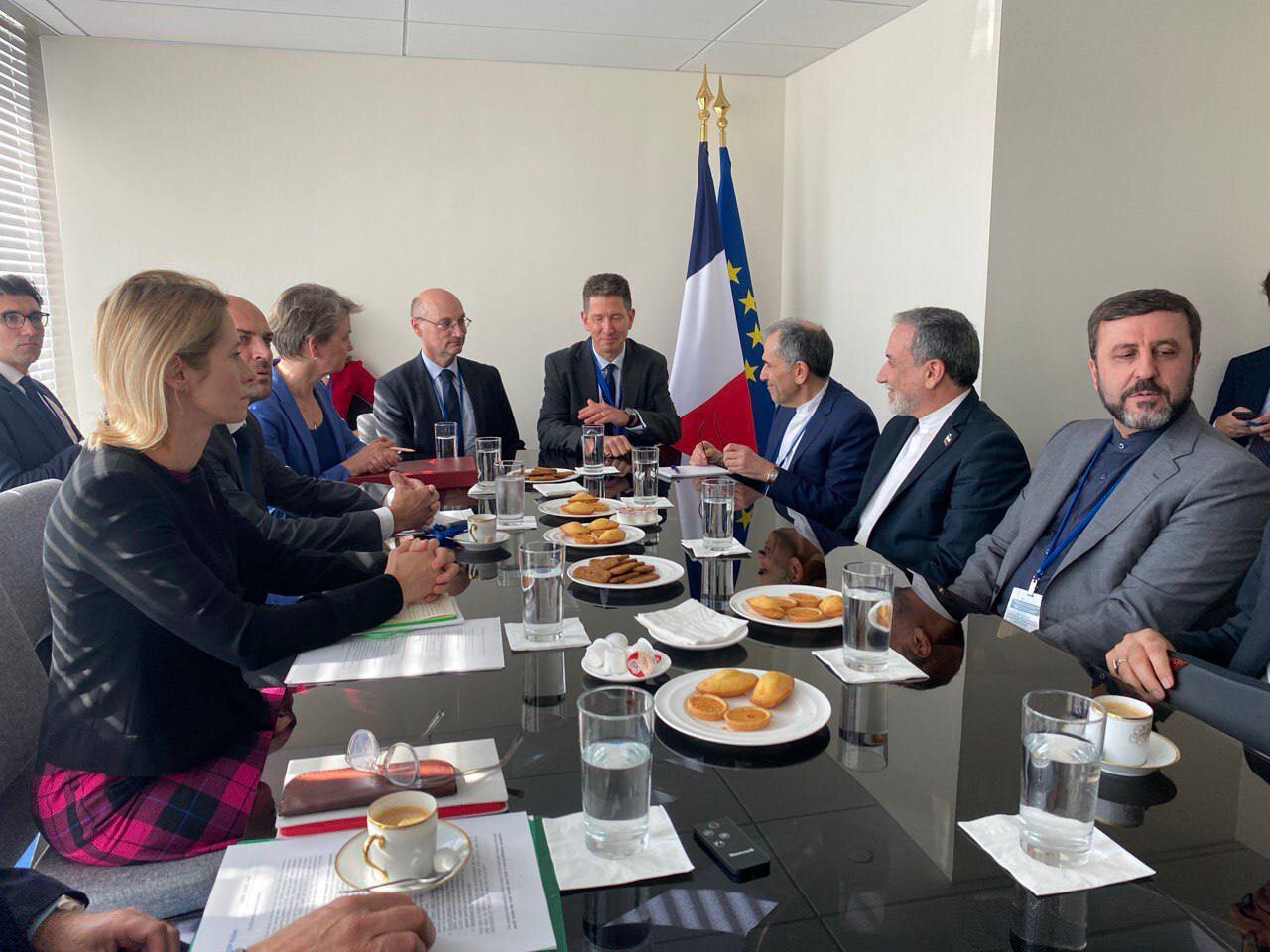
Iran’s Foreign Minister Abbas Aragut met with his British, German and French counterparts in New York, who are on the sidelines of the UN General Assembly, and also attended by the EU foreign policy director Kaja Karas.
During the meeting, both sides reviewed recent diplomatic efforts over the past month aimed at finding solutions to Iran’s nuclear issue and preventing further escalation.
Araguchi has outlined Iran’s principled position and practical steps in recent months to dispel doubts and pretexts surrounding the nuclear program. He described illegal and criminal attacks on Iran and its nuclear facilities as a dark and dangerous chapter in the history of its unenhancing regime.
On June 13, Israel launched a blatant, unprovoked attack on Iran, triggering a 12-day war that killed at least 1,064 people across the country, including military commanders, nuclear scientists and ordinary civilians.
The United States also took part in the war by bombing three nuclear sites in Iran with a serious violation of international law.
In response, Iranian forces targeted strategic sites across the occupying regions and Aldeid Air Force Base in Qatar, the largest US military base in West Asia.
On June 24, Iran managed to stop the invasion through successful retaliation operations against both the Israeli regime and the United States.
Seraj said Iranians expect urgent and immediate action in the face of Israeli attacks from international organizations responsible for maintaining international peace and security, especially the UN Security Council, but they only witnessed silence, omission and politicization.
Elsewhere in his remarks, Aragut referred to Iran’s latest responsible steps. This has reached an understanding with the International Atomic Energy Agency (IAEA) to fulfill its obligations under current circumstances. He emphasized the need for mutual and responsible actions by European parties.
On September 9, 2025, Iran’s Foreign Minister Abbas Aragci and IAEA Director Rafael Grossi signed an agreement to resume nuclear cooperation in Cairo under a new framework. The recent agreement with the IAEA marks an important step in restoring trust in the nuclear sector and resuming cooperation.
The agreement was signed during a three-hour meeting with Araguchi and Grossi in Cairo. Iran and the IAEA previously negotiated three rounds in Vienna and Tehran, trying to find a practical way.
The UN Director-General of Nuclear Energy described the new agreement as “an important step in the right direction,” but said its full content would not be published anytime soon.
The IAEA said the new agreement would provide access to inspectors at all Iran’s nuclear facilities, including those bombed by Israel and the United States during the June military attack on Iran’s Islamic Republic.
The European Party’s meeting with Iran and the JCPOA also tackled controversial and illegal moves to trigger a process of revamping the UN Security Council sanctions. It was agreed that various ideas and proposals were exchanged to keep diplomacy on track, and consultations with all stakeholders would continue.
MNA/6599707