
BEIRUT – Protests in Sweida have been rekindling since last week, marking three consecutive demonstrations against the siege imposed by the HTS administration, further exacerbating the region’s humanitarian and economic crisis.
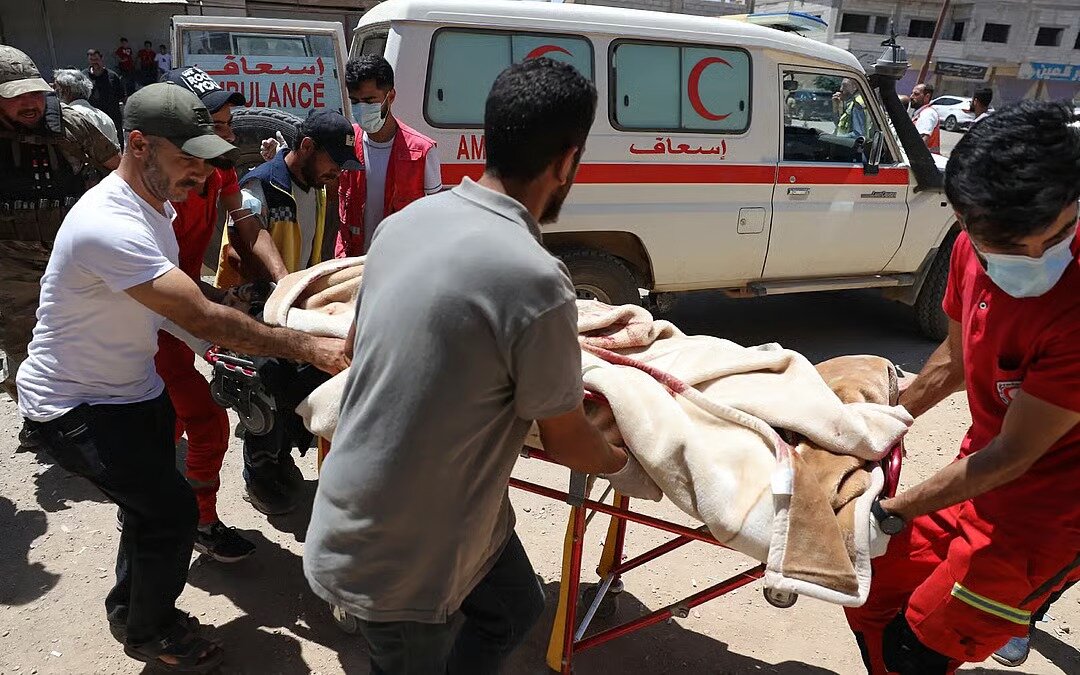
The protest broke out in late July after attacks launched by the HTS regime’s troops in several towns, resulting in civilian casualties.
These people now oppose what they consider to be “collective punishment” for the more than a million people trapped in Sweida, and are calling for the establishment of an International Committee of Inquiry to indict those involved in the massacre and the “right to self-determination.”
But even more dangerous is the flag of Israeli occupation groups as the regime is intensively interfering to separate Sweida from Syria.
The current situation in Sweida cannot be interpreted as a result of a conflict between two individuals that has evolved into a sectarian aspect, but it is interpreted as the implementation of a pre-planned Israeli plot.
Sweida was intended to be an Israeli gateway for implementing so-called “New Middle East” projects.
The Sweida problem was not new and not just in the current government. It has existed since the war with Syria broke out in 2011. In 2011, the former government made fierce efforts to build a bridge of dialogue with Druze Sheikhs, seeking to reach an agreement that would help reclaim all Syrian territory.
Raising the Israeli flag in Sweida is an irresponsible act and a dishonor to all Syrians interested in its downfall, as previously defeated by Sultan Pasha al-Atrash, the leader of the Syrian Revolution.
The Syrian druze has always been the Syrian shield in conflict with Israel. Their revolutionary slogan was “Religion belongs to God, and homeland belongs to everyone.”
Until the last day of his life, Sultan Pasha al-Atrash continued to worry about Syria, Golan Heights and Palestine, resenting the rulers who had wasted Arab rights. He realized early on the power of the colonies and the ambitions of their divisive schemes.
Sultan Pasha al-Atrash will tell politicians, “Please don’t give up on the independence of the country that paid a cheap price for our lives.” He also said, “The eyes can resist AWL.”
Sultan Al Atlas believed that the revolution lasted for 12 years as he and his fellow revolutionaries refused to abandon their arms. He wrote on dairy products, “I can’t buy Sultan al-Atrash.”
Since then, the method of colonialism has not changed. The Occupant continues to long for us and our wealth, achieving its own benefits. We too need resistance and should not change our belief that our eyes can resist AWL to stand up to colonial projects!
Clearly, Israel is attempting to exploit the tense relationship between the HTS-run government and the Druze by advocating efforts to establish Druze entities in the form of statelets in the southern part, or in the form of Druze autonomy management, which is linked only by federal relations with Druze. This would completely demilitarize a deep 80-kilometer zone within southern Syria.
Meanwhile, Israel is also afraid of increasing Türkiye’s influence. This is especially true after Turkey began taking concrete steps to implement the security agreement concluded between the government and Turkey in February 2025.
This growing Turkey influence in Syria forces Israel to pursue one of two paths. The first is a direct conflict with Syrian Türkiye. This is an option with high political and security costs for Israel. This option is rarely likely at this point, but it is more likely given the current tense climate created by Israel in southern Syria.
The second path is the path of dialogue with Türkiye. This is because regional sponsorships can be provided for future understandings of Syria and Israel related to the resolution of the situation in southern Syria.