
Madrid was a recently concluded conflict between Iran and Israel, a 12-day open hostilities, not a battle between two historic antagonists.
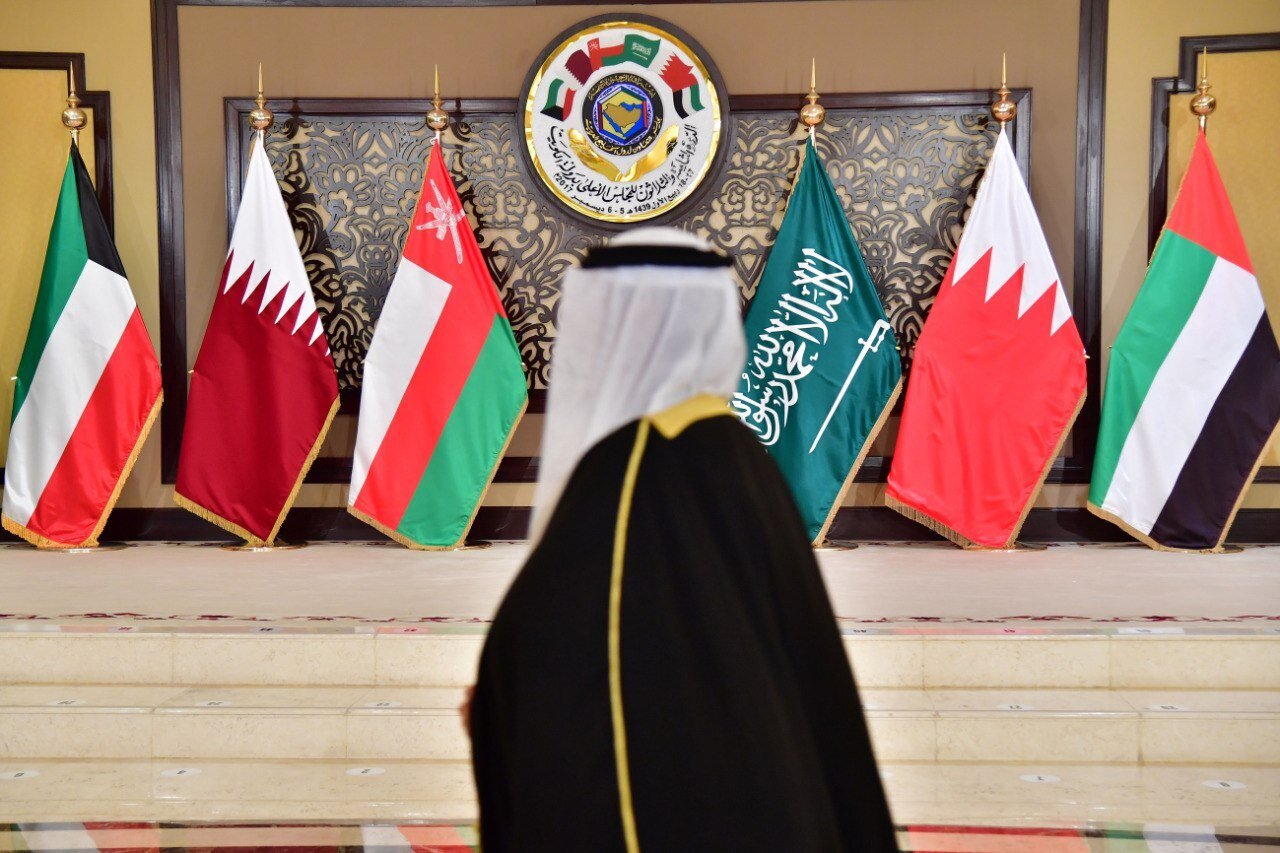
It marked the opening chapters of a new era in security, diplomacy, and the very definition of national interests in the Persian Gulf. Arab coastal countries from Saudi Arabia to Qatar and the Emirates have had to face the collapse of the fantasies of external tyetherage and the collapse of the emergence of inevitable regional dynamics for the first time in decades.
Amid this drastic upheaval, Iran’s centrality is no longer an issue. The current urgent questions are different. Regions can design their own stable, multidimensional order. Can Iran be able to let go of the framework imposed by foreign forces as a cornerstone and by foreign forces?
Disputes redrawing security paradigms
Historically, the security system in the Persian Gulf has rested on two pillars. It is a strategy to contain Iran through protection by major Western powers and through force, pressure diplomacy and alienation.
However, the June war served as a catalyst for the systemic crisis. The scale and accuracy of Iran’s response to Israeli attacks have surprised both the global public and Arab elites, including an unprecedented long-range missile strike against targets on Qatar territory.
The message was clear. Neither Western military bases, nor the most sophisticated weapons packages, nor partnerships with Washington or London, provide complete immunity from regional forces that can combine traditional military forces, missile technology and asymmetric warfare.
From that point on, even Riyadh and Abu Dhabi, Iran began to sound like an outdated formula. As a once distant and iconic guardian, the Persian Gulf’s ability to determine their future has emerged as the only realistic security measure.
One of the clearest consequences of the recent crisis is the clear or implicit recognition that attempts to build sustainable security in the Persian Gulf must be directly involved in Iran. Continuing policies that negligible exclusion or pretend to the structural weight of the Islamic Republic in this region are no longer viable.
The new dialogue between Tehran and the Persian Gulf countries cannot be driven by fear and exhaustion alone. It also reflects a more mature understanding of the factors shaping stability. Even Saudi Arabia, which has long been reluctant to adopt the Detente scenario, has come to realize that security based on persistent conflict is a lost game. Cooperation in early warning systems, missile defense, and incident management has begun to move past the biggest rhetoric.
This does not mean a lack of harmony or competition, but rather the need to include a practical acceptance of multiple interests and the inclusion of Iran.
From this perspective, the attack on Iran’s Aludedid base was restrictive, proofreading and strategic, exposing the vulnerability of all parties facing regional escalation. But it also prompted an unprecedented intra-ARAB coordination not only to request more guarantees from Washington, but also to launch discussions on the creation of a reliable regional defense system, as well as in emergency meetings and consultations.
The turn to sovereignty in the region has taken a break in decades of external dependencies and also responds to generational demand for less and more homemade solutions with external tuterage.
Model crisis: Israel’s isolation and the dilemma of the Persian Gulf
One of the clearest fractures brought to the surface of the war was the current impossible divergence in strategic models between Israel and the Persian Gulf states. In Tel Aviv, security is built on military superiority, offensive preemption, and absolute denial of perceived or actual threats, regardless of diplomatic architecture. Even at peak hostilities, Israel acted unilaterally without thorough consultation or coordination with regional allies.
In contrast, the Persian Gulf region has invested in coexistence strategies aimed at transforming economic diversification, multilateral diplomacy, and oil wealth into comprehensive development over the past decade.
Despite the rifts within them, the Arab government understands that their stability depends as much on security as it is as thriving and integration of their society into a global order.
The war revealed how different these two logics are and ultimately they cannot be reconciled. The discomfort with the Zionist regime has become increasingly apparent, with Arab foreign ministers expressing serious reservations about future alliances that could endanger their internal agenda.
Therefore, recent intense experiences provide clear lessons. The implicit alliance model for Iran has been promoted by some in the wake of Abraham’s agreement, but it does not convince long of either the region’s population or the political elite. Coexistence with Tehran based on clear rules and mutual respect seems far safer than recycling endless tensions.
The conflict also has a deep failure, and in many cases, a deep, counterproductive role of global forces in shaping security in the Persian Gulf.
The United States has long been positioned as a self-appointed arbitrator of regional stability, acting as an accelerator rather than a guarantor. The secret attacks on Iran’s nuclear facilities, carried out in collaboration with Israel, escalated the conflict and caused a wave of retaliatory violence that threatened the entire region. Washington’s actions revealed a security architecture designed to defend US power and Israeli interests rather than provide protection, rather than to defend the Persian Gulf.
Its unstable attitude surprised the between provocative aggression and delayed calls for delayed emissions, revealing that the so-called American umbrella is selective and vulnerable. For many in the area, the war has been suspected for a long time. Reliance on “guarantees” on us is not only unacceptable, but also increasingly dangerous.
Therefore, the end of the “age of external guarantees” approaches the horizon. The Persian Gulf must recognize that at moments of crisis, only regional cooperation frameworks and independence can provide a timely and reliable response.
From missile strikes in energy infrastructure to temporary closures of important trade routes, revealing vulnerabilities during the war has really given momentum to the proposals of local defence architecture. This is to not only acquire more refined weapons, but also share intelligence and put aside political resistance to building harmony of technical protocols, quick responses and early warning networks.
Here, Iran appears not only as an inevitable actor, but as a potential partner in certain key areas: risk management, information sharing, and coordination of threats that arise outside the region itself. Such cooperation does not imply a lack of rivalry, but gradually opens the door to a trust-building mechanism and the possibility of easing the crisis before it erupts. Citizens of the Persian Gulf are now demanding solutions based on internal responsibility, rather than external promises that are no longer convinced.
A strategic shift towards multipolar security
The Iran-Israel conflict serves as a mirror for the regional government. The threat is no longer binary. Maps can no longer be properly divided into absolute “friends” and “enemies.” Arab countries are witnessing the need for unilateral risks and diversification of alliances in real time. The future appears to be about embracing multiple actors and building flexible partnerships that can adapt to the cycle of crisis and detente.
The confusion surrounding Abraham’s future and the uncertainty about continuing normalization with Israel reflect the quest for new balances that have not been determined by external interests. Today’s priorities include not only defending territorial integrity and collective security, but also pursuing stronger voices in development, social justice and global diplomatic forums.
Recent wars have clearly redrawn the spiritual boundaries of Western Asia’s security.
The problem is that while Iran can no longer be ignored, contained or slander, the way it can be integrated is that it is realistic, multiple, and equitable local buildings without losing autonomy.
The future will no longer rely on the credibility of distant allies, but it will depend on the ability of local societies and governments to build flexible consensus, acknowledge differences and share risks. The age of dependence did not end because local officials would have decided to do so. It ended because ground facts irreversibly changed the Gulf equation.
The key issues are not just what weapons own, but agreements and agreements that allow us to maintain a shared life beyond the short term. Rather than an anomaly to be excluded, Iran has proven that the vision of the future to exclude it is an illusion. This opportunity is historic. It abandons outdated frameworks, embraces realism, and, above all, revives the rights of the Persian Gulf state into its own future. From now on, security will be in the region. If not, then there is none at all.