
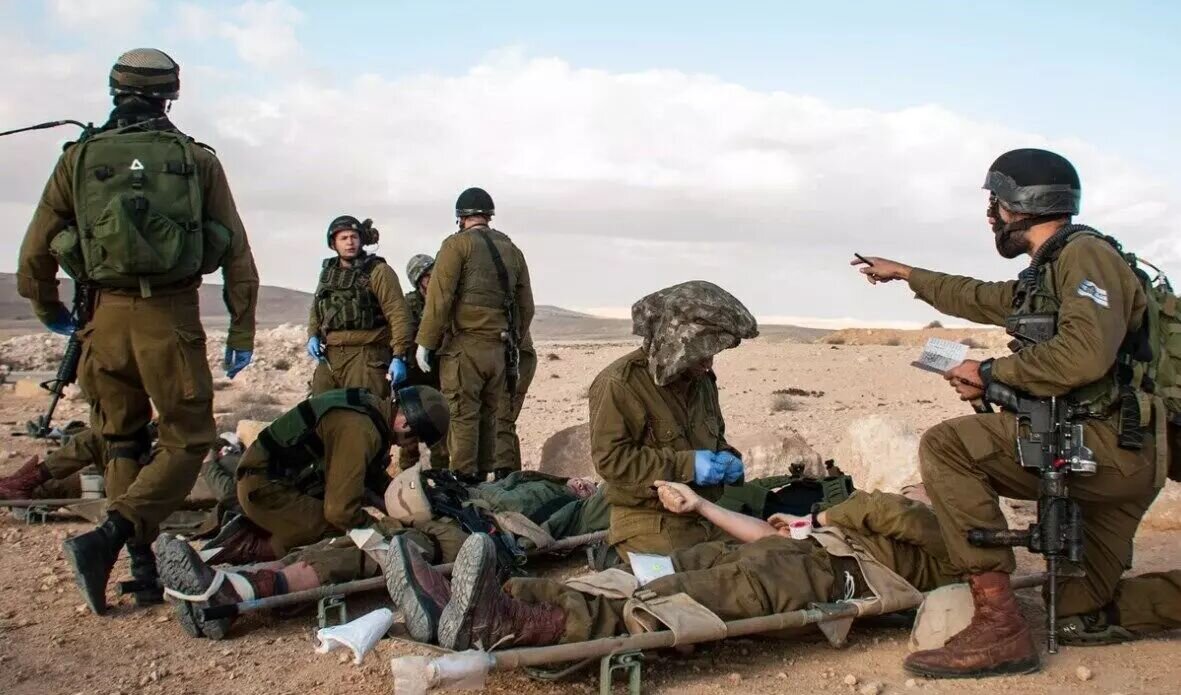
TEHRAN – Rising wartime casualties by the Israeli regime reveal a fierce battle shaped by resilient Palestinian factions and changing fighting dynamics.
More than two years after the Gaza massacre, Zionist regime military casualty data released by Hebrew-language media reveals a rapid increase in human and organizational damage, something that even Israeli regime officials had not anticipated when the genocidal war began.
The rapid increase in the number of wounded soldiers and the serious nature of their injuries highlight two realities that regime leaders have struggled to publicly acknowledge: the unexpected resilience of the Palestinian resistance and the strategic strain of endless urban warfare.
According to Hebrew-language media, since the genocide began, the government’s Ministry of Defense has been overwhelmed with requests for disability and injury recognition, and the system is reaching its limits.
Approximately 82,400 wounded people are currently being treated, more than a quarter of whom were injured in fighting in Gaza over the past two years.
When Netanyahu’s government began operations in Gaza, Zionist government officials indicated that the dismantling of Hamas would occur relatively quickly. Instead, the genocidal war evolved into a cycle of ground invasions, retreats, and new conflicts.
Israeli Occupation Forces (IOF) repeatedly returned to areas previously declared “cleared,” only to encounter regrouped Palestinian resistance fighters adopting new defensive tactics.
This adaptability is central to the unexpectedly high IOF casualty rate. Palestinian resistance groups, including Hamas, Islamic Jihad, and smaller factions, have utilized tunnel systems, distributed command, and improvised explosive devices to neutralize IOF’s technological superiority.
Their resilience in the face of heavy artillery fire led to the ground war lasting longer than Israel expected.
Despite censorship of casualty numbers, the extent of injuries documented by regime sources in Hebrew media speaks to the intensity of the ground fighting.
• 873 soldiers currently confined to wheelchairs
• 1,061 soldiers are amputees.
• 612 soldiers have “special disabilities,” the most severe category.
• 115 soldiers suffer from blindness.
The fastest growing category is psychological trauma. Approximately 22,000 newly injured personnel have entered the rehabilitation system since October 7, 2023, with 58% suffering psychological injuries.
Internal projections predict that there will be thousands more by 2026. The Hebrew newspaper Yisrael Hayom estimates that by 2028, the system could treat 100,000 wounded soldiers, half of whom are battling mental illness.
These numbers highlight an internal dilemma. In other words, even though the regime’s war objectives require long-term military deployments, long-term deployments create a level of trauma that the IOF cannot easily absorb.
Reasons for so many casualties:
1. Durability of Palestinian armed groups
Despite relentless airstrikes and targeted assassinations, Gaza’s resistance fighters operated from a combination of tunnels, hardened positions, and mobile cells. Their tactics emphasized attrition, gradually exhausting the IOF rather than directly confronting them in large formations.
2. Asymmetry inherent in urban warfare
In dense urban environments, the regime’s technological advantages, such as drones, armor, and signals intelligence, provided limited protection. A small team of Palestinian resistance fighters inflicted significant damage using locally manufactured IEDs, anti-tank weapons, and sniper fire. The layout of the city amplifies any tactical mistakes.
3. Dependence on reservists
The IOF’s heavy reliance on reservists (63% of newly registered casualties) meant that many frontline soldiers were unprepared to be drawn repeatedly into intense combat from work or family life. Rotation fatigue, uneven training, and psychological strain increase vulnerability.
4. War without a clear end point
IOF forces have remained in Gaza for an extended period of time, with the goal shifting from “destroying Hamas” to “weakening Hamas” to “establishing a security corridor.” This unrestrained posture exposes it to sustained and unpredictable attacks.
Systems under increasing pressure
The government’s rehabilitation sector budget has increased by 53% to 8.3 billion shekels, half of which is earmarked for psychological care. Mental health hotline usage has increased by 80%. The government has now convened a task force to redesign long-term support for the growing number of injured people.
A genocidal war that redefines military assumptions
Ultimately, the data reflect a deeper strategic shock. The genocidal war in Gaza is challenging long-held Zionist assumptions about military superiority, making clear that Palestinian factions can sustain long-term resistance, impose significant costs, and regroup repeatedly.
The rising number of casualties indicates not only the intensity of the fighting, but also the difficulty of achieving a decisive victory on a battlefield where the IOF’s advantages are constantly eroding.