
Tehran – Recent political and military discourse surrounding Bagram Air Force Base in northern Afghanistan highlights a new strategic tug of war in Central and South Asia.
US President Donald Trump has made the Bagram landfill the focus of his political agenda and called for the Taliban to reclaim what was once the major US military hub in Afghanistan. His statement, particularly his warning that “bad things will happen” if the base is not returned, shows a potential shift towards a more aggressive US stance within a complex global environment.
Historical background of Bagram Air Force Base
The Air Force Base in Bagram was originally built in the 1950s with Soviet support and initially served as the main airfield of the Afghan Air Force.
During the Soviet invasion from 1979 to 1989, Bagram became the hub of thousands of combat missions against the mujahideen (guerilla army). The strategic location, about 40 miles north of Kabul, allowed for the effective deployment of Soviet air forces and became the target of frequent attacks by the rebels. Following the Soviet withdrawal and subsequent civil war, Bagram’s domination changed hands multiple times among various factions, reflecting the instability that involved Afghanistan in the 1990s.
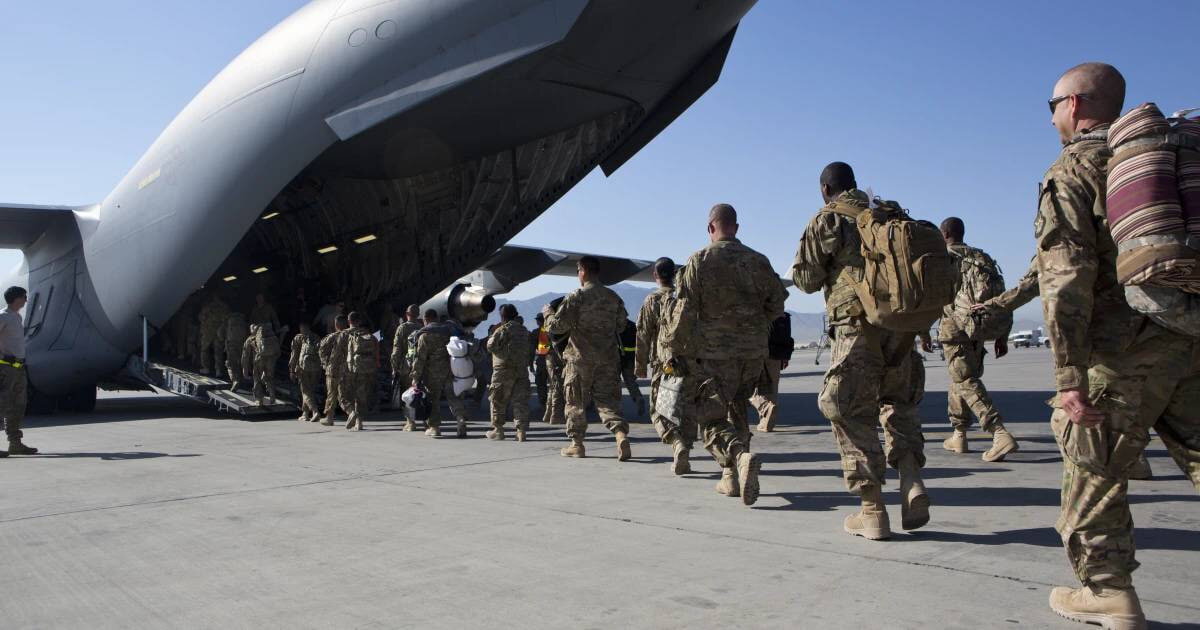
The US-led invasion since 9/11 has revitalized Bagram as the largest military base for American troops outside the United States. The base has expanded into a vast complex equipped for sustainable air and ground work, with two runways over 3 km that can host fighter jets, bombers, transport aircraft and drones.
It housed tens of thousands of military forces, contractors and support personnel. The facilities include hospitals, housing, recreation centers and an extensive logistics network. For 20 years, Bagram served as the epicenter of US military operations, allowing for air strikes, reconnaissance, intelligence report recovery and rapid military deployment across Afghanistan.
With the Biden administration’s chaotic withdrawal in 2021, Bagram’s extradition forced the extradition to Afghan national security forces. The loss of Bagram closed the chapter on the long-standing military presence of America in Afghanistan, but left a vacuum that had a major impact on the safety of the region.
Trump’s political use and the US domestic context
Bagram’s losses are actively politicized domestically by Trump, who framed it as a sign of weakened American resolve under President Biden. Trump has shown a return to Hawkish’s stance that aims to mobilize his core supporters by asking for the base to return and threatening “bad things” if the Taliban refuses.
This strategy is based on a larger story in contrast to his “strong leadership” and Biden’s “disastrous” military withdrawal. Trump’s stance on Afghanistan continues to be a powerful wedge of American electoral politics, as evidenced by social media, especially the response of the X virus.
Iran and the location of global strategy at Bagram Air Force Base
For Iran, the possibility of US control over Bagram could naturally constitute a threat. Located in northern Afghanistan, near the Iranian border, the base allows for surveillance and military operations to target Iran’s eastern provinces. The proximity of the base to China’s New Jiang region, and Afghanistan’s shared border with Central Asia, enhances its strategic value as a platform for military and intelligence reporting in the US region.
Bagram would allow US forces to carry out drone reconnaissance, electronic surveillance, rapid deployment of special operations forces, and missile or air force attacks on Iran’s interests.
Tehran sees Bagram through the lens of US and Iran’s geopolitical rivals, and interprets it as likely that the US potential would be part of a larger strategy to surround the Islamic Republic and curb the growing influence in the region. The strategic partnership between Iran and China, including a 25-year cooperative agreement spanning the economic, military and technical sectors, is also entangled in the regional competition.
From a Tehranian perspective, the US presence in Bagram serves as a check on the expansion of Sinoilan in Central and South Asia, complicating Tehran’s efforts to deepen relations and increase regional influence.
A broader regional and global context
The struggle against Bagram is embedded in wider triangle contests, including the US, China and Russia, all compete for influence in corridors in Afghanistan and Central Asia. In Washington’s case, Bagram symbolizes a scaffolding to project electricity, counter China’s belt and road initiatives, and monitor local security threats.
China believes it is concerned about Bagram. The US surveillance near New Jiang Province is a region that is said to have been supported by Afghan militants as Beijing is a region facing ethnic unrest and terrorism. Beijing’s deep engagement with Afghanistan and Pakistan helps counter our influence and provides China’s support for the Taliban government, providing strategic hedges against the US military footprint in Bagram.
Given historic interests and security concerns in Central Asia, Russia is also paying attention to the situation. Despite the fact that Russia follows a different approach that emphasizes diplomatic engagement and security partnerships, a reassertment of US military power via Bagram, a mere dream, will complicate Moscow’s regional goals.
The Taliban has become an important geopolitical actor juggling relations with China, Russia, the US and regional forces like Iran and Pakistan. This is demonstrated by refusing to abandon Bagram’s control in the face of American pressure. In delicate and complex regional systems, Bagram control remains important and symbolic, affecting diplomatic and power dynamics.
Security and military operational capabilities
The Bagram Air Base’s infrastructure supports a variety of military assets, including fighter jets such as the F-16S, fighter jets such as the UH-60 Blackhawks and CH-47 Chinook, transport aircraft such as the C-130 Hercules and C-17 Globemaster III, and transport aircraft such as the expanded drone cap. Its multi-layered security includes perimeter fencing, surveillance machines and patrol units that protect this critical site.
As a logistics hub, Bagram manages the flow of military, weapons, food, medical supplies and humanitarian aid across Afghanistan’s challenging terrain. The rapid air and ability to launch drone strikes from Bagram allow the US military to perform surgical operations deep within hostile territories essential to counterterrorism campaigns and special operations.
Revitalizing Bagram could restore the ability to deploy quickly in the northern and central provinces of Afghanistan, increasing pressure not only on extremists but also on recognized national enemies. This operational flexibility increases the interests of local security calculations.
The Air Force Base stands as a geographical and iconic keystone of the US strategic ambitions in Central and South Asia. Historical heritage from the US existence 20 years after the Soviet era highlights its important role in military operations, intelligence and regional influence.
Trump’s dream of returning reflects domestic political strategies intertwined with broader geopolitical contests, including Iran, China, Russia and Afghanistan run by the Taliban.
The complex interaction of US military ambitions, Taliban sovereignty claims, and regional competition for power means that Bagram’s position will continue to affect the balance of power. The future of the base remains uncertain, but it is crucial to understand the evolving dynamics of conflict, diplomacy and power in Afghanistan and beyond.
But, to put it simply, Trump’s access to Bagram Air Force Base is a dream.