
A few years ago, in August 2019, I was invited to a seminar at Counterpoint Belgrade (“The role of art in times of crisis and war”) for the translation of my book into Serbian.
The one-day conference was hosted by Serbian Culture Minister Vladan Vukosavljevic and invited artists such as China’s Zhang Xiqing, Serbia’s famous film director Emir Kusturica, Serbia’s Mehmed Baždarević, Switzerland’s Slobodan Despot and Russia’s German Sádulaev. It was held in the hall of the Belgrade Cinema Museum, and my invitation was signed by the then Serbian Minister of Culture.
Because of the theme of the seminar (“The Role of the Arts in Times of Crisis and War”), I brought some general non-governmental experiences from myself and friends. This included holding a reading contest based on the memoirs of dedicated men and women who served in the Iran-Iraq War, which we held in our prisons and which was very well received. I also brought a film about a program to reduce the negative effects of eight years of war, first for children in Iran and then for children in Iraq. I presented these in seminars for the audience and the Minister himself.
The Minister thought these experiences so interesting and noteworthy that he pulled me aside at the farewell dinner the last night. While praising these popular initiatives and reading competitions to promote better human thinking and behavior among prisoners and criminals, he asked me to cooperate as much as possible so that these reading competitions using the memoirs of Serbian generals and heroes of the Yugoslav separatist wars could also be held in his country’s prisons.
With all due respect to the Minister, I told him that I had three simple questions. If he answered yes to these questions, I would definitely put this experience into practice in their prison.
My first question was: “Minister, is there a general in the Serbian army who always goes ahead of the youngest soldiers during ground attacks?”
He said, “No, because the general’s position is not in the front line, but in a command post in the rear.”
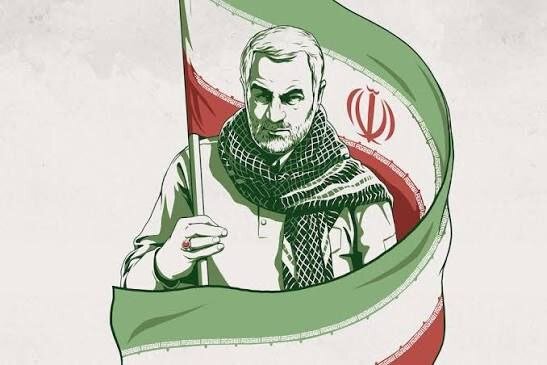
My second question was, “Is there a commander in a recent war whose death made all your countrymen and its soldiers weep as if they had lost a father or brother?”
I remember exactly that after a pause he made a gesture with his head that meant no.
“Well then, Minister, third question. If your answer is really yes, then I will ignore the previous two negative answers and return to your country free of charge and hold a reading contest in your country’s prison where I will read the memoirs of Serbian generals and heroes.”
“And my question is, after several years of fighting with the armies of Kosovo and Bosnia, all the soldiers and commanders of these two former enemy countries, are there any commanders in Serbia who are willing to fight selflessly and even die for their cause, without material motives?”
The Minister’s answer was clear to me in advance. He had no answer other than “no.”
Finally, I told him: “When you find such commanders, not only in Serbia but throughout the Western world, know that their wartime memoirs can be used to turn criminals in prison into good men.”
Seven years after this conference, I still strongly believe that the West has never truly understood the peoples of the East, never understood the true human joy of being a true example for the betterment of others, even in the highest echelons of politics and militarism.
Otherwise, instead of learning from their own mistaken experiences in the East, figures like (Zelensky), Netanyahu, and Trump would not have become real heroes in life.
Can these three people really be good role models in life for all our children, influenced by Western media propaganda?
Think long and hard about the answer to this fourth question, as the Serbian Minister of Culture did.