
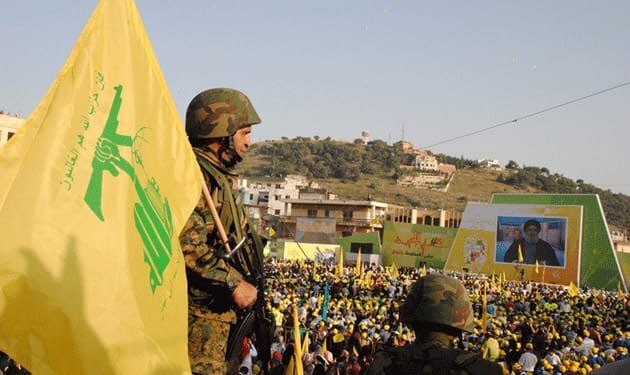
Beirut – Hezbollah took part in the war in favor of Gaza in a broader, cumulative context that went beyond political enthusiasm and fleeting sentiment.
Historical decisions were not uncalculated adventures. Rather, it was a strategic read of the region’s landscape and the achievement of Hezbollah’s position and role in the conflict with Israel since the July 2006 war.
However, the Al-Aqsa flood operation has made the war against Lebanon a matter of time, regardless of Hezbollah’s position to change the balance, resume the fundamental issues of conflict and open a support front.
From the first time of the operation on October 8, 2023, Hezbollah realized that what happened in Gaza was not a passing event, but a political and military earthquake in the Western Asia region.
Benjamin Netanyahu’s rhetoric from the start of the war clearly revealed his intention to misuse the Al-Axa flood to rebuild the region.
For Hezbollah, facing Gaza alone was a political, moral and ethical sin. It is perceived as abandoning the Palestinian cause. The Palestinian cause has been the basis for its existence and identity since its inception.
Therefore, the decision to join the support front was made to maintain the principles and credibility of the discourse of resistance before the audience.
However, religious motivation alone was not critical. After years of monitoring Israel’s military and technological transformation, Hezbollah knew that the enemy was about to launch a preemptive attack on it sooner or later.
Statements from enemy leaders from Gallant to Eisencott confirmed that the argument for the preemptive attack on resistance was already on the table for the first few days after the Al-Axa flood attack, with Washington’s intervention frozen.
In other words, Hezbollah’s involvement in the war was not a cause of its occurrence, but a factor that determined its timing and shape.
Israel’s enemies were looking for excuses rather than justifications to launch the attack they had been preparing for years.
Meanwhile, the balance of deterrence that has protected Lebanon since 2006 was unlikely to last long after the earthquake that hit Israeli national security in Gaza.
The image of “invincible army” shook, a deeper sense of Israel’s threat, and voices rose in northern settlements demanding the elimination of what they called the “Lebanese threat.”
Here, Hezbollah finds himself facing two bitter choices. Stand vaguely to observe genocide in Gaza, or open a limited front to impose new equations.
In calculations for that field, Hezbollah tried to control the pace of engagement from the start, so it didn’t escalate into a full-scale war, focusing on exhausting the enemy on the Northern Front without expanding the scope of conflict.
This approach aims to prevent a major explosion while simultaneously confirming that Lebanon is not a bystander, but an integral part of the equation of resistance.
Over time, the support front turned into a true pressure point for Israeli professional organizations, forcing them to redistribute its power and resources between Gaza and the North.
Without a doubt, the decision to participate was not without costs. Lebanon has a huge economic and security burden, and its southern region was targeted almost daily, killing and wounding hundreds of people.
Nevertheless, Hezbollah continued to commit to that choice, believing that the cost of abstaining was high.
That withdrawal was interpreted as betrayal in Arab and Islamic consciousness, leading to a dangerous rift that could have led to resistance facts and perhaps even the sectarian conflict that Washington and Tel Aviv had been staked for years.
Involvement in the war, despite great losses, protected the unity of the axis of resistance and kept the Palestinian flag high in national consciousness.
And, at least in part, Israel’s enemies have hampered attempts to strip Nezbollah from the nationalist and Islamic dimensions and politically isolate them.
The choice of support therefore has become a moral and historical position, surpassing current political boundaries to the level of local collective conscience.
Hezbollah may have chosen neutrality, but the instant neutrality of genocide is not a position, it is an accomplice!
Hezbollah saw the Battle of Gaza as an extension of its own battle, and saw the Palestinian defense as a defence of Lebanon itself!
The war destined for Lebanon since the Al-Aqsa flood operation was not the result of Lebanon’s decision, but rather the result of regional power imbalances.
In a project that attempts to force rebuild West Asia in the face of Israeli-American projects, Hezbollah chose to stand up rather than wait for his turn.
In this sense, Hezbollah’s involvement was not an adventure, but a historical order imposed by geography, principles, history, and equations of existence.