
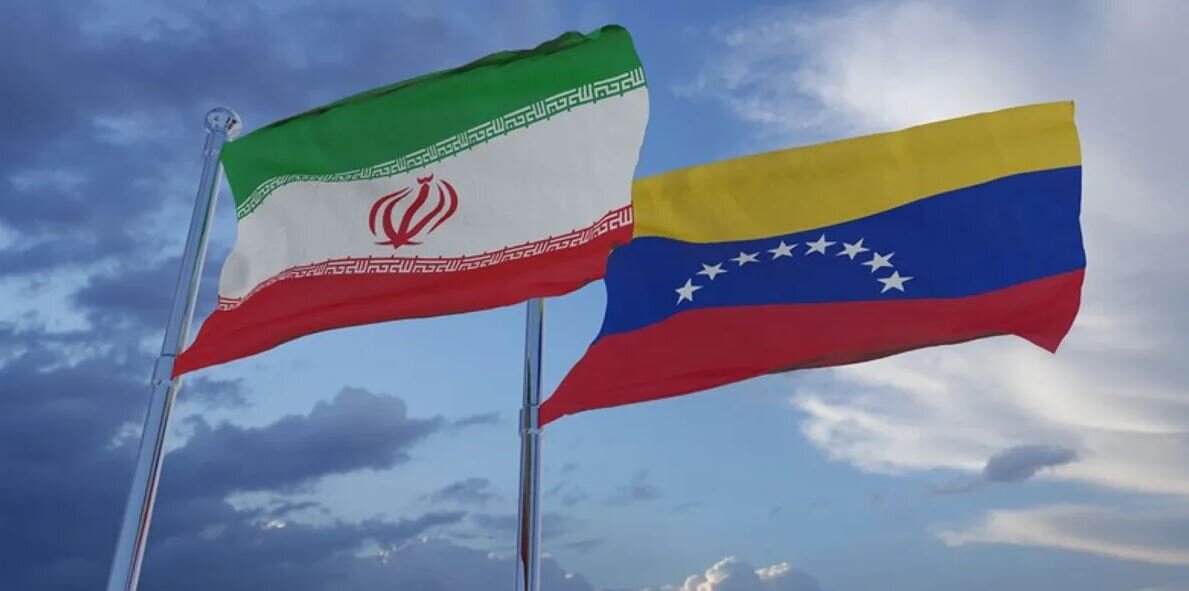
TEHRAN – Could the US attack on Venezuela be a precursor to a future attack on Iran? This is one of the most frequently asked questions among Iranian officials today regarding the fate of Caracas and the Maduro regime.
At first glance, such a scenario should be unlikely due to geographic distance, lack of serious economic or military ties, and ideological differences between the two countries, but the question nevertheless arises from a mindset and experience based on realism.
In a world of renewed great power conflict, any regional crisis becomes part of a broader global competition. Iran’s view of Venezuela’s development is therefore not limited to a particular country, but is part of a broader understanding of the changing world order.
Over the past two decades, relations between Iran and Venezuela have been shaped more by shared experiences than by economic interests. Both countries have faced sanctions, political pressure and external attempts to change the regime. This common experience created a sense of mutual understanding. The roots of this community of destiny go back decades to the triumph of Iran’s Islamic Revolution. When Iranians observed Venezuela’s oil nationalization model, they were inspired to pursue a similar path at home, ultimately leading to the first major confrontation between Iran and Washington.
The historical experience of states shows that attacks and interventions anywhere in the world can serve as a template for later pressure on other countries (especially if those countries share many similarities). Iran and Venezuela both represent major anti-American governments in their respective regions. Both account for a significant share of the world’s oil resources. Both have significant populations and territories, giving them geopolitical advantages. And both have the ability to inspire neighboring regions, and their success may inspire others to emulate their methods.
Seen from this perspective, Iran’s defense of Venezuela is not about defending Maduro personally, but about the very principle of national sovereignty. Iran, which recently endured a 12-day war, is acutely aware of the consequences when violations of this principle go unpunished, and how such impunity can undermine international order.
The timing of this conflict is inseparable from the broader transformations underway in the world system and the emergence of new blocs. While other powers such as China and Russia expand their influence, the United States continues to seek to maintain its role as the arbiter and guarantor of international order. Iran sees itself as part of this redefinition process, albeit on a smaller scale. In such a situation, every regional crisis becomes a testing ground for testing the limits of power.
Given this situation, Iran’s concerns about Venezuela’s future are rooted in realism. However, because Iran’s regional position and defense capabilities are very different from Venezuela’s, it cannot be said with certainty that an invasion of Venezuelan territory will necessarily lead to war between Washington and Tehran. But from a behavioral perspective, Venezuela’s experience could serve as a warning to Iran. If the United States can carry out military actions in other countries without paying high political costs, it will make similar forms of pressure and intervention in other countries seem more legitimate, even if such actions are not military in nature.
Another question that has been raised recently is how Iran will respond to a U.S. military attack on Venezuela. The answer must be understood within the scope of Iran’s capabilities and position. Tehran lacks any substantial practical means for military or economic support to countries on the other side of the world. Therefore, even if a conflict were to break out, Iran’s political and diplomatic support would likely continue, condemning the intervention, coordinating within international organizations, and perhaps providing limited technical and humanitarian assistance.
For Iran, Venezuela is more a place of reflection than a place of action. This crisis is a reminder that in our interconnected world, the destinies of nations are more intertwined than ever before. Iran’s response to these events will emerge not from ideology or hostility toward the United States, but from an effort to understand global transformation and find a balanced position within it: between vigilance and solidarity, between pragmatism and empathy for countries that share the experience of resisting great power pressure.
Political systems do not have a fixed perceptual model of the world. Much of their understanding is formed by observing events around them and the experiences of other countries. From this perspective, if we are trying to predict Iran’s response to the US attack on Venezuela, the real answer will not be found during the war, but in its aftermath and strategic changes.