
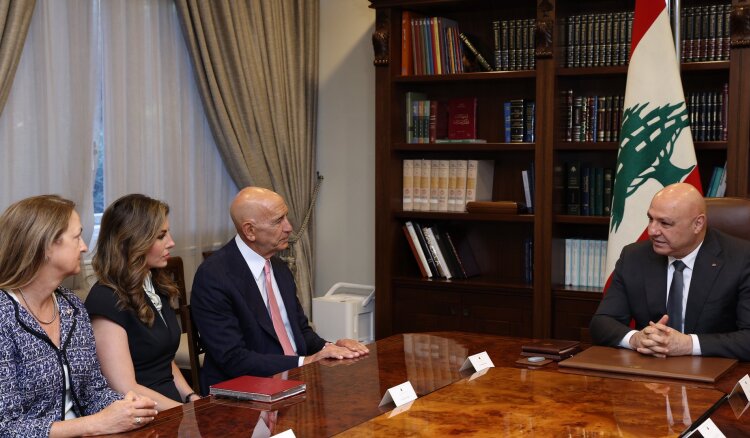
BEIRUT – US envoys Thomas Barrack and Morgan Ortags have arrived in Beirut again to intensify pressure on top Lebanon officials and put peace in the nation.
Sources at the end of this month declared to the Tehran Times that Washington and Tel Aviv had agreed to renew UNIFIL’s duties in southern Lebanon for their final year term.
Sources point out that the renewal decision will involve escalators and highly charged tones, as UNIFIL is given new authority under similar strict conditions as those granted under Chapter VII of the UN Charter. Setup of checkpoints etc.
After the liberation of the South in 2000, the Security Council renewed UNIFIL’s mission for just six months, reducing it from a force of around 11,000 to about 2,000 before bolstering following the Israeli Lebanon attack in July 2006.
If the update is decided by the end of next month, an expansion of UNIFIL’s authority, particularly freedom of movement without coordination with the Lebanese army, will become a reality, sources said.
As symptoms of US and Saudi leadership in the South are intensifying, Israeli occupation forces continue their daily attacks. These attacks have become routine and should not trigger a response from the government of NAWAF SALAM or the committee overseeing the implementation of Resolution 1701.
Italian general Diodato Abagnara took on the Unifil Command, so his leadership was almost completely lacking on the ground. This absence, or intentional omission, does not apply to all elements of the International Forces. The French forces appear to be very active without coordination with the Lebanese army.
Members of the French accidental act daily without army escorts, invading valleys and forests in various regions south of Ritani, raising questions about the nature of its mission and the limits of its power.
Last week, French Charge da Affairs in Beirut, Bruno Pereira da Silva met with Foreign Minister Youssef Rajji to discuss the extension of the Unifil Mandate.
The Cerez-Fire Supervisor Committee also held an emergency meeting (the first since June 26) in light of the Lebanese government’s decision to disarm the resistance and the suspicious explosion of Wadi Zevin, who claimed the lives of six Lebanese soldiers.
During the meeting, the Lebanese army received no serious answers regarding its demand to strengthen its presence on the southern border postings.
The Israeli Army delegation refused to discuss the issue of withdrawal from the occupation or buffer zones, and spoke in arrogant tones that Lebanese forces could be deployed at the border.
An enemy delegation reportedly said Tel Aviv “is not an obligation to listen to Lebanon’s requests until Lebanese forces complete their plans to disarm Hezbollah.”
In light of this incompromising by the Israeli army, the Lebanese army is under increasing pressure from the Supervisory Committee. This allocates only the task of demolishing the Hezbollah facility.
Sources told the Tehran Times that there has been no official announcement regarding the arrival date of UNIFIL.
During the meeting, French general Valentin Serie, vice-chairman of the committee, reiterated the French force’s commitment to submit a report explaining the actions of Zebkin staff before handing over to the Lebanese Army.
Sources say Washington and Unifil leaders often criticize Paris for its independent operational actions from Nakoura Command.
Meanwhile, on August 10, the six Lebanese soldiers martial arts increased the responsiveness of the people to the Unifil.
Clearly, updating the Unifil mandate cannot be separated from the sectors and political developments seen in Lebanon since the approval of the US envoy Thomas Barrack’s plan to hand over Hezbollah’s weapons to the state within a specific schedule.