
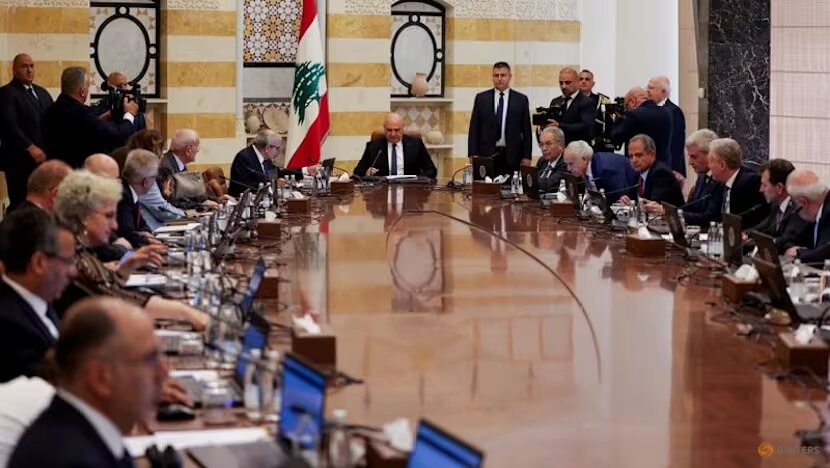
Beirut – No cabinet session in Lebanon’s political history is perhaps more of a global and Arabic attention than the September 5th that shaped Lebanon’s future. It determines whether the country is heading for a reconciliation, chaos, or somewhere in between, as in the current situation.
At the start of the session, five Shiite pastors retreated as Army commander Rodolph Heikal began discussing the Army’s plans to disarm Hezbollah. Ministers viewed the plan as “contrary to the National Charter” based on the Cabinet’s decision.
Following the withdrawal of Shia ministers, the government had to avoid slipping to the point where there was no revival, as the language of its statement appeared to have been refined and softened.
Therefore, the September 5th session effectively disabled August 5th and 7th sessions. This is because it links Israel’s approval, halting attacks and assassinations, and implementation of US Endanger Thomas Barrack’s proposal for reviving prisoners.
Navi Beli’s welcome to the government’s decision was notable. The Hezbollah Circles welcomed the government’s positive steps, particularly the reported willingness to discuss the national strategic plan to protect the country from attacks.
Army commanders reportedly are committed to civil peace as they questioned the obstacles to implementing the Army’s capabilities and plans, primarily caused by Israel’s incommunity and its occupation of Lebanon’s borders.
Government spokesman Paul Morkos said: “The Army will begin implementing the Arms Monopoly Program, but within the scope of its availability — presided, financially and humanly, the government is committed to developing a national security strategy with the aim of achieving the principles of expanding state control over all territories and achieving the principles that suppress the management of arms.”
Molcos pointed out that Lebanon has taken important steps in its American plan, but Israel has not taken mutual steps. Israel continues to violate Lebanon’s territory by repeatedly violating the ceasefire agreement and by circumventing its obligations. These actions clearly illustrate the risks to local security.
Given the three presidents’ commitment to civic peace and internal stability, the pre-session atmosphere within the country is likely to be different, opening the door to serious national dialogue.
However, some analysts believe the government’s decision may not meet Washington’s direction, so Israeli enemies may resort to further escalation of their attacks.
Meanwhile, US envoy Morgan Ortags arrives in Beirut this Sunday with new commander of St.com, Brad Cropper.
Centcom Commander’s visit to Beirut is not usually announced until they are made, and this sends important signals.
The visit relates to the military committee responsible for implementing UN Resolution 1701, but in addition to carrying out a mission to examine the needs of the Lebanese military, there are other explanations on the timing of the visit.
It is worth noting that we are aware of the recent New York Times report on Washington’s position on Hezbollah’s disarmament issue. This is already certain. The Donald Trump administration hopes the Lebanese government will adopt a compelling approach to Hezbollah’s disarmament.
There is no doubt that the coming days will be decisive and critical.