
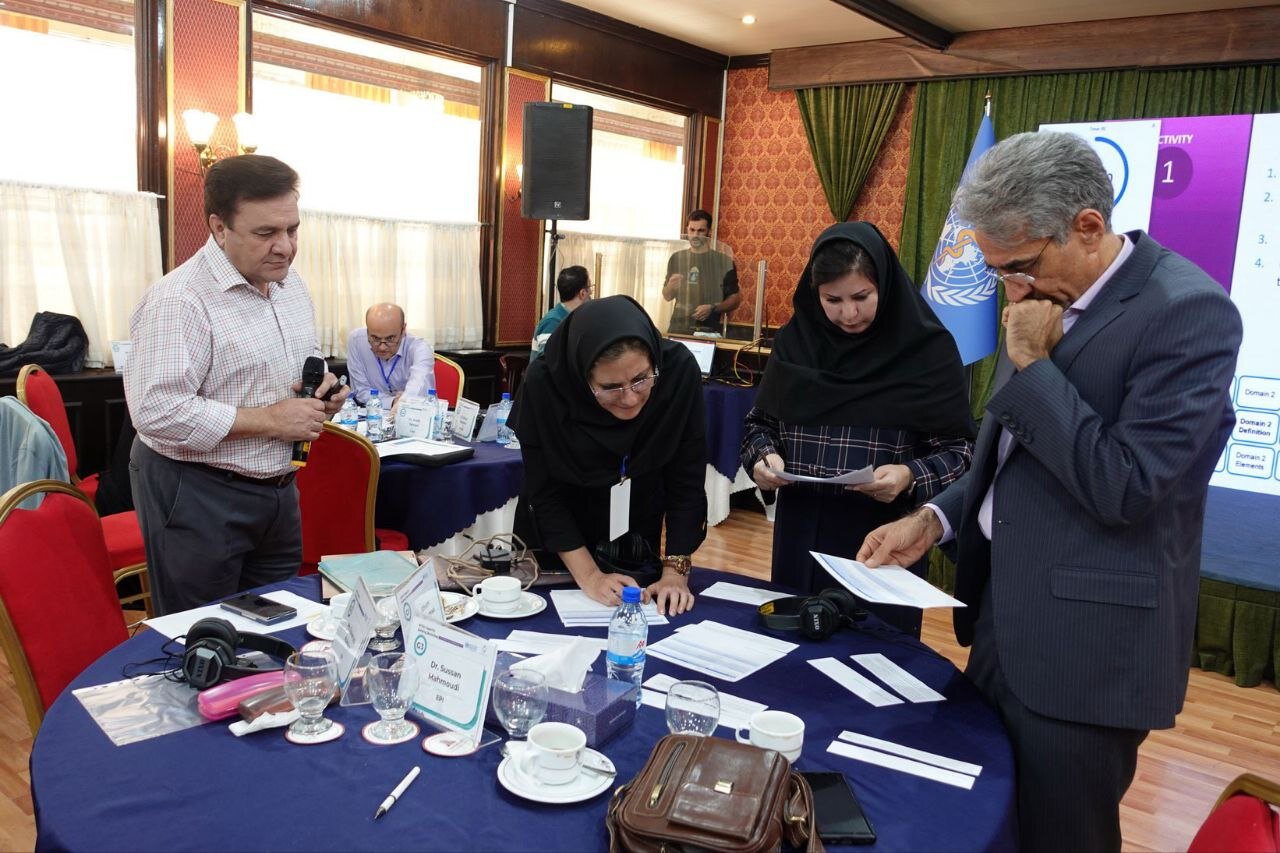
TEHRAN – With support from the Global Alliance for Vaccines and Immunization (Gavi), the Vaccine Alliance, and the World Health Organization (WHO), in collaboration with Iran’s Ministry of Health and Medical Education (MoHME), a workshop was held to promote the capacity of Iran’s National Immunization Technical Advisory Group (NITAG).
The capacity-building workshop, held in Tehran from November 9 to 13, aimed to strengthen the capabilities of Iran’s National Immunization Technical Advisory Group (NITAG) and ensure alignment with global standards.
Participants included Iranian NITAG members, Ministry of Health officials, experts from the Pasteur Institute, the Razi Institute, and the National Institutes of Health, as well as representatives from WHO and the United Nations Children’s Fund (UNICEF) in Iran, and technical experts from the WHO Regional Office for the Eastern Mediterranean.
They participated in a series of lectures, technical discussions, group work, and case presentations aimed at promoting teamwork, supporting peer-to-peer learning, and promoting knowledge sharing.
NITAG provides independent, evidence-based recommendations to support national decisions regarding vaccine registration, distribution, and administration in Iran. It works in close collaboration with the Program of Essential Immunization (EPI) and the Department of Health to help guide vaccine rollout strategies and recommend ways to optimize routine vaccination across the life course.
Dr. Awad Mataria, Acting WHO Representative and Head of Delegation to the Islamic Republic of Iran, spoke at the opening session and said, “This workshop is an important and timely event that is fully in line with our global and regional goals. The Immunization Agenda 2030 (IA2030) delivers on our global vision of a world where everyone, everywhere, at all ages, has access to the full benefits of vaccines for their health and well-being.
“A central pillar of IA2030 is strong country ownership based on solid, evidence-based decision-making. In our region, the strategic framework of IA2030 gives concrete shape to this by ensuring Member States have a functional and strong NITAG. WHO is committed to providing technical support to this process at all three levels: Headquarters, Regional Offices and Country Offices here in Tehran.”
The overall goal of the workshop was to support NITAG’s capabilities and facilitate organizational strengthening through structured training, expert guidance, and collaborative planning. This will create a well-functioning, evidence-based advisory body that will ensure more effective vaccine policy decisions, increased immunization rates, and improved overall health outcomes for the population.
As Iran’s participation in global and regional immunization dialogues increases, there is a need to strengthen the group’s technical preparedness. This workshop was an important step in providing NITAG members and partner organizations with the tools, knowledge, and collaborative experience needed to strengthen current interventions and support quality immunization decisions that improve the health of all people in the country.
In October, Kerman University of Medical Sciences, with support from the WHO and GAVI Alliance, hosted a three-day regional workshop on vaccination and vaccine-preventable diseases.
The event, held on October 10 and 12, brought together Expanded Program on Immunization (EPI) executives and managers from 34 medical universities, mostly from eastern and southeastern Iran, to strengthen the country’s immunization capacity with a focus on planning, monitoring, and tackling vaccine hesitancy.
The workshop received technical support from the WHO Country Office in the Islamic Republic of Iran and financial support from Gavi, the Vaccine Alliance. The training focused on strengthening immunization plans, providing updates on national guidelines, strengthening cold chain management, improving monitoring of post-immunization adverse events, and promoting effective community engagement.
Senior officials from the Ministry of Health and Medical Education (MOHME) outlined key priorities. Dr. Ghobad Moradi, Director of the Center for Infectious Disease Control, highlighted the important public health role of vaccination and addressed cutting-edge topics such as the targeted use of artificial intelligence in immunization programs and strategies to increase vaccination coverage among immigrant populations.
The workshop provided a platform for interactive discussion and practical problem solving. Dr. Omid Zamani, National Expert at WHO Country Office, led a session on Global Immunization Agenda 2030 (IA2030), sparking a dynamic discussion on national priorities. Participants also collaborated on group tasks to develop and present innovative and practical solutions to address local challenges such as vaccine hesitancy.
Other important topics covered included new national immunization guidelines, vaccine procurement, and a review of surveillance systems for diseases such as meningitis, diphtheria, tetanus, and pertussis.
MT/MG