
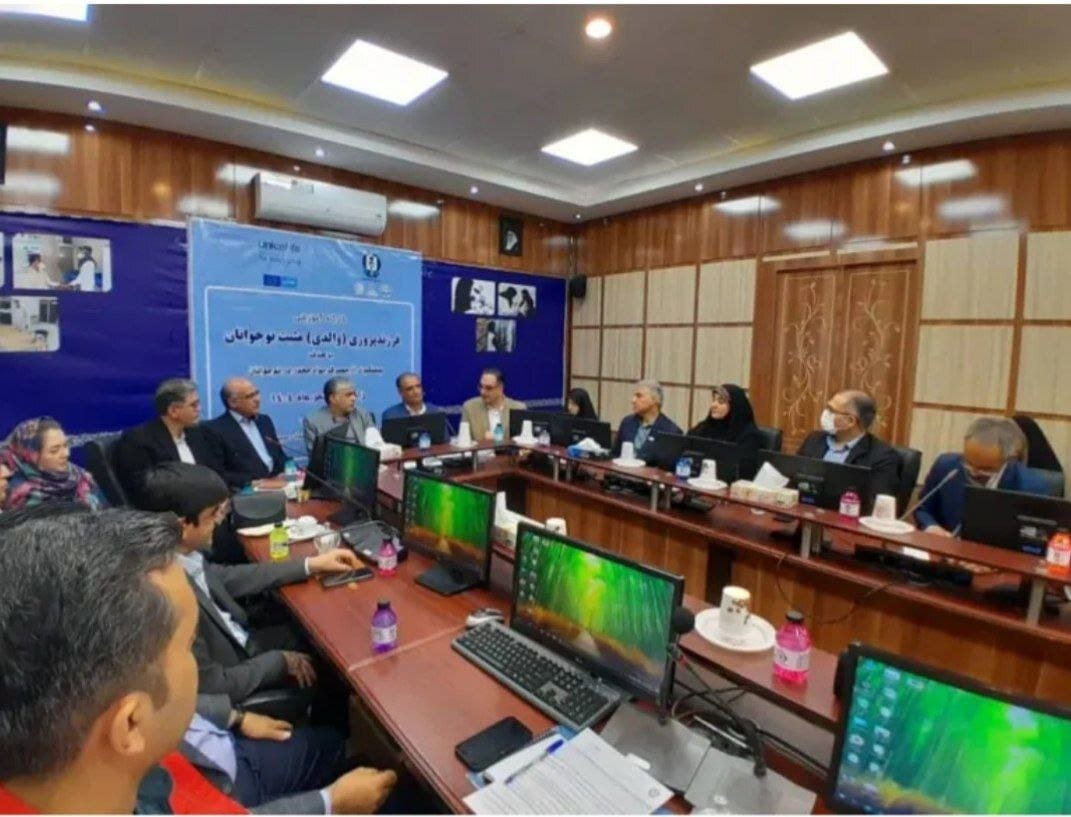
TEHRAN – To promote positive parenting skills, the United Nations Children’s Fund (UNICEF) held a workshop for primary health care (PHC) centers and school counselors in 14 southern and eight northern cities in Sistan-Baluchestan province.
Two training sessions have been held in the prefecture so far. The first training workshop was held in Chabahar from October 6th to 9th, 2025, and the second was held in Zahedan from October 19th to 22nd.
Their goal is to guide and support local primary health care and school counselors to help parents of adolescents adopt positive parenting approaches, the UNICEF website announced in a November 10 press release.
Psychologists and counselors in Cistern-Baluchestan are now better equipped to support families with parenting skills, thanks to a UNICEF-supported positive parenting training program for adolescents.
What did the counselors learn? They gained the critical knowledge, skills, and confidence needed to effectively engage with youth’s parents, support parents in promoting the healthy and positive development of youth, strengthen family relationships, and bring their training to the community.
These workshops are just the beginning. After the training, the multidisciplinary team will begin organizing positive parenting sessions for adolescents at the community level.
These teams include key partners from schools, primary health care (PHC) services, Iranian Red Crescent Society (IRCS), and social emergency services.
Together, these organizations will ensure that at least 2,000 parents and caregivers in all 22 cities of Sistan-Baluchestan receive the support they need to actively support their youth.
Online resources for parents
Parents are encouraged to visit the dedicated parenting section of the UNICEF Iran website (link). We provide a wealth of resources, articles, and advice to help families promote the healthy development and well-being of their children.
Positive parenting during adolescence
In December, UNICEF, in collaboration with the Ministry of Health and Medical Education (MoHME) and the Ministry of Education (MoE), held a comprehensive training workshop on ‘Positive Parenting of Youth’ in Mashhad, Khorasan Razavi Governorate, to ensure that young people from vulnerable communities benefit from a supportive environment.
This intensive eight-day training was conducted over two four-day rounds in December and brought together 90 psychologists, counselors, and mental health professionals from primary health care centers (PHCs), schools, and community centres. The program is funded by the European Union Humanitarian Assistance (ECHO), the UNICEF website reported on December 23.
This workshop aimed to strengthen knowledge, skills and technical expertise in delivering positive parenting programs specifically tailored to parents of adolescents.
As part of an initiative supported by UNICEF, parents of adolescents from vulnerable communities will receive practical training to develop positive parenting skills.
The goal is to establish a supportive and nurturing environment for youth from vulnerable and disadvantaged communities.
The Positive Parenting of Adolescents package, developed with support from UNICEF, includes three detailed manuals and workbooks for trainers, parents and young people. It also features 17 educational films for trainers, 5 videos for parents, and 5 motion graphics designed to enhance learning and engagement.
The Drug Control Headquarters (DCHQ), Provincial Drug Coordination Council (DCCC), Iranian Academy of Child and Adolescent Psychiatry, and local non-governmental organizations also collaborated with UNICEF to conduct this workshop.
In the first phase, trained professionals will reach out to at least 1,600 parents in Khorasan Razavi province to provide practical training on positive parenting skills.
The initiative is part of a broader effort to expand a youth parenting program first launched in Qom County for vulnerable parents.
More than 4,000 parents of adolescents from marginalized communities in Qom have participated in at least eight parenting training sessions, proving that the program is successful in fostering stronger family relationships and adolescent well-being.
By collaborating with key governmental and non-governmental organizations, UNICEF continues to expand its reach to ensure that young people and their families in vulnerable communities receive the essential support and guidance they need for a bright future.
MT/MG