
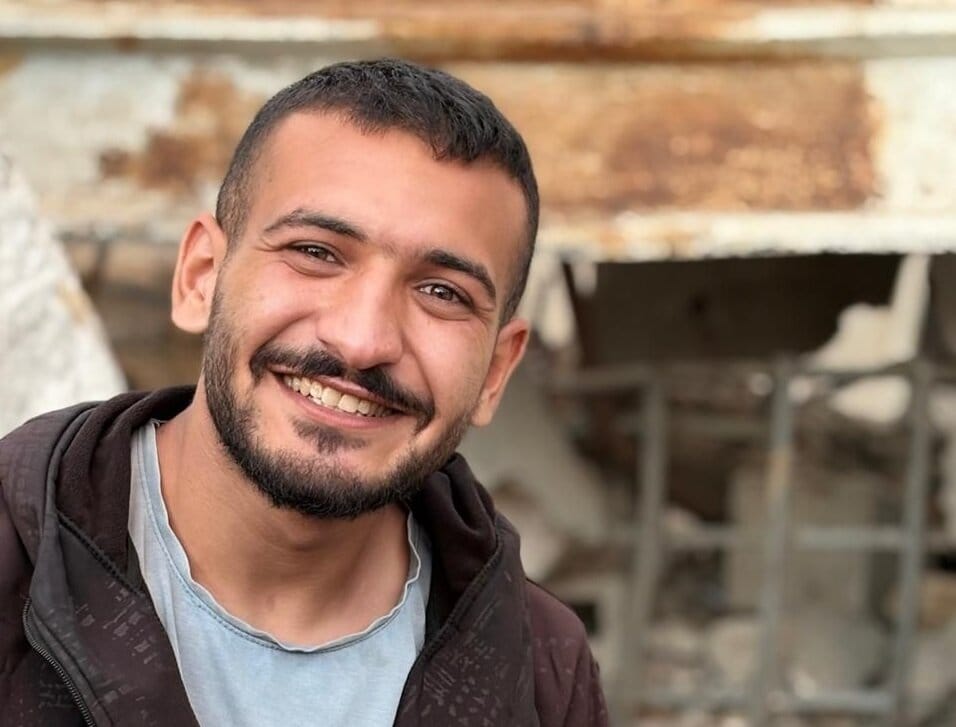
TEHRAN – In the midst of the devastation of the Gaza Strip, where entire neighborhoods have been wiped out and the international community has remained largely silent, young Palestinian writer Wasim Said has emerged as one of the clearest voices documenting the unfolding genocide.
His book, Witness to the Inferno of Genocide, is not a memoir of survival, but a real-time account written between bombings, famines, and repeated evacuations.
After the ceasefire in January 2025, he briefly returned to his destroyed hometown of Beit Hanoun and began recording what he called a “hellish journey,” but was forced to flee again.
In this interview, Saeed spoke to Tehran Times about writing under fire, resisting erasure, and preserving truth for future generations.
The text of the interview is as follows:
Why did you begin writing this testimony during the ongoing genocide, rather than after having survived it?
After the ceasefire ended in January 2025, I returned to my hometown of Beit Hanoun in the far northeast of the Gaza Strip and began writing. I began to detail my journey through hell, imagining the end of the war and my eventual return to Beit Hanoun and my homeland. Even if it is reduced to rubble and our land is bulldozed. But its air and soil are indescribable.
I wanted to depict how my soul suddenly felt at peace there, how my tears wet the ruins of the house, about that earthy scene and about my grandfather who kissed it. But as soon as I started writing, the genocide returned and I was forced to flee once more, this time even more brutally.
The only reason I kept writing was to leave a suicide note in case a monster killed me.
How was he able to continue writing under the constant threat of death, starvation, and bombing?
Writing was very, very difficult. But what scared me the most, and what prompted me to write in spite of everything, was the fear of being killed and erased, of being remembered as just a number, of being forgotten with all my suffering.
Your book conveys the resilience and moral fabric of Gaza’s society under siege. How do you see the role of solidarity and cultural resistance in community survival?
The moral fabric of Gazan society has been shaken by genocide, famine, and continued displacement. It’s cracked. But despite all this, I believe that our society will be remembered in history as one of the greatest peoples who persevered in the face of abandonment, supported each other, and showed unparalleled perseverance in the face of the most ferocious and criminal forces.
But when it comes to “steadfastness,” what scares me the most is glorifying resilience. The situation is catastrophic in every sense of the word. After the so-called “ceasefire”, I am here today, still unable to return to my city, which has been completely destroyed. The tent was flooded due to yesterday’s rain and was ruined. I just hope this hell ends soon.
How do you hope your real-time documentation of genocide will impact readers around the world and influence international responses?
I hope that the truth can be transmitted to the world, become part of recorded history, preserved for future generations, and change the suffering that the Palestinian people continue to endure.
Can you share a particularly poignant story from your experience that embodies a spirit of hope and resistance despite fear?
There are countless stories of solidarity, compassion and mutual support of people sharing handfuls of flour with others in the midst of famine. Like I said, my community is really great.
However, I believe that highlighting these stories can sometimes contribute to glorifying resilience. It creates a reassuring illusion in audiences that we are dealing with this hell, and can paralyze them from taking moral or humane action against this genocide.
What message do you send to the international community and those who remain silent or complicit in the face of these ongoing atrocities?
My message to the world is: This is the truth. This is what the monsters did to us.
And history will not forget those who remained silent or were complicit. They will be remembered as participants in the greatest genocide of the 21st century. Their future generations will curse them.
How many countries has your book been distributed so far? Have you received any feedback from readers or representatives of this book?
The book is available in Arabic and English, and will soon be available in Italian, Spanish, and Greek.
Found in Arab countries, Europe, and the United States.
All I want is for my voice and the voices of my people to be heard in the world. It is the story of our genocide, our blood, the hunger of our children, the tears of our mothers, the martyrs killed by monsters.
I hope all of this reaches everyone. That way the world will know the truth about these monsters and their crimes and it will be preserved for future generations so that this never happens again.
(For more information about the book Witness to the Inferno of Genocide, please visit the publisher’s page:)
https://1804books.com/products/witness-to-the-hellfire-of-genocide?utm_source=ig&utm_medium=social&utm_content=link_in_bio&fbclid=PAb21jcAOWhK NleHRuA2FlbQIxMQBzcnRjBmFwcF9pZA81NjcwNjczNDMzNTI0MjcAAaf7PrQj__dvxt3V1 k6aSR7OS3MdZyfsz_4pLTRkKzsMtrPAQ5kUHQMjz1MepA_aem_V1yxQ_hPnBWPHyeP0EaLI