
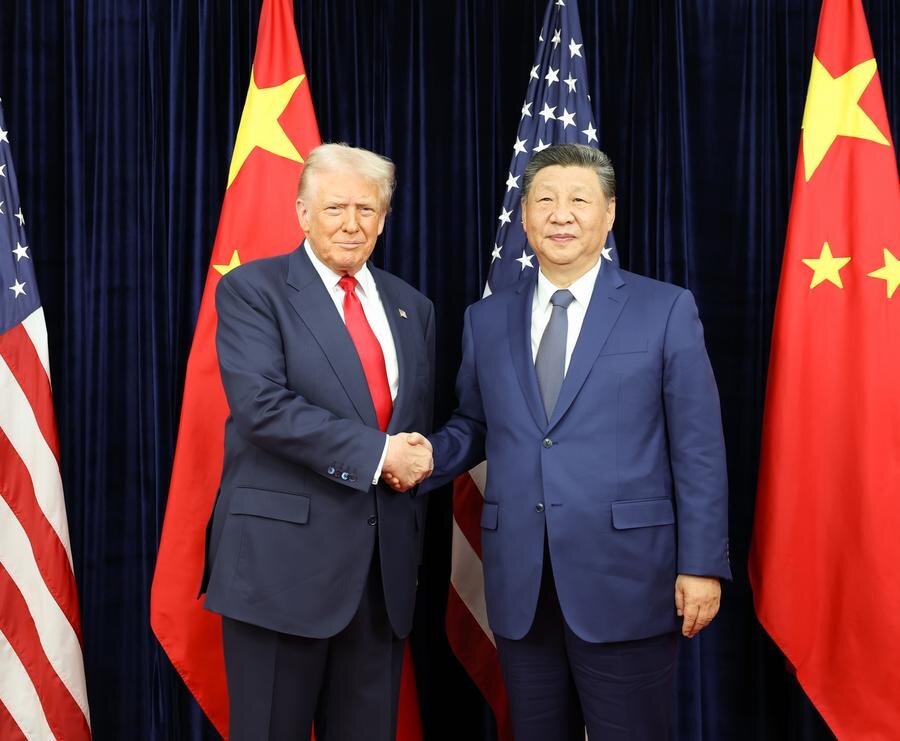
TEHRAN – When Chinese President Xi Jinping and U.S. President Donald Trump met in Busan on October 30, the immediate results appeared transactional: lower tariffs, restarting soybean purchases and ending restrictions on China’s rare earth exports. But beneath these surface-level adjustments lie deep differences in geopolitical philosophy.
The Busan summit and subsequent APEC summit revealed not only policy differences but also competing visions for the world order.
China’s multilateral blueprint
President Xi’s remarks in Busan emphasized China’s commitment to multilateralism, sovereign equality, and inclusive development. He described China-US relations as a “giant ship” navigating turbulent waters, emphasizing mutual respect and steady management of differences. This metaphor reframes China not as a rival but as a stabilizing force in world affairs.
At the APEC summit held in Gyeongju, President Xi proposed building an “Asia-Pacific Community” rooted in openness and cooperation. His five-point agenda – protecting the multilateral trading system, building an open economy, stabilizing supply chains, promoting digital and green trade, and promoting inclusive development – embodied the principles of the Global Governance Initiative (GGI), a framework that champions rules-based international engagement.
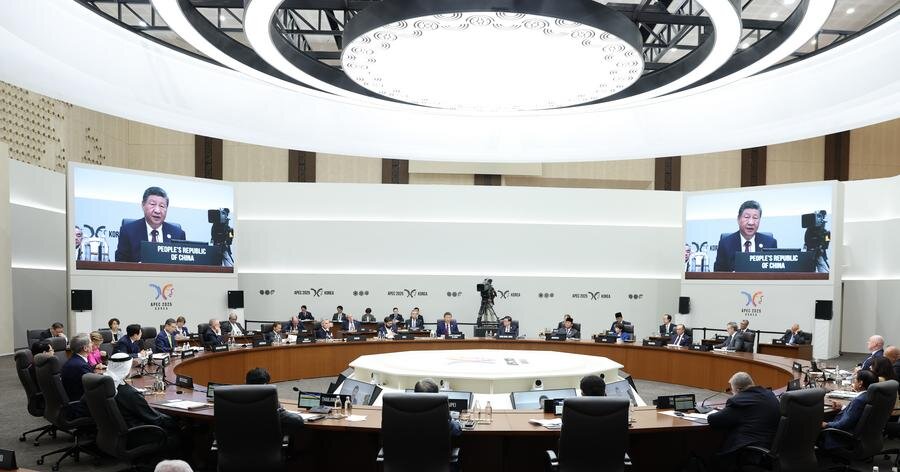
Chinese President Xi Jinping attends the first meeting of the 32nd Asia-Pacific Economic Cooperation (APEC) Economic Summit in Gyeongju, South Korea, October 31, 2025.
GGI is more than just aspirational. It institutionalizes China’s beliefs in consultative diplomacy, compliance with international law, and people-centered development. By incorporating these values into regional platforms like APEC, China is positioning itself as a leader in shaping the next chapter of globalization.
China’s strategic depth
China’s multilateralism is not a recent axis, but a continuation of the post-reform diplomatic spirit. Since joining the World Trade Organization in 2001, China has steadily expanded its role in the world organization. Launched in 2013, the Belt and Road Initiative (BRI) demonstrates infrastructure-driven connectivity and economic integration across Asia, Africa, and Europe. Although critics often frame the Belt and Road as a strategic expansion, its focus on ports, rail, and digital corridors reflects a deeper commitment to joint development.
China’s participation in UN peacekeeping operations, where it is now the largest contributor among permanent members of the Security Council, further demonstrates its principled commitment. China’s military has supported regional stability and humanitarian relief, often ignored by Western countries.
American unilateralism
In stark contrast, US policy under President Trump remains bound by the “America First” slogan. The trade war, characterized by the threat of tariffs that at one point exceeded 100 percent, is an example of a coercive approach to economic diplomacy. Busan’s concessions, while seemingly conciliatory, were driven by domestic economic pressures rather than a true strategic shift.
The United States engages selectively in multilateral institutions and often withdraws when its obligations conflict with its perceived interests. Blocking WTO reform and reducing UN contributions reflect a structural orientation toward unilateralism, where leadership is defined by freedom from constraints rather than commitment to shared norms.
This pattern of engagement reveals deeper philosophical rifts. While China builds a system that fosters cooperation, the United States uses its institutions tactically and withdraws when it does not serve its immediate interests. Such actions undermine the credibility of global governance and undermine trust among allies and partners.
Contrasting governance philosophies
China and the United States embody fundamentally different approaches to global leadership. China’s foreign policy is institutional, comprehensive and principle-based. The United Nations’ contributions to peacekeeping, humanitarian assistance and tackling climate change reflect a consistent commitment to global responsibility.
President Xi’s five-point proposals at the 32nd APEC Summit reflect the core tenets of China’s global governance vision: promoting inclusive globalization, genuine multilateralism, and regional cooperation. In contrast, the United States treats international organizations as instruments of convenience. Engagement is transactional and often dependent on domestic political cycles. This difference is not just behavioral, but structural. China aims to build a durable cooperation framework. The US prefers discretionary engagement.
Drive a global vision
President Xi’s APEC speech translated China’s multilateral philosophy into actionable policies. By promoting regional integration, digital and green transitions, and trade liberalization, China is promoting a globalization model that prioritizes collective progress over competitive advantage.
The integration of the GGI into APEC mechanisms signals a shift from rhetoric to implementation. It provides a blueprint for inclusive economic governance that balances growth with sustainability and technical cooperation. In doing so, China redefines globalization as a common endeavour, rather than a zero-sum competition.
The events in Busan and Gyeongju embody a structural reality. Although China and the United States remain engaged, their trajectories have diverged. China positions itself as the builder of a rebalanced rules-based world order. The US remains committed to selective withdrawal and discretionary engagement.
As unilateralism loses credibility, China’s leadership, rooted in law, equality, and common development, provides the most consistent framework for rebuilding global stability. In a time of institutional weakness and geopolitical flux, China’s vision brings clarity, coherence, and collective rationality.
China’s multilateral stance increasingly resonates across the Global South. Countries in Africa, Southeast Asia and Latin America see China not just as an economic partner, but as a reliable defender of unconditional development. Initiatives such as the Forum on China-Africa Cooperation (FOCAC) and the China-CELAC Forum reflect the Chinese government’s commitment to South-South cooperation.
In this contest of ideas, China’s vision offers not just an alternative but a way forward as the world seeks stability amid uncertainty.