
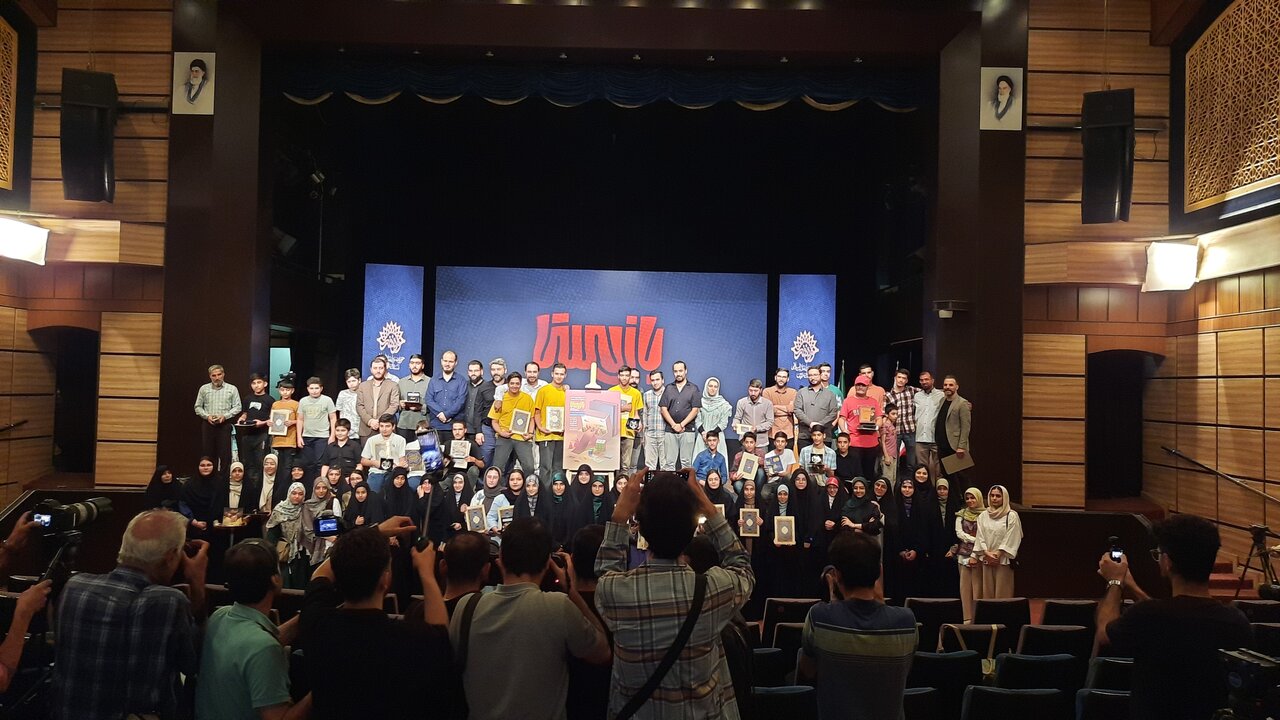
Tehran – The closing ceremony of the first national game script writing event, “Baazista,” was held at the Art Bureau in Tehran on August 4th, with the announcement of the winners of the event.
Baazista’s initial goal was to focus on game scripts, but the enthusiasm that participants demonstrated changed the course of the event, leading to the creation of several board games, environmental games and escape rooms.
At the start of the ceremony, Mohammadreza Emmamholi, secretary of the event, reported on the minutes of the event, saying, “There were nearly 3,800 participants from across Iran, and the submission of around 3,000 entries showed the high energy and enthusiasm surrounding the event. Nine environmental games and escape rooms have reached the final stage.”
He thanked the judges and mentors for their efforts, saying, “Without their cooperation, it would not have been possible to complete the last two years of journey. This first edition is not the end of the road. With the support of officials, we hope that such events will continue.”
After that, Hamed Tanmori, one of the Bargesta judges, said, “During the two days of the judges we really enjoyed the quality of the game.
Speaking at the ceremony, Seyed Amir Javid, vice-director of the International Arts Bureau, spoke to the young people in attendance, saying, “Your work was wonderful for us and was really uplifting.
“Teens may think their work will not affect big issues like war, but they need to know that what they do with Bargista will help them solve key challenges in future conflicts. Future war scenarios require impact games that can prepare decision makers to deal with a variety of situations.
Ali Yambaz, director of the Department of Children and Youth at the Art Bureau, also spoke at the closing ceremony, saying, “Serious efforts are being made to the Department of Children and Youth Art Bureau to give special attention to the topic of gaming.
“We already have a solid technology infrastructure in this area. We have a strong international position in graphic design and printing. We also have the potential to export games to regional countries. We are ahead of our competitors in some regions. We can develop collaboration and interaction with other countries.”
“If serious work is done in the field of gaming and entertainment, it can have important and impactful results. This generation is very practical, and don’t forget, it’s not just teenagers who have achieved all this.
In the final part of the closing ceremony, winners from various categories received the award. Finalists came from 10 states including Qazvin, Yazd, Gilan, Qom, Hamedan, Khorasan Razavi, Isfahan, Fars, Semnan and Tehran.
At the end of the ceremony, a poster for the second edition of the event was announced. Iran is scheduled to start in September.
In an interview with the Tehran Times, Ali Janbaz spoke about choosing a field for board games, environmental games and escape rooms for Baazista events nationwide.
“Initially we were planning to hold this event exclusively in the field of game scripting. We thought that children and teenagers could expand this emerging industry in Iran, starting with stories and stories, with a complex yet playful mind.
“We also believe that intellectual games are more effective in our country compared to other types such as computers, mobiles, and online games. These games promote unity within the family and encourage children to move away from individualism.
“In terms of domestic capabilities, it is also competitive in this area in the region. Though it may not have made much progress in the video game industry, Iran is well known in the printing industry in the region, with world-class illustration and graphic design.
“Burgista is the starting point for growth and empowerment, and could lead to the formation of a professional community of game designers in 10 years,” he emphasized.
Regarding support for the teenager-designed game, he said: “We supported and funded 20 games designed by adults last year in the Children and Youth Division of the OMID Innovation Center, which is affiliated with the Art Bureau and the Art Bureau,” he said.
“From a distribution perspective, we are committed to expanding local ties and we are also supporting the game to help teenagers see. The opportunities for mass production of some of these games will be promoted by other organizations.
Regarding the issue of limited audiences for such games in the country, Yambaz said: “Promoting the use of these games can be done through schools,” he also announced the launch of the Baazista Games League next year. Here, each participant in the current event can act as an ambassador to help expand the field. ”
Speaking to the Tehran Times, Seyyed Ali Tabatabaei, one of the event’s judges and mentors, commented on the quality of submissions and the review assignments. “One of our challenges was the high quality of the game. Thanks to the ongoing mentorship process over the past two years, participants can ask questions online from their mentors and participate in in-person sessions where possible. The final game has reached high quality.”
“The addition of several graphic designers to the event also improved the visual quality of the game. These factors made it difficult to choose the best one. I’ve been to a similar event before. I can say that the level of this event was higher than the other events.
Regarding ideas and prototypes from participants, he said: “All participants were students, and for most people, this was the first experience of designing games, so it was naturally flawed. The key point is that the mentors did not step too far in. Students themselves tried to improve their work, play other games, and explorate other games.”
“Game design is a creative endeavor, except for the knowledge element. Kids may be more creative than their age group. When this creativity merges with knowledge, a positive transformation took place, making it a game ready for production. I think we can enter the market within the next six months.”
Hossein Beigi, an 18-year-old student at Qazvin and the winner of the most creative board game award for the game “Hegmataneh”, spoke to Tehran Times about his game.
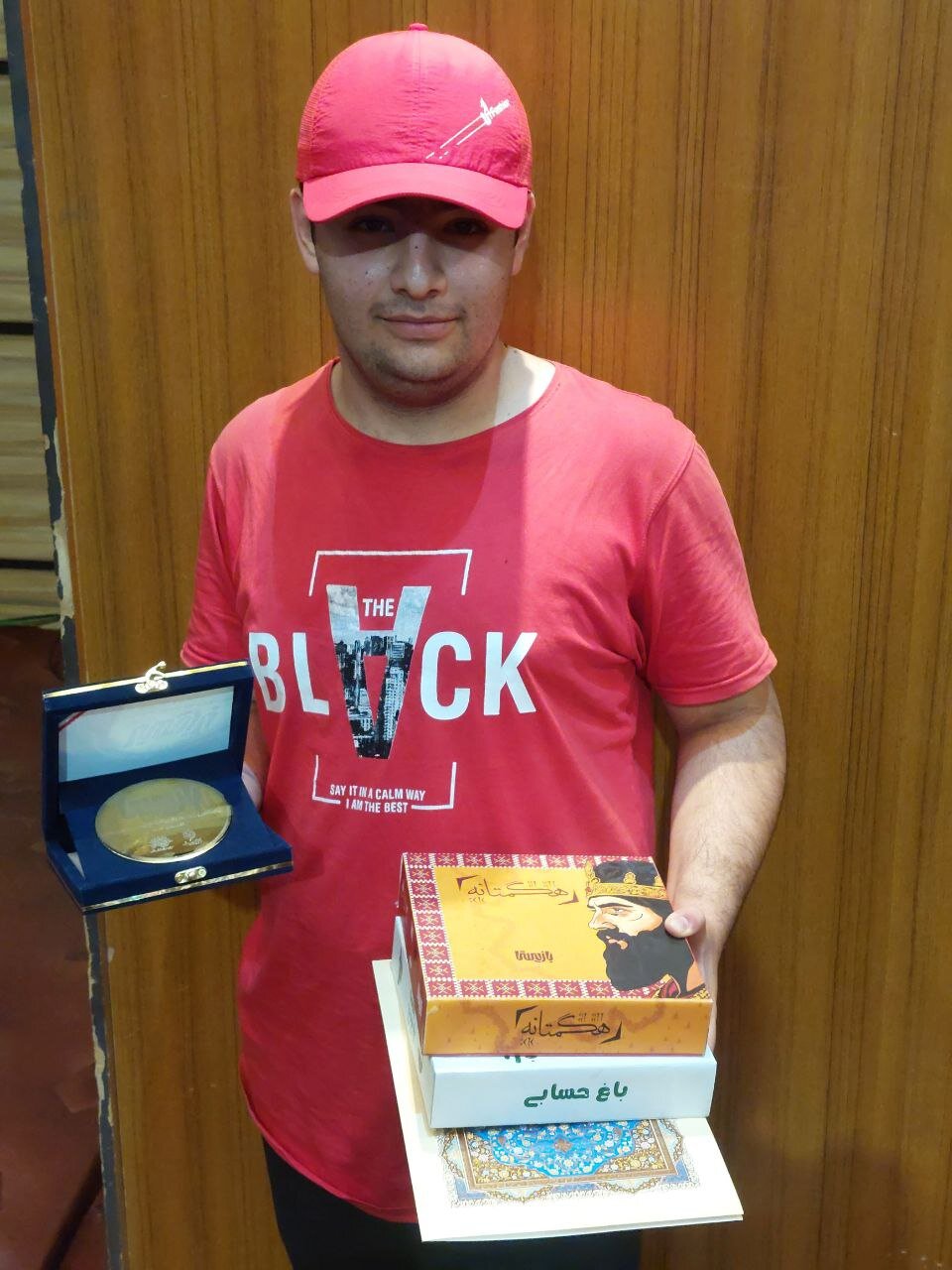
Hossein Beigi won the Most Creative Board Game Award on August 4, 2025 at No. 1 Baajista.
Hossein is one of the few participants at an event where he has gained more experience in game design. He was introduced to board games at the age of seven and became interested in designing them, and later designed several games. “Hegmataneh” is the second game in his game and will be presented as the final product.
When he chose the name “Hegmataneh” for his game, he said: “I plan a series of games under the title “Persian Empire,” starting with the early dynasties of Iran, each focusing on the thematic characteristics of that dynasty.
“The major historical event in the median period was the establishment of a central government established in the city of Hegmatane, which was considered the beginning of Iranian civilization. That’s why I chose it as my name,” he said.
Hossein said of the upcoming game in development, “Immortal Guard is the name of my next game and a prototype has been designed. It focuses on the Achaemenid Army.”
Baazista’s events are held with the aim of teaching game design, promoting non-digital games, and taking action against historical and national concepts. The ju apprentices for the first edition of the event included Fatemeh Alaeddin, Hamed Taammoli, Seyyed Ali Tabatabaei, and Ali Edriszadeh.
In addition to the virtual sessions, three in-person events were also held in the states of Kazbin, Gilan and Yazd.
SS/SAB