
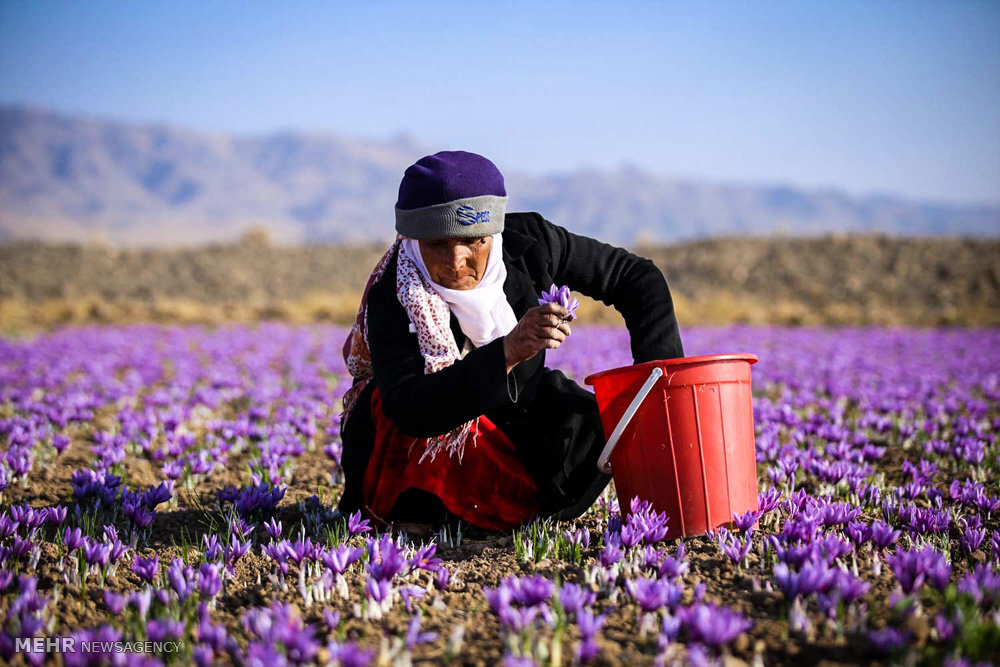
TEHRAN — Zabeh province in northeastern Iran has the potential to become a major agritourism destination thanks to its high-quality saffron and vast areas dedicated to the cultivation of this valuable crop, local officials said.
Ali Mohammadi, head of the Turbat Heydariye Zabe Cultural Heritage Department, told ISNA that one of the key capacities that can be developed with saffron at its core is agritourism.
“Fortunately, relevant ministries have adopted a proactive approach towards this type of tourism in recent years,” he said.
Mohammadi said saffron tours were launched to showcase the potential of zabeh and familiarize tourists with the different stages of saffron production. In addition to visits to saffron farms, plans are afoot to include saffron-based products in souvenir packages for travelers, tourists, and pilgrims.
He recognized October 27 as National Saffron Day and said a number of specialized festivals and tours were held in the region this year. Since the harvest season began in early October, more than 35 tour leaders have announced their readiness to guide visitors through saffron plantations, and these programs are expected to continue until early December.
Emphasizing that saffron is not only an agricultural product but also an important part of local culture, rituals and identity, Mohammadi said, “One of our main policies, along with tourism development, is to preserve traditional customs and customs associated with saffron.”
He added that efforts are underway to register these rituals as elements of Iran’s intangible cultural heritage. “The enthusiasm and joy of people during the harvest season, especially when they go to the fields to pick saffron flowers before sunrise, reflects Iran’s authentic agricultural culture. Revival of these traditions is itself a valuable cultural and tourist attraction,” he explained.
Mohammadi admitted that making Safran a prominent tourism brand in Khorasan Razavi comes with its challenges, with the biggest challenge being the lack of tourism infrastructure. To address this, consultations are being held with city managers and relevant organizations to develop and strengthen critical infrastructure, particularly in tourist villages that boast historical and natural attractions in addition to saffron production.
“The development of ecotourism resorts in these areas could play an important role in attracting more tourists and promoting long-term stays,” he added.
KD