
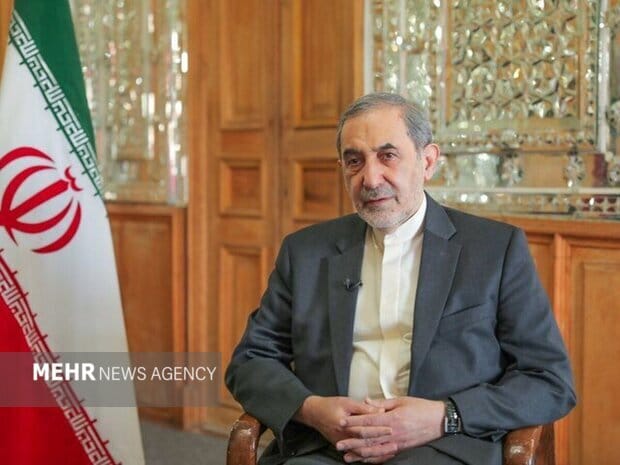
In his remarks at a ceremony in Tehran to commemorate Sheikh Safi al-Din Al-Din, Belayati addressed geopolitical concerns surrounding the Republic of Azerbaijan and the proposed Zanjur Corridor.
He said Iran’s enemies, particularly global Zionism and the United States, have long been hindered by Iran’s historic unity and deep cultural ties in the region.
“These actors are trying to undermine the foundations of Iran’s identity as a way to harm the country’s national security,” he said.
Velayati said plans like Zangezur Corridor would serve as the cover of larger geopolitical projects.
He warned that the main purpose was to weaken the axis of resistance, cut ties between Iran and the Caucasus, and impose land blockades on both Iran and Russia in the southern part of the region.
Verayati stressed that Iran’s national security remains a red line.
According to the Tasnim News Agency, the full statement of Velayati’s statement is as follows:
In the name of God, compassionate, compassionate,
Greetings and salutes to the brave and cultural people of Azerbaijan, especially the proud province of Aldabil. We would like to express our special thanks to Hassan Amelie of Ayatollah Sei of Ardabil, the leader of leadership and respected Friday prayer leader.
We also express our gratitude to all those who played an important role in honoring this prominent academic and national figure.
Dear guest, respected scholars and intellectuals,
Throughout history, and especially in the modern era of the Zionist regime and recent attacks by the US, Iran’s great nation has shown exceptional unity, vigilance and solidarity. This unity, rooted in Iran’s rich Iran and Islamic culture, has always been a source of inspiration for freedom-seeking countries around the world.
Iranian culture has two distinctive characteristics: First, internal cohesion between diverse ethnic groups. Second, the historical continuity that strengthened our ancient civilization, like the weaving of Persian carpets.
Iranian identity is always based on monotheism. From ancient times to today, Iranians follow the monotheistic beliefs. Even the ancient Iranian kings considered them to be descendants of the prophet Abraham (AS), as written by historians like Shahrestani and Masoudi.
With the advent of Islam, the Iranian people (who had previously followed the Zoroastrians, the monotheistic religion) have sincerely enveloped this God’s faith. Interestingly, according to most historians, Zoroaster himself was born from the Azerbaijan region.
Iranians have historically led the fight against oppression. From the Abu Muslim Khorasani’s uprising against Umayyadh, the efforts of Kaje Nasir al-Din Tusi during the Mongol period, and Shia movements before the Safavid period.
However, the turning point in this historic road was the establishment of Safavid province, inspired by the teachings of Sheikh Safi al-Din Al-Dabili of Iran, under Shah Ismail Safavi, after serving centuries as divisions.
Sheikh Safi al-Din Al-Dhabili, a mysterious and respectable jurist descending from Imam Musa Al-Khazim (AS), not only established a true spiritual and intellectual movement, but also united Iran by tying together mysticism, Shia and Iranian identities.
He laid the foundations for institutions and structures where signs still live in our culture today.
Today, just like in the past, Azerbaijan is a source of faith, Shia centre and pioneer of Iranian and Islamic identities.
This region has always been at the forefront of defending the territorial integrity, independence and the value of Islamic revolution, and this historic role must be preserved.
Iran’s enemies, especially global Zionism and the United States, have been hindered by this historic unity and strategic cultural depth.
They have consistently attempted to undermine the foundations of this identity in order to harm our national security.
In this context, plans such as the “Zangezur Corridor” will be pursued as cover for a wider geopolitical project.
The main goal is to weaken the axis of resistance, cut ties between Iran and the Caucasus, and impose land blockades on Iran and Russia in the southern part of the region.
The project is not only part of the American strategy to shift pressure from Ukraine to the Caucasus, but is also supported by NATO and the specific pan-Turkist movement.
However, Iran has clearly and decisively opposed these actions from the start, deploying troops at the border and implementing deterrence campaigns that show that national security is our red line.
The policy of “active prevention” rather than “passive response” is an intellectual strategy adopted by the Islamic Republic.
Heroic people of Azerbaijan – facing the Ottoman and Emperor Russia invaders, supporting commanders like Abbas Mirza and Grand Shiite scholars such as the late Shead Mohammed Mojutahed, and the Iranian territory being divided under the leadership of the colony leader, Senior Krelis of Azerbai – the company.
Today, the enemy is trying to infiltrate Iran’s geopolitical depth under the cover of a seemingly economic but actually separatist project.
However, the Iranian state continues to confront these plots, inspired by the teachings of its great figures, particularly Sheikh Safi al-Din Al-Dhabili.
Just as its sacred mysticism stood in his time, today the Iranian state thwarts the sinister plans of its enemies through unity, vigilance and faith.
May the memories of Sheikh Safi al-Din endure.
May his path continue widely.
MNA/TSN