
Buenos Aires – Ariel Feldman is an audiovisual filmmaker, lecturer in film and philosophy, a photographer supporting Palestine and denounces Israel’s colonies and genocide policies. Based on his life experience in Israel and his Jewish identity, Feldman seeks ethical recognition in the face of Israeli occupation and the suffering of the Palestinians.
He emphasizes that speaking up against Gaza’s genocide is an ethical and political obligation, resistance is a moral obligation, and defending most of the rest of humanity in the world. Argentine journalist Silvina Pachelo interviewed Feldman for the Tehran Times.
Here is an excerpt from the interview:
How did your experience live in Israel and did you begin to notice any contradictions there from your Jewish identity?
I have always been connected to Israeli life. I was born in Israel to Argentinean parents and returned to Argentina when I was seven years old. I grew up immersed in Israeli and Jewish identities in a family where my parents were active in the Left Zionist youth movement. In Israel I was the “son of Argentina” and in Argentina I was the “Israel”. That identity tension shaped me from a young age. My childhood at Kibutz was great, but at the age of 14 it began to develop politically, resulting in the first contradictions regarding colonial violence. At that time, I was only associated with the territory I occupied in 1967. The critical turning point took place in Gaza in 2009 with the “cast lead” strategy. I understood the problem as not situational, but rather the ideology of Zionism: exclusive and supreme nationalism. Since then, I have looked back at the contradictions between Judaism and Zionism. In short, my evolution took three stages. First, political perception of occupation. Second, we understand this as a social issue. And thirdly, I recognize that the roots lie in the founding ideology of a nation that clashes with the values of Judaism, as I understand it.
Tell us about your experience with Kibbutzim.
I have had two different experiences with Kibbutz. Visits as children and adults. I regularly return to Israel and experience is very different. My childhood experience was amazing. My mother was a kibbutz doctor. It was a beautiful place with socialist and humanist values within the community. At the time, Israeli politics still maintained some progressive elements. I grew up in a very nurturing environment and that left me with a deep mark. But over time, on my return I began asking historical and political questions. Then my relationship with the people there became even more difficult. I was the son of a beloved child, a doctor in Kibbutz, and my questions and comments began to create tension and discomfort.
Were you part of a political group that denounced the nature of Israel’s colonies and genocide?
yes. In 2009, in the context of the “cast lead” operation, we founded a significant group of Jews in Argentina. The operation began at the end of 2008 after a breakdown of a six-month ceasefire between Israel and Hamas. In that context, I wrote the first article that was widely distributed. Through the argument that arises – I was not yet consciously an anti-Zionist, but I cemented my anti-Zionist attitude. In April 2009, in Buenos Aires, the small group became the first important group of extremist anti-Zionist Jews in Argentina. There is an important non-Zionist Jewish tradition within the country, but it has not actively intervened in political debates historically in general. This tradition comes from the ICUF and the European bandist movement, as well as the labor and political movements of workers in Russia, Lithuania and Poland. It historically hosted anti-Zionist policies focused on the liberation of Jews from countries of origin in Europe. Our activism became stronger during and soon during the “cast-lead” operation, but later declined due to other political responsibilities in turbulent Argentina. In 2014, during another brutal Israeli campaign in Gaza, I resumed my activities from an intellectual and personal perspective, which gave me some traction. In October 2023, I wrote an article a few days after October 7th. The article attracted a lot of attention. Since then, he has continued to oppose the occupation and genocide in Gaza and the West Bank, as well as the social inequality facing Palestinians living within Israel’s 1948 Borders.
What does it mean today to speak up against Gaza’s genocide?
It is an ethical and political obligation. In the face of what’s happening in Gaza, lack of commitment is not an option. I think it’s particularly serious that most of the Jewish community, the children of Holocaust survivors, do not stand up to the genocide committed in their names. John Berger said that by ignoring it and resisting it, he can declare himself the innocence of the conspiracy. Today there are no excuses. You can’t ignore what’s going on. If they don’t intervene, they are conspiring. By denouncement of Israel through official statements, political activities, micropolitics, or actions that contribute to the suspension of this genocide. Therefore, I believe resistance is a moral obligation. It is to defend the small remains of humanity in this world.
How do you interpret Israel’s current attack on Gaza since October 2023?
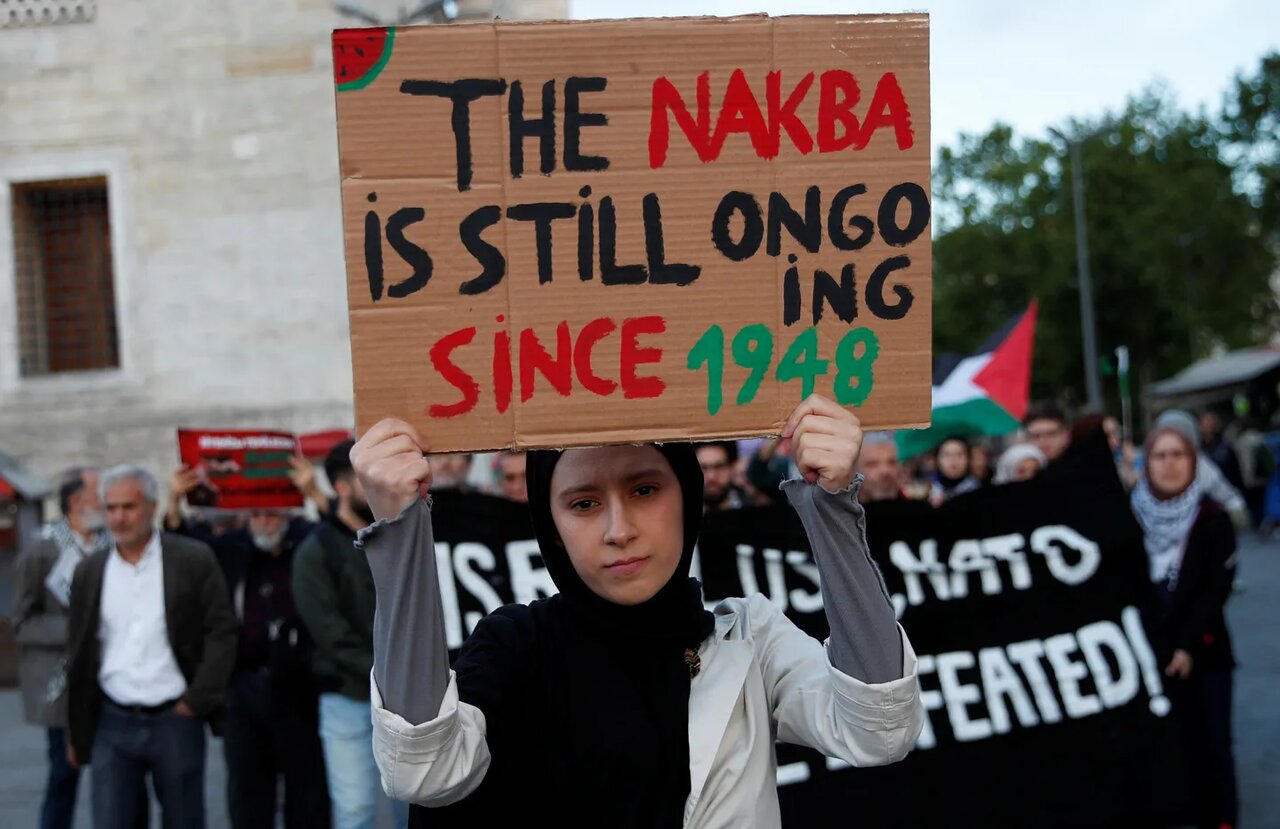
The Israeli attack continues economic and social confiscation of Palestinians, launched by the Zionist movement’s colonization of Palestine. You can discuss the starting point. In the 1930s and 40s, it was the large-scale land purchases that warded off ex-tenants and groups like Ilgan and Lehigh that ex-tenant terrorism, but the Zionist Project is a problem with crimes against humanity. It’s complicated because it was also a specific national liberation project. Those who free themselves from European oppression through the colonization of others. It was colonialism without big cities and a dream of liberation. After the capture of the West Bank, Gaza, Sinai and Golan Heights in 1967, Israel was integrated as a classic colonial force. On October 7th, I believe that Israel’s most inexplicable Zionist forces are looking for a Jewish majority from the river to the sea, seeing the opportunity to advance towards “great Israel.” Today, in historic Palestine, the population is divided roughly evenly. It has around 7 million Jewish origins and 7 million Palestinian origins (Arab, Bedouin, Christian, etc.). What we’ve seen since October 7th is the continuation of Nakba, a more cruel and tragic version than 1948. Israel aims to invalidate Gaza, gradually expelling Palestinians from the land on the West Bank, protected by the Jordan River Army. The explicit idea is to annex the Gaza and the West Bank, leaving only small Palestinians with limited rights, as in the situation of the “Israel Arabs” within the boundaries of 1948. Israel saw a window of opportunity to make this project come true. That’s what we’re witnessing.
What role does mainstream media play in legalizing genocide?
Mainstream media plays a fundamental, deplorable and conspiratorial role. Israel and these media share interests and values. They are anti-popular, olita heads, racist and deeply anti-democratic. The Israeli state is a continuation of European supremacy over the “east” that must be civilized. This is why anti-Semitic leaders and movements like Orban and supremacist groups in the US and Germany support Israel. They represent the same racist and authoritarian values reflected in Western imperialist media.
How do you distinguish Judaism from Zionism when Israel seeks to adequately represent all Jews?
It should not be difficult to distinguish Zionism from Judaism. Zionism is a recent political trend of less than 200 years, hijacking Jewish identity and retaining its position as representative. Judaism, meanwhile, is a culture and people with a history of over two thousand years, and its modern identity has been falsified as a resistance to empire, racist and Catholic Europe. It is a tradition based on experiences of resistance, deep reflexes and exile, forming a resilient identity to the realities of empire and racism. Zionism rejects its tradition, spis diasporic culture and promotes the “new Jews” who are nationalists, assertive, European-style colonies. Therefore, the anti-Zionist Jewish movement must commit to this humanist (Tikkun Olam) who has committed to this resistance, equality, justice and restoration, and reclaim this resistance Judaism as a denial of oppressive forces and a defence of minorities.
What role do art, film and photography play in making the situation in Gaza visible?
This is a complicated question. For me, images alone do not create political awareness or shock. They always come with the text and the ideology they approach. For example, a photograph of a hungry child can be interpreted as a general reality of all armed conflicts or as a result of Israeli oppression. As Susan Sontag pointed out, the political influence of the image from the Vietnam War was related to the US’s past political perceptions. Photos of the girl burned by Napalm and the co-soldiers, unlike countless other US interventions, contributed to the public’s opposition to the war. Israel seeks to block images and limit the work of journalists because of the dialectical relationship between images and ideology. One side is not unilaterally decided. Images are powerful and help shape political perceptions. In Gaza, photos of hungry children have forced changes to previously silent Argentine media and human rights groups, changing even more consciences, in order to acknowledge that genocide is occurring. That’s why I think images are so important, they always depend on context and social political consciousness, but it is influenced by many factors.
In Argentina, especially, how do you see solidarity with Palestine on the continent?
In Argentina, the situation is special. There is a very small Palestinian community and a very large Jewish community. Unlike the United States, where Jews migrating to Israel are often extremist Zionists, this is different in Argentina. It has close ties with Israel not only symbolically but also family-wise. It is rare that Argentine Jewish families do not live relatives or live in Israel. This kinship was the result of Argentina’s political and economic crises, including the 1990s and the military dictatorship of 2001-2002, which encouraged the Jewish migration of Argentina to Israel. The attack on the Israeli Embassy in Argentina in 1992 and the AMIA bombing in 1994 created a strong identity with Israel as a victim of the same conflict. This has led to Israel’s hijacking of Judaism, making Argentine Jewish community perhaps one of the most Zionists outside of Israel. As a result, non-Jewish media and political movements have excessive self-censorship and caution to ensure that they do not contradict the community that primarily advocates the Israeli state. This permeates Argentine Palestinian solidarity. Argentina has historically been much weaker than other countries. In Buenos Aires, there are no large demonstrations in support of Palestine, like other major cities such as London, New York and Paris. However, the current genocide cannot be denied, making it increasingly difficult to maintain a strict ideological position in the face of evidence.
What message would you like to leave to anyone who is still opposed to genocide?
Self-censorship causes distress. Outside, everything feels more important and authentic. The fear that comes from speaking is not bad. It’s a sign that something is important to you and something is still hitting your chest. The problem is confusing the anguish and fear that arise from denial or ignore it. We are responsible for ourselves and the humanity within us. We are not isolated beings. Many people die of hunger and malnutrition. People are being slaughtered. The suffering of the Palestinian people, which did not begin on October 8th, escalated evilly. That’s why it’s up to us to give our voice and do everything in our power to stop this genocide.