
Tehran, an international tropical day observed annually on June 29th, focuses on the importance of the tropical as a global biodiversity hub, and the challenges facing the region due to climate, geography and urbanization.
Covering almost 40% of the Earth’s surface, the tropical zone hosts around 80% of the world’s biodiversity and a substantial portion of its cultural and linguistic abundance.
Tropicals are the territory of the Earth, and are roughly defined as the region between the tropical cancer and the tropical Capricorn. Although topography and other factors contribute to climate change, tropical locations are usually warm and there is little seasonal change in daily temperatures.
A key feature of the tropical is the prevalence of rain in wet interior regions near the equator, with seasonal rainfall increasing with distance from the equator. Tropical abundance is also central to achieving the United Nations Sustainable Development Goals (SDG).
By 2050, the region will host two-thirds of most people and children in the world.
However, tropical regions face several challenges, including climate change, deforestation, logging, urbanization, and demographic changes.
Consistent with a higher level of poverty, many people experience nutritional deficiencies in the tropical regions than in other parts of the world.
The proportion of urban population living in slums is higher than in the tropical regions than in other parts of the world.
Countries within the region, spanning Asia, Africa, Latin America, and parts of Oceania, have witnessed rapid population growth and urbanization, but these developments have urgent issues such as deforestation, habitat loss, pollution and socioeconomic inequality.
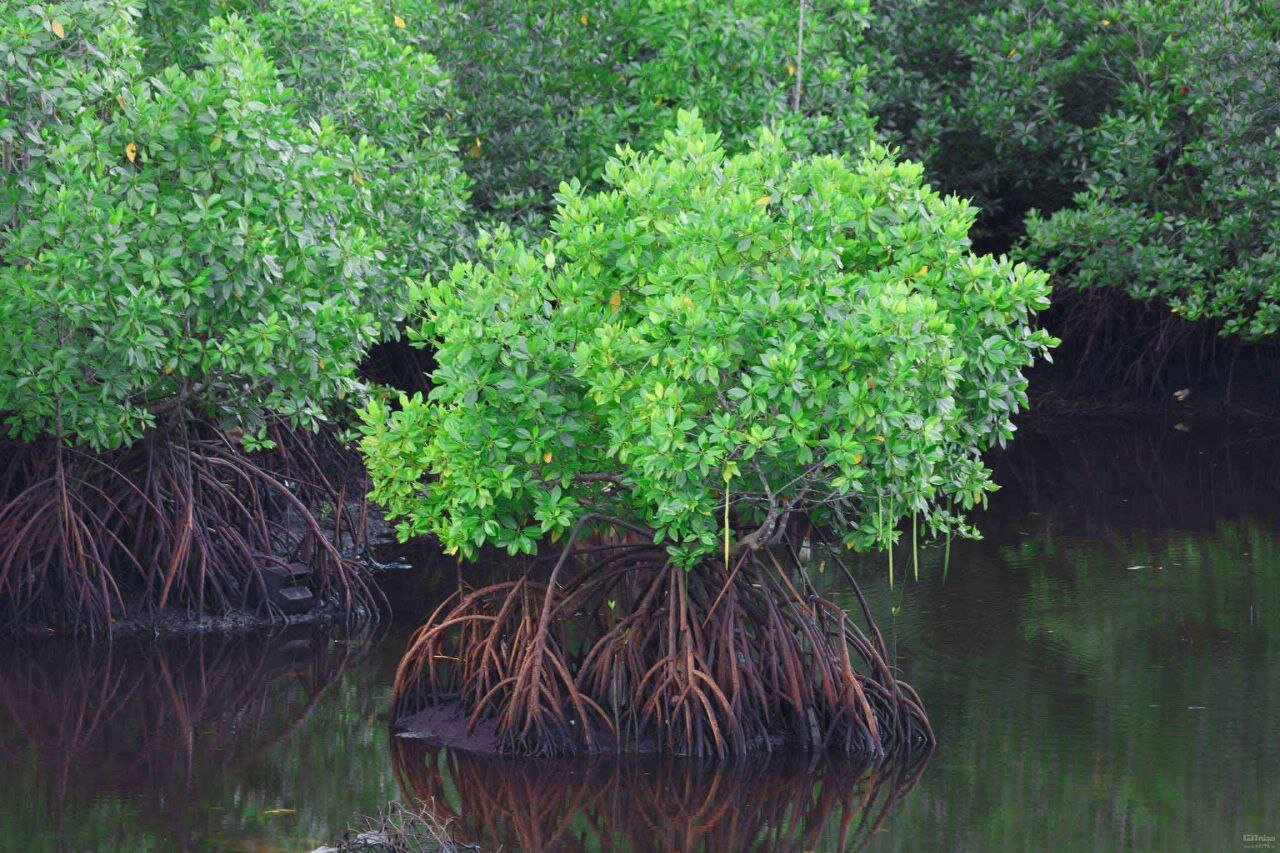
Additionally, the tropics host almost 95% of the world’s mangrove forests and 99% of mangrove species.
Mangrove trees, as a wonder of the marine environment, offer many benefits to a variety of species, including birds, fish, crustaceans and even terrestrial animals, and stabilize the soil. Mangrove forests are rich ecosystems that support planets and humanity in unique ways by providing conditions for fish growth, carbon storage and fighting floods.
Researchers at the National Institute of Marine Science reveal that mangrove ecosystems in the northern Persian Gulf face a variety of environmental and anthropogenic pressures.
Iran’s mangrove forests consist primarily of Avisenna Marina, known primarily as Hara, and are named after the great Iranian scientist Avisenna, or Abu Alisina, of the 11th century.
This study uses a multidimensional approach that includes satellite-derived, drone-based, and field-measured data to assess the ecological dynamics of mangroves in Deyer City (MDC) in the northern Persian Gulf.
Satellite images from Google Earth (2011–2022) reveal changes in the MDC region, with significant planting efforts until 2018, followed by rapid degradation.
Mangrove forests, which initially covered 2.2 hectares in 2011, had expanded to 3.2 hectares by 2015 due to planting efforts, but by June 2022 it had decreased to 1.7 hectares.
The construction of non-standard roads and bridges in 2018 disrupted freshwater flows from the upper regions and emerged as a major factor in degradation.
Drone-based observations for March 2023 provided a detailed map and revealed that 44% of healthy mangroves were damaged. Field measurements carried out in November 2023 showed higher salinity levels in MDC compared to other adjacent mangrove regions.
Principal Component Analysis (PCA) also showed differences in environmental conditions for MDCs compared to environmental conditions for the two sampled habitats (Nayband and Melgonzeh).
This study suggests that long-term multifaceted surveillance, particularly at various points within mangrove ecosystems, is essential for effective management.
This study also highlights the important need to address human-induced threats to mangrove ecosystems. Emergency conservation and management strategies are essential to mitigate the effects of artificial pressures and to ensure the survival of mangrove ecosystems facing environmental challenges.
Additionally, the impacts of climate change should be taken into consideration when planning conservation and management strategies.
Temperature, sea level rise and increased salinity pose a long-term threat to mangroves.
Therefore, mitigation of both human-induced and climate-related stressors is essential to develop integrated conservation strategies combined with restoration efforts and to increase the resilience of mangrove forests.
mt/mg