
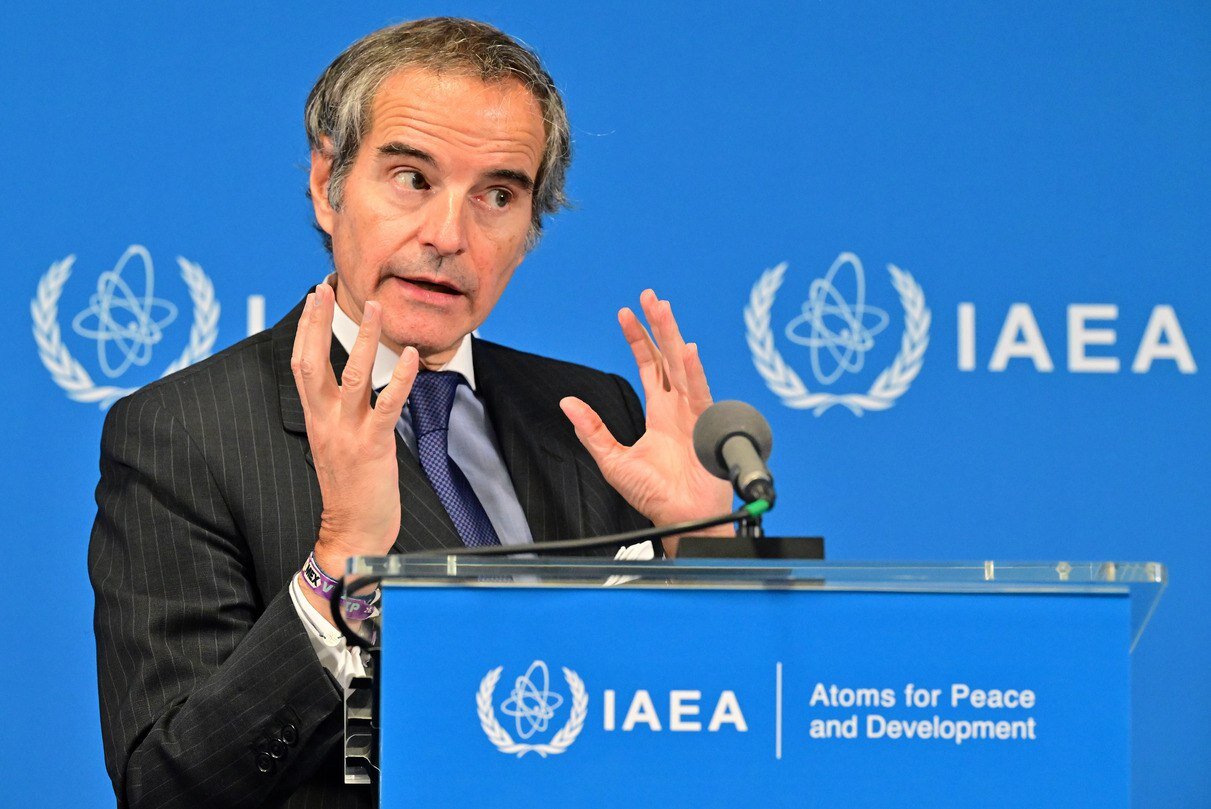
It is said that 400 kilograms of uranium, which Tehran probably had, was enriched to 60%. Grossi said, “I don’t know where this material is.”
“Some of them may have been destroyed as part of the attack, but some may have moved. So at some point there’s a need for clarification,” the IAEA chief reported Tass.
Previously, CNN cited the sources, reporting that the US intelligence community believes that the US strike against Iran did not destroy key elements of the country’s nuclear program.
The Zionist regime fought a war of attack on Iran on June 13, attacking Iranian troops, nuclear and residential areas for 12 days, but the US carried out a military attack on three nuclear facilities in Iran, Natanz, Fordou and Isfahan on June 22.
Iranian troops carried out a powerful counterattack shortly after the attack. The Islamic Revolutionary Guard Aerospace Force implemented 22 waves of retaliation missiles against the Zionist regime as part of Operation True Promise III, which caused significant losses to cities throughout the occupying territories.
The battle was suspended due to a ceasefire that came into effect on June 24th.
Hamid Reza Haji Babaei, vice-chairman of Iranian parliament, said on Saturday that Iran will no longer allow Rafael Grossi, director of the International Atomic Energy Agency (IAEA) to install surveillance cameras at nuclear facilities.
He said the Iranian decision comes from discovering sensitive facility data in documents obtained from the Israeli regime.
MNA/