
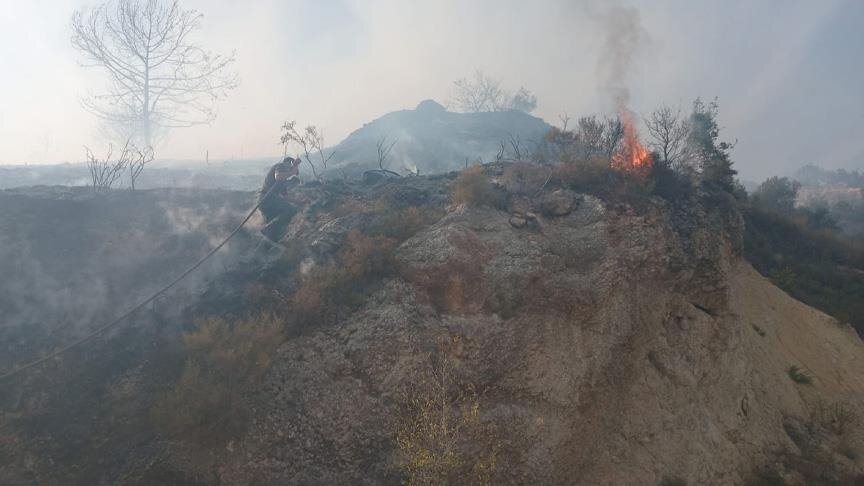
BEIRUT — Lebanon’s forests, farmland and green areas are once again under siege. The recent wave of wildfires sweeping across the country is reminiscent of the devastation of 2010, when hundreds of hectares of pine and oak trees disappeared in smoke and ash.
Nearly 30 fires are burning at the same time, with more than 7,700 recorded this season alone, raising urgent questions about accountability. Beyond local negligence, all signs point to the deliberate hand of Israel’s enemies, who have started fires across the southern regions of Al-Aisiyah, Jarmak, Reyhan, and Alamta, turning natural landscapes into battlegrounds.
This is no ordinary attack. Targeting forests and fertile land represents a calculated attack on Lebanon’s environmental, food and water security. The aim is not simply to scorch trees, but to undermine resilience, weaken communities and instill long-term vulnerabilities.
These fires are not accidents. These are a continuation of years of repeated policies and a systematic operation that has already destroyed thousands of hectares of productive land, forests and grasslands in recent years. Lebanon’s ecological scars persist, leaving communities vulnerable to the next natural or man-made disaster.
While many fires are caused by human negligence, the intervention of enemy Israel exacerbates the crisis, especially during prolonged drought and delayed rainfall. Areas such as Akkar, Mount Lebanon and Nabatiyeh are particularly at risk and on the verge of ecological collapse.
Notably, this fire occurred just one day after Lebanese military lawmaker Ghada Ayoub publicly claimed that Hezbollah was storing weapons in those forests, a claim suspiciously consistent with a sudden outbreak of fires.
Environmental experts warn that deliberate fires will reduce vegetation, reduce biodiversity and undermine forests’ ability to absorb carbon, exacerbating the climate crisis that threatens Lebanon and the region alike.
Lebanon’s response must be comprehensive. Civil defense needs to be strengthened, public awareness needs to be expanded, and surveillance systems need to be modernized. However, the ultimate responsibility lies with national and local governments, who must protect land, implement preventive measures and prepare emergency plans to withstand external aggression.
Fires set by Israel’s enemies are a dual threat: military and environmental. They don’t just burn land. They attack the very foundations of livelihoods, food security, economic stability, and national resilience.
Lebanon faces an urgent challenge to protect its land, communities and future. National strategies must combine vigilance, forest protection, and coordinated private and government action. By protecting Lebanon’s green heart, the country protects its sovereignty, its people, and the fragile livelihoods of its homeland.