
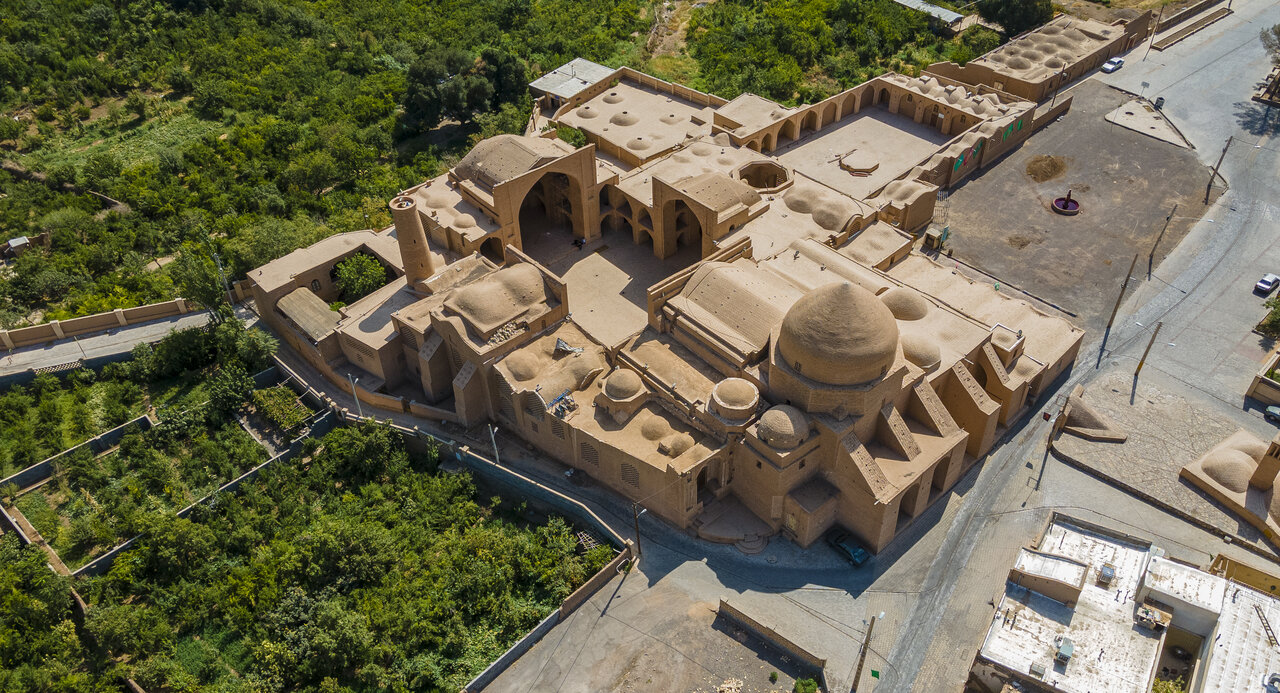
TEHRAN – Iran has placed 17 of its most iconic mosques on UNESCO’s Tentative List under the collective name “Mosques of Persia,” paving the way for possible future inscription on the World Heritage List.
This series of nominations covers mosques from different historical eras and different provinces, highlighting the evolution of Islamic architecture in Iran from the earliest early years after the emergence of Islam to the late Qajar dynasty. This effort aims to demonstrate how Persian architecture not only absorbed Islamic spiritual and structural concepts, but also influenced the development of mosque architecture throughout the Islamic world.
According to Iran’s Ministry of Cultural Heritage, Handicrafts and Tourism, the proposed “Persian Mosques” series includes some of Iran’s most representative, influential and distinctive mosques. Together they show the full trajectory of Persian mosque architecture, from early columnar halls to monumental four-iwan courtyards adorned with intricate tilework and towering domes.
This nomination emphasizes the continuity of ancient Persian design elements such as iwans (porches), domes, and courtyards, and their integration with features of Islamic architecture. Many of these features trace their roots to pre-Islamic Iranian structures, such as Achaemenid, Parthian, and Sasanian fire temples and palace halls.
The oldest examples proposed date back to the first centuries of Islam, such as the Masjideh (or Masjed Jamek) in Fakhraj, Yazd province, and the Talihaneh Mosque in Damgan, Semnan province. The Fakhraj Mosque is considered one of the oldest mosques in Iran, and still retains its original adobe structure and simple arcades, reflecting the early stages of mosque construction in Iran.
The Tarikhane Mosque in nearby Damgan marks the transition from pillar-based to pier-based architecture. Its round brick piers and heavy arches recall Sassanid architectural methods and indicate a continuation of pre-Islamic building techniques adapted to Islamic worship.
Another early example, the Masjid-e-Jameh at Sabeh, was originally built in the first century of Islam and expanded over time, reflecting the gradual transformation of early prayer halls into more complex congregational spaces.
The Friday Mosque of Neiris in Fars province represents one of the earliest uses of iwans (vaulted open halls) in Persian mosque architecture. Its structure, built in stages from the Buyids to the Ilkhanids, shows the early fusion of Iranian spatial concepts and Islamic religious needs. Similarly, Jamek Masjideh in Natanz embodies the mature domed and iwan style of the Seljuk and Ilkhanid periods, characterized by sophisticated stuccowork and balanced proportions.
The Masjid-e-Jameh of Nain, Ardestan, and Zavareh, all in central Iran, trace their architectural evolution from a pillared hall to a fully developed four-iwan layout. The Mosque of Zavare, dated 1135 AD (530 AD), is the earliest known example of a complete four-iwan plan, a design that later became a characteristic feature of Persian mosques.
Perhaps the most important example of Persian mosque architecture is Masjid-e-Jameh in Isfahan, which has been included in the World Heritage List since 2012 and is once again included in the serial nominations as a reference point. Built over 12 centuries, it stands as a living record of continuous architectural adaptation and innovation. The shift from a colonnaded plan to a four-iwan configuration in Seljuk-era mosques became the prototype for mosque design in Iran and throughout Central Asia.
Masjid-e-Jameh in Yazd, with its two minarets and high gates, exemplifies the later development of this style. Its tall iwans and elaborate tiled decorations demonstrate the craftsmanship of the Timurid and Muzaffari dynasties, which elevated Persian mosque architecture to new heights of art.
Illustrative buildings from other regions, such as Masjid-e-Jameh in Gonabad and Masjid-e-Malek-e-Zozan in Khorasan province, demonstrate the regional adaptation of the Four Iwan form and the resilience of Persian architectural traditions through successive dynasties.
The Safavids (1501-1722) ushered in a golden age of Persian mosque design. In Isfahan’s UNESCO World Heritage Site Naqsh-e-Jahan Square, two mosques, Masjid-e-Imam (also known as the Shah Mosque) and Masjid-e-Sheikh Lotforah, stand as masterpieces of tilework, geometric patterns, and spiritual harmony.
Built under Shah Abbas I, Masjid-e-Shah is famous for its monumental blue dome and intricate layout that fits the urban shape of the square while oriented the mosque perfectly towards Mecca. The nearby Sheikh Lotfollah Mosque was designed as a private sanctuary for the royal family and is famous for its delicate proportions and the brilliance of its interior dome.
The Aka Bozorg Mosque in Kashan and the Sepasaral Mosque in Tehran represent the continuation of Persian architectural principles into the late Islamic period. The Aka Bozorg complex, a combination mosque and madrasa built around a sunken courtyard, was built in the 19th century and is known for its spatial harmony and balance.
Built in the late 19th century under the Qajar dynasty, the Sepasaral Mosque (later renamed the Shaheed Motahari Mosque) embodies the enduring influence of traditional Persian design, such as iwans, domes, and tile decoration, integrated with the capital’s emerging urban form.
The Masjid-e-Jameh at Semnan is a later addition to this series group and continues this long architectural lineage, combining early mosque structures with Qajar period decorations.
Experts say Iran’s nomination document highlights that Persian mosques are not only religious buildings, but also urban and artistic structures that embody centuries of cultural exchange, technological innovation and spiritual symbolism. Additionally, the selected series aims to highlight the central role of Iranian architects and craftsmen in shaping the Islamic world’s broader architectural identity.
morning