
Beijing – As part of a media exchange programme hosted by the China International Press and Communications Centre (CIPCC), I had the opportunity to visit Beijing Polytechnic University with a group of international journalists on Monday.
The visit, aimed at providing deeper insight into China’s development and society, offered more than just a tour of academic institutions.
Among the highlights of the visit was a tour of the Faculty of Automotive Engineering, a facility with advanced technology and training systems. What impressed me most was the university’s commitment to practical and practical learning, seamlessly integrated with theoretical instruction. Students were actively involved not only in textbooks, but in actual automotive systems and cutting-edge equipment. The level of infrastructure and technical support reflects important national investments in future talent.
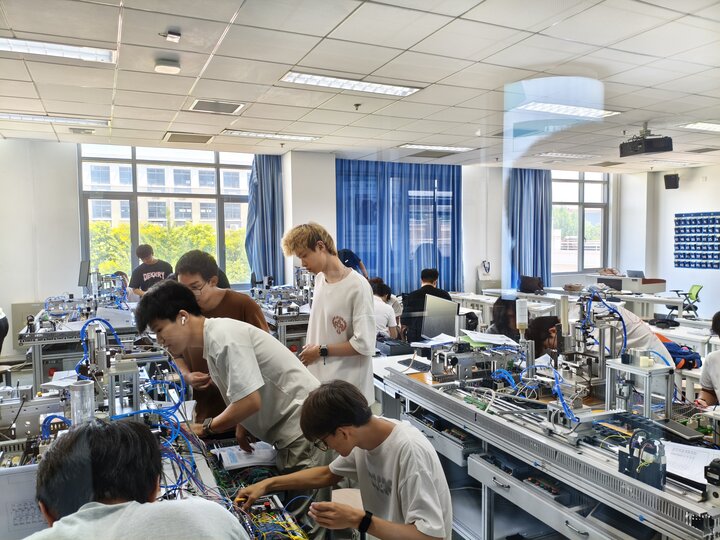
As I observed the scale of resources I was devoted to training students, problems naturally came to mind. It was a posing for Chiang Jianfeng, the vice president of Beijing Polytechnic University, where I was leading the visit.
I asked how the university would ensure that these well-trained students remain in China after graduation, rather than moving abroad for work. In other words, how does China address the Brain Drain problem, especially given the enormous investments to cultivate young professionals?
Chen’s reaction was profound and clear. “Where they go, they serve humanity, regardless of whether it’s China or elsewhere.”
It was a powerful and unexpected answer. It challenges the commonly held notion that state investment in talent must bring national benefits. Chen further explained, “Beijing Polytechnic University is actively welcoming not only Chinese students but international students to study at university, return to the country after graduation and contribute to the development of human civilization.”
This philosophy is deeply rooted in President Xi Jinping’s vision of building “a community with a shared future for humanity,” he added. In this vision, knowledge and innovation are global commodities and to raise society where it is applied.
After hearing about Chen, I realized that the classrooms and labs we visited were part of a broader mission to serve humanity through knowledge, cooperation and shared growth, not only to form China’s next generation of engineers and scientists.
The CIPCC programme has given us the opportunity to look beyond the headlines and experience the deeper layers of China’s development. My visit to Beijing Polytechnic University was not just an academic tour, but a window into a country that is boldly investing in education, but it looks not only at itself but at the world.
In an age where many countries were turning inward, China’s message was clear. True progress lies in developing talent. It’s not to keep it up, but to share growth.