
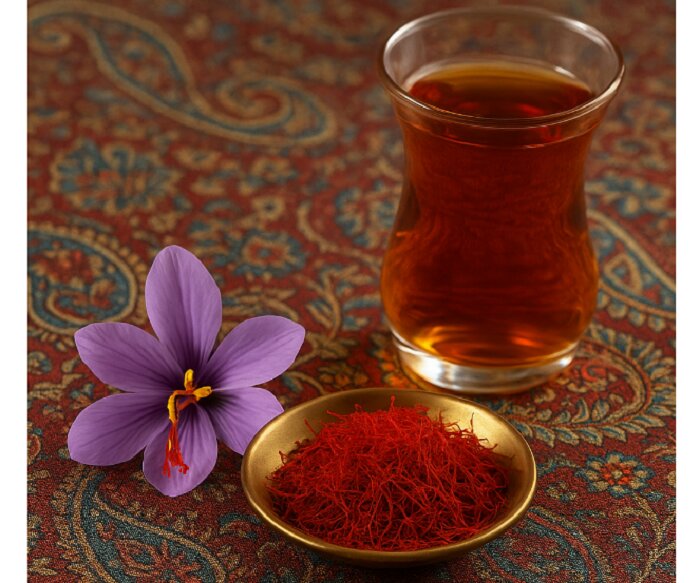
Saffron is one of the most valuable spices in the world. It is derived from the red stigma of the Crocus sativus flower and is prized for its bright golden color, rich aroma, and unique flavor.
Although its exact original homeland is debated, many experts place its roots somewhere in ancient Persia/Iran, the eastern Mediterranean, or Mesopotamia. In any case, Iran has long been the center of saffron cultivation.

In Iran, saffron is mainly grown in arid or semi-arid regions with suitable soil and climate. Major provinces include Khorasan-Razavi province (particularly around Turbat-e-Heydariye, also known as the “red capital”), South Khorasan province, and parts of other provinces such as Fars and Kerman provinces.
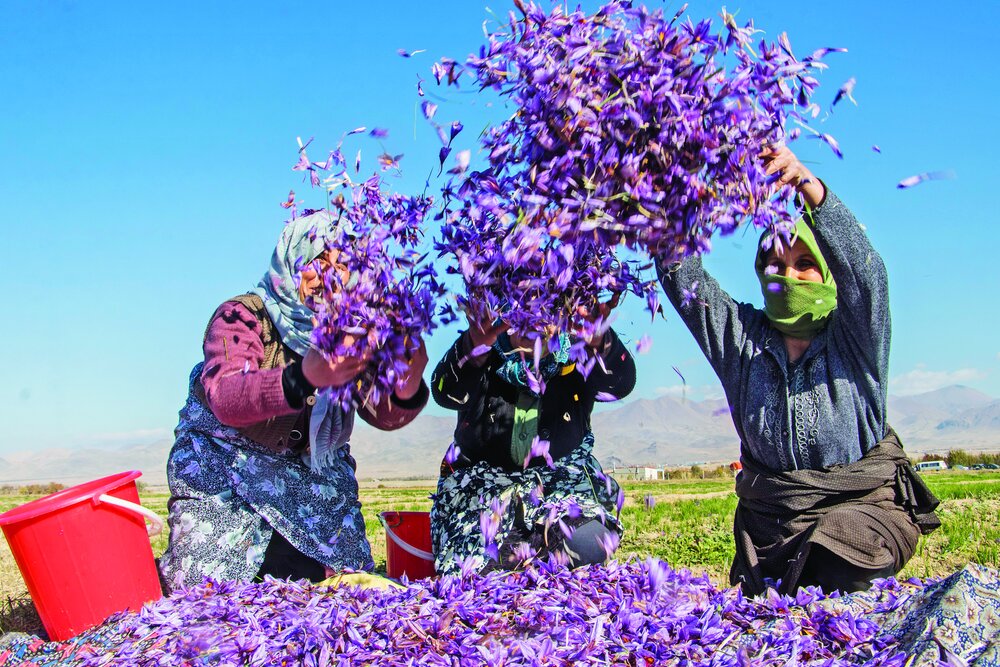
In terms of quality, Iranian saffron has a very high reputation all over the world. Climatic conditions, traditional harvesting (by hand) and processing methods result in a rich color, strong aroma and excellent flavour.

Learn more about Iranian saffron varieties
Iranian saffron is classified based on the stigma part used and its quality. The main types are:
Super Negin is the highest quality Iranian saffron and is world-famous as the finest product. This type is characterized by long, thick, unbroken red threads that are carefully separated from the yellow or white parts. Superkneegin’s vibrant, uniform appearance is matched by its extraordinary potency. Its color intensity (crocin) rating on the ISO scale is consistently above 250, offering the deepest color and aroma of all saffron varieties. To identify a true superneggin, look for thick, straight, untangled threads that don’t contain any yellow styles. Super Nasin’s superior quality and high aesthetic value make it a top choice in premium markets, fine restaurants and the pharmaceutical industry where both purity and potency are paramount.

Negin saffron is highly valued among Iranian saffron and is known for its excellent balance of top quality and competitive value. Unlike the included Daste, this grade is composed of professionally treated pure all-red saffron thread. Although it is a high-purity thread similar to Super Negin, the twisted thread has a slightly more natural appearance and is less uniform.
This special saffron from Iran is prized by culinary experts and the world market for its amazing benefits. Its color intensity (crocin) is highly concentrated, with ISO 3632 standard ratings typically in the 220-250 range. This means it brings vibrant, deep colors and rich, powerful aromas and flavors to any dish. Its outstanding performance and stunning appearance make it popular among discerning consumers who want superior quality without paying the price of top-of-the-line super knee-jean grades.
Sargol saffron, which means “top of the flower” in English, is a very popular pure Iranian saffron. This grade consists only of red threads of saffron flowers, without any yellow styles. The threads are shorter and more delicate than Negin and Super Negin Saffron, but they have the same strong coloring power.

Pushhar saffron is a unique variety of Iranian saffron that offers a good balance between quality and cost. This grade is easily recognized by its red saffron threads and small sections (1-3 mm) of yellow saffron styles. It is important to know that the presence of yellow parts is completely natural and does not indicate a lack of quality in the red stigma itself.
Daste saffron, also known as bunch saffron, is the most complete and authentic Iranian saffron. This grade is characterized by a neat bundle of threads all the way from the deep red stigma to the yellow and white saffron style. This type is a testament to traditional harvesting methods and is prized for its pristine, authentic shape. Although the presence of yellow areas means that its coloring intensity is low (typically ISO 3632 standard ratings range from 150 to 170), Dasteh provides a pure and unadulterated experience. This is an ideal choice for consumers who appreciate the utmost authenticity and visual appeal of saffron yarn. Daste is a great option for making saffron tea and is preferred for traditional dishes where its unique characteristics are highly sought after.
Impressive health benefits of saffron

Saffron, also known as the “red gold” of spices, is more than just a flavor and aroma component. Not only has it been used in cooking, medicine, and ritual for thousands of years, but it also offers an incredible range of health benefits, making it a true treasure of nature.
Rich in antioxidants: Saffron contains compounds such as crocin, crocetin, safranal, and kaempferol that help protect cells from oxidative stress.
Mood enhancer: Research suggests that saffron may help improve mood and reduce symptoms of mild to moderate depression.
Cognitive Support: Some studies have shown that saffron may aid memory, learning, and protect against neurodegenerative conditions.
Heart Health: Saffron improves blood circulation and helps regulate blood pressure.
Anti-inflammatory: Contains compounds that reduce inflammation in the body.
Digestive Aid: Traditionally, saffron is used to support digestion and reduce stomach discomfort.
Menstrual Support: Saffron helps relieve symptoms of menstrual cramps and premenstrual syndrome.
Skin and Beauty: Antioxidants and vitamins improve skin tone and protect against sun damage.
Potential cancer support: Early research suggests that saffron compounds may help inhibit the growth of certain cancer cells, but more research is needed.

Iran is the world’s main supplier of saffron
In terms of exports, Iran dominates the global saffron trade. For example, Iran’s saffron exports in 2022 were approximately 215,879 kg and valued at approximately $201.7 million.
In the Iranian year ending March 2025, Iran exported approximately 214,300 kg worth USD 184.7 million. Top buyers include the United Arab Emirates, Spain, and China.
The top exporters of saffron in 2021 are Iran ($154,318.37 thousand, 262,974 kg), Spain ($44,257.98 thousand, 396,417 kg), European Union ($38,299.91 thousand, 126,841 kg), United Arab Emirates ($10,290.49 thousand, 107,699 Kg), Greece ($6,110.15K, 30,899 Kg).
Report by Marji Rahmani