
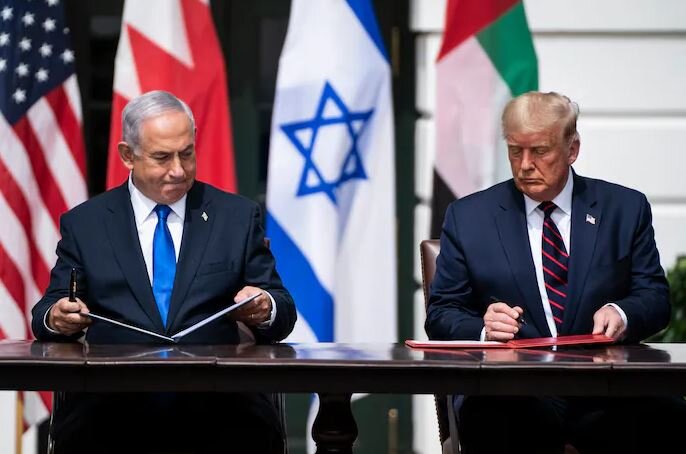
Tehran – US-Israel relations are the pillars of American foreign policy in West Asia, affecting security dynamics and economic alliances. Their military and economic partnerships remain strong, but recent events, particularly the Israeli war on Gaza and Iran’s peaceful nuclear program, have rekindled questions about the true nature of their ties.
Media reports suggest a growing tension between Donald Trump and Benjamin Netanyahu. This includes reports that have been currently deleted by the Wall Street Journal.
Trump vs Netanyahu
A recent call between the two has encouraged speculation about a conflicting approach to Iran. Trump said he defended diplomacy and publicly announced that he warned Netanyahu not to disrupt nuclear negotiations with Tehran. However, Netanyahu continues to push for military action and strengthens Israel’s hard-line stance on Iran’s nuclear program.
Despite these obvious differences, history suggests that Washington and Tel Aviv routinely choreograph their disagreements. This is a strategy designed to keep Iran under pressure while maintaining diplomatic flexibility. Historical patterns show that Israel’s threat to Iran is exploiting nature rather than a true course of action. Netanyahu’s war against Iran has been ongoing since the day he became Israel’s prime minister. Former Israeli Minister Ehud Barak admitted that Israel was approaching three attacks on Iran between 2010 and 2012, but abandoned the plan every time. Rather than showing true intentions for war, these threats seemed to serve as pressure tactics, urging the US and its allies to tighten sanctions against Tehran. In 2012, Israel once again hinted at a preemptive attack, but the Obama administration exploited the threat to secure global support for economic sanctions. This pattern suggests that Israeli military rhetoric acts as a negotiation tool rather than a true pioneer of war.
The “good police, bad police” strategy has long shaped Washington and Tel Aviv’s approach to Iran, ensuring diplomatic engagement while maintaining pressure on Tehran. Today, the United States continues to hold its position as a diplomatic mediator, maintaining the credibility of negotiations by defending sanctions relief and diplomatic outreach. Meanwhile, Israel maintains its military threat and has given Iran the advantage through targeted rhetoric, secret operations and regular escalation.
Security and Economic Bonds: Partnerships Beyond Rhetoric
Despite public theatre, US-Israel’s military and economic cooperation remains unchanged. Washington provides Israel with billions of dollars of military aid each year, ensuring that it maintains the so-called qualitative military edge (QME) in the region. The funding supports advanced defence technology, weapons procurement and military training. Missile defense cooperation between the US and Israel is the basis of the security partnership, along with joint initiatives focusing on systems such as the Iron Dome, David’s Sling and Arrow. These technologies play an important role in intercepting rockets and ballistic missiles.
The US-Israel Free Trade Agreement (FTA) promotes numerous annual trade and economic ties across multiple industries. This partnership has expanded beyond traditional defense contracts, increasingly besieging AI-led military technology and energy exports.
Fallout after the Gaza War: Diplomatic Criticism with No Consequences
Following Israel’s war with Gaza, Western allies have expressed concern about Tel Aviv’s military action, but concrete policy changes remain limited. Germany, the UK and the US each issued formal denunciations, indicating the scale of diplomatic dissatisfaction against civilian casualties and the Israeli attacks. However, while some countries have launched temporary sanctions and trade reviews, the core military aid flow is unaffected, highlighting the persistent nature of Israel’s security with Western countries.
Despite the increased scrutiny, these criticisms seem largely symbolic, lacking substantial measures that change the trajectory of US-Israel defence cooperation or economic partnerships. Western countries, including the United States, are increasingly captured in delicate balancing acts as they seek to maintain their long-standing alliance with Israel while tackling the growing Arab concerns about the war in Gaza. This diplomatic tightrope is shaped by strategic economic interests, public opinion and regional stability, forcing Western policymakers to maintain strong ties with Israel without alienating key Arab partners.
The suspension of Saudi Arabia’s normalization consultations with Israel indicates that Tel Aviv’s actions in Gaza could endanger a wider regional alliance. The United Arab Emirates and Bahrain, signatories of the Abraham Agreement, face domestic pressures to reassess Israeli relations, complicating Western efforts to expand the normalization agreement. Meanwhile, Arab-led advocacy has pushed the government to intensify public scrutiny in the West, promote protests across Europe and North America, and reevaluate unconditional support for Israel.
The future of US-Israel relations could depend on how effectively Washington navigates these competing interests, ensuring that the alliance with Tel Aviv remains intact without alienating its major Arab partners. Western criticism of Israel has escalated, and Trump was the first to visit Arab countries rather than Israel, but substantial policy changes remain unlikely as strategic interests continue to negate temporary economic interests. However, the influence of Arab countries can still direct Western narratives in ways that challenge Israel’s long-term relationship with the West.