
TEHRAN – The late leader of the Islamic Revolution, Seyyed Ali Khamenei, who consistently emphasized national unity and considered division a deep wound to Iran’s long-standing identity, has now become, through his martyrdom, a central symbol of empathy and solidarity for all Iranians. He sacrificed his life to protect the integrity of Iran.
He was martyred in the very first moments of the US-Israeli attack on February 28th. On Thursday, people in Tehran mourned the 40th day of his absence, marking one of the most emotional days since his death.
Over the past 40 days, these same people have endured severe violence, lost loved ones, and witnessed the destruction of hospitals, schools, and universities. But they have come together to ease the weight of this grief and to show that they understand his teachings and respect his legacy, especially unity.
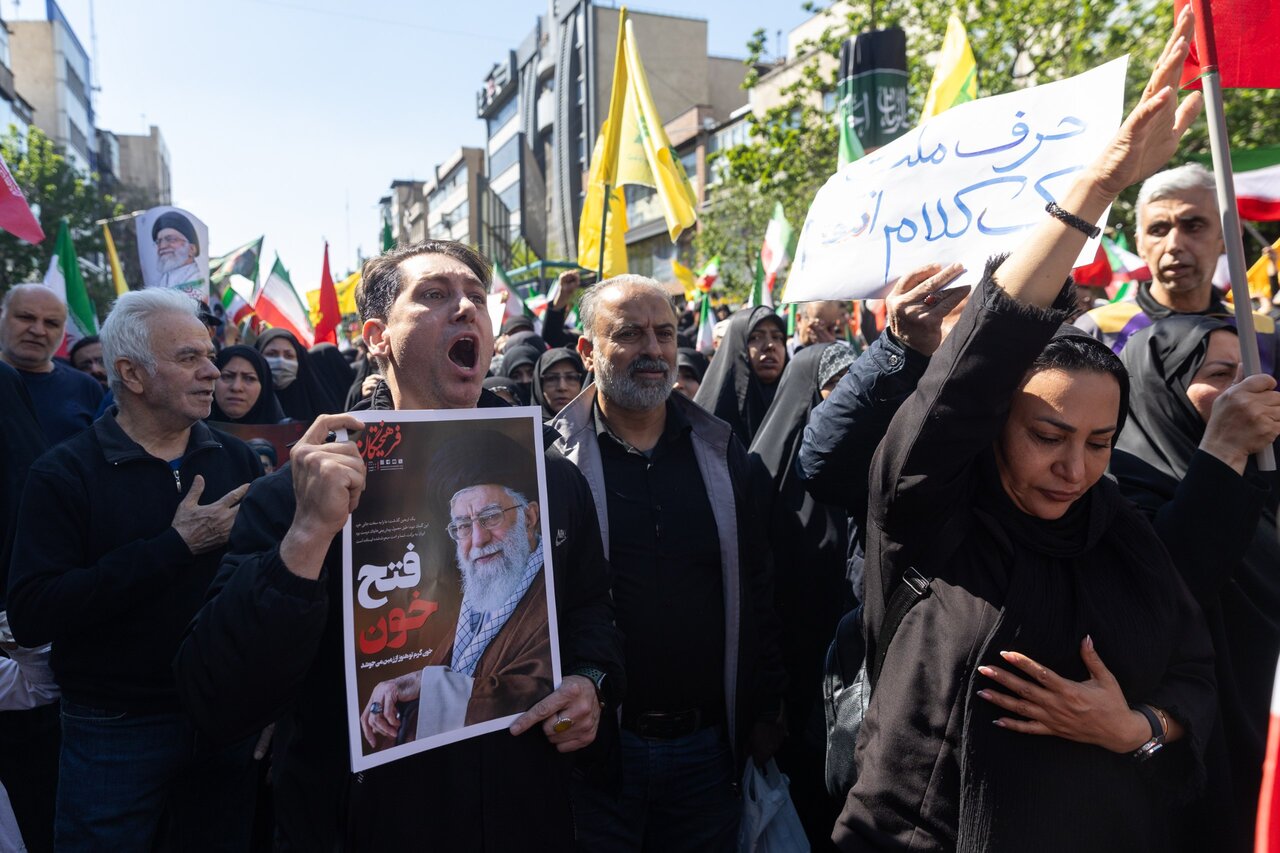
Jomhouri Square in central Tehran was filled with mourners from the early hours of the ceremony, which began at 9:40 a.m. They moved east toward the leader’s home and office, the scene of the attack. Choruses of “Ya Hussein” and “Hihat minna al-Dilla” echoed through the streets. Some people sat on the ground weeping, while others walked, chanted and waved Iranian flags.
As time passed and more people approached the leader’s residence and office, the crowd grew so large that by the end of the ceremony, Tehran’s main streets were backed up by traffic.
The people of Tehran jointly mourned the 40th day of the martyrdom of a leader who always warned against polarization and urged unity among the Iranian people. He is no longer here to witness how his martyrdom strengthened the unity of the nation.
Now more than ever, people understand that the Iranian identity and the concept of the Islamic Republic can survive only through unity. If this unity is ignored even for a moment, Iran’s enemies will seize the opportunity of division and try to tear apart this ancient civilization.