
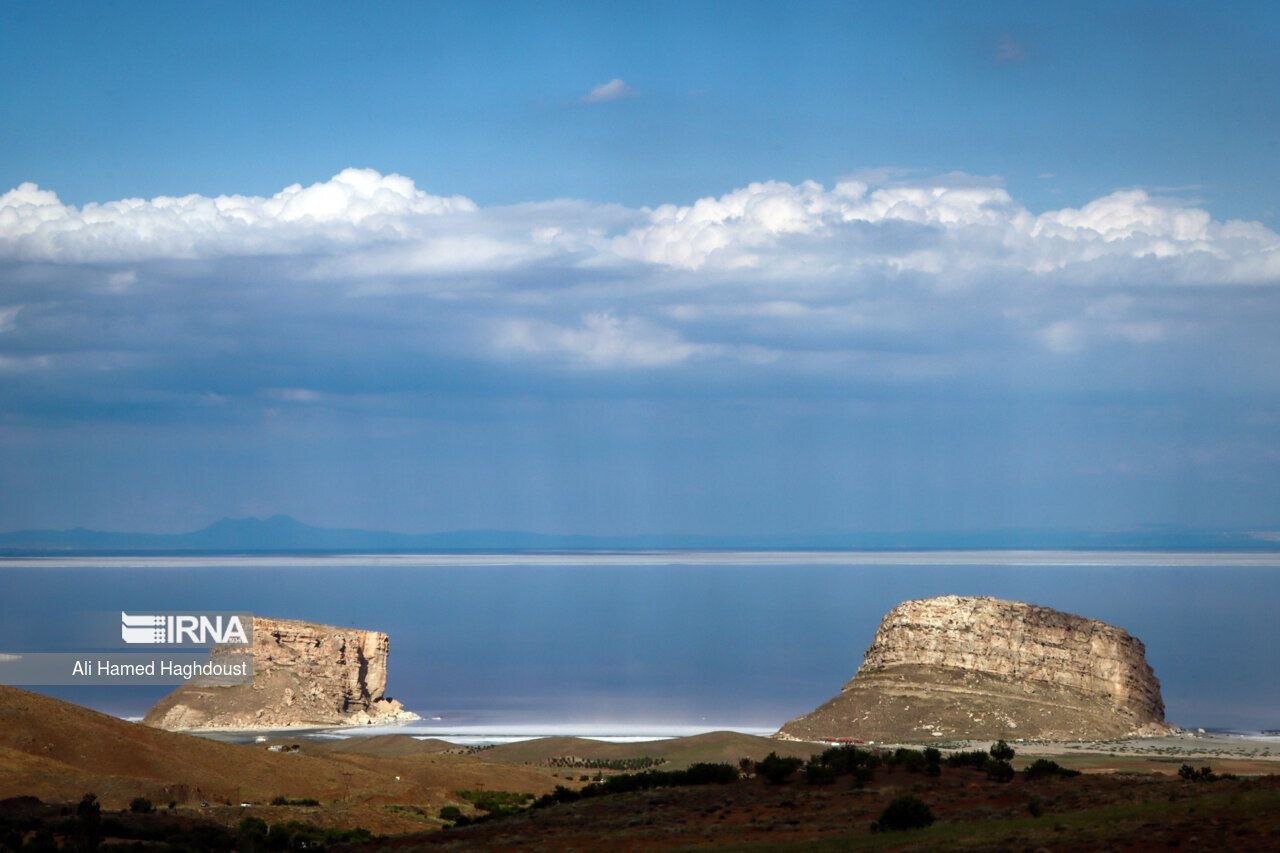
Tehran – The current lake’s Urmia level is 1,270.09 meters, indicating a 51st century decline compared to the same period last year.
The decline was 420 centimeters compared to the long-term average, the IRNA quotes Yousef Ghaffarzadeh, a person in charge of the Western Azarbaijan water company.
The volume of Lake Urmia has decreased from 1.444 billion cubic meters in 1403 (March to March 2025) to 1.14 bcm in the current year of Iran, which began in March 2025. Compared to the long-term average, the amount increased by 15.19 BC.
The lake needs a minimum annual water intake of 3.1 billion cubic meters to maintain healthy ecosystems and ecological functions. If this influx is provided, the lake levels are expected to reach 1,274.1 metres in the long term, officials noted.
Since the start of the current water fiscal year in September 2024, the state aquifer water volume has decreased by 63 million cubic meters due to reduced rainfall and rainfall. Currently, the statewide cumulative groundwater deficit is equivalent to 5.1 billion cubic metres, Gafarzadeh added.
Repair efforts
Through a joint project led by the United Nations Development Programme (UNDP) and funded by the Japanese government, the United Nations Food and Agriculture Organization (FAO) will participate in promoting sustainable agricultural practices and solutions for the conservation of urban lakes.
On December 1, 2024, the Japanese government and UNDP signed the exchange of notes to launch a project to develop a conservation system for Lake Urmia and other wetlands.
the communities around them. ” The project, which will be held between 2024 and 2028, will be implemented in collaboration with the Ministry of the Environment and FAO.
Focusing on sustainable agriculture and climate-adapted livelihoods, the initiative aims to provide long-term benefits to the community while preserving wetland biodiversity as a key ecosystem.
Lake Urmia faces major challenges due to the overdose of water resources, which has been expanded by the effects of climate change, and has severely impacted its ecosystem.
Agricultural activities in the region are becoming increasingly vulnerable to water shortages, a situation exacerbated by the effects of climate change. Research shows that these climate change could further disrupt the vulnerable environment of the agrifood system and lakes in the future.
With the support of the Japanese government, FAO has identified technical agricultural solutions to increase water efficiency in the agricultural sector of the Urmia Lake Basin, which may be efficient in saving internationally recognized biosphere reserves.
mt/mg