
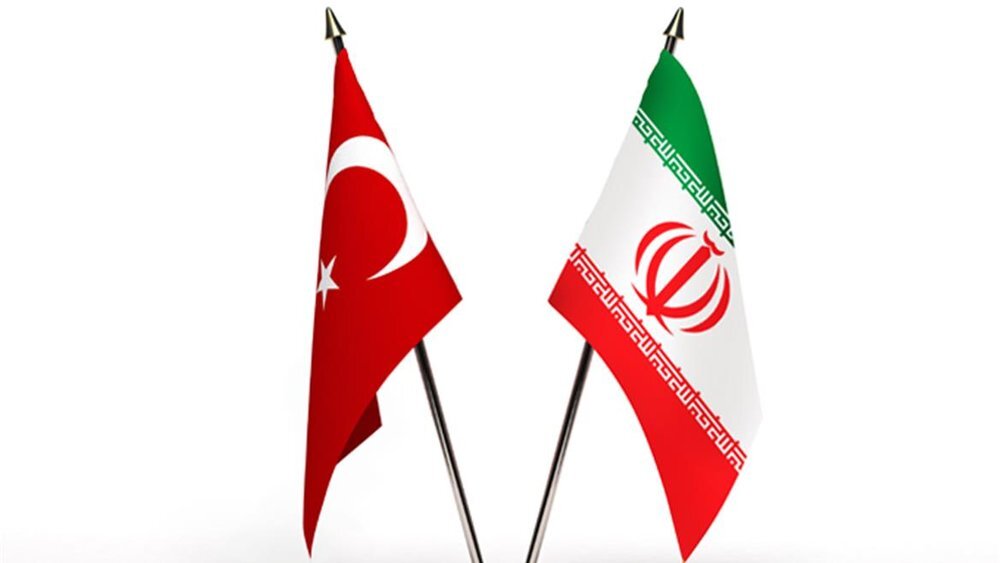
TEHRAN – Turkey’s Higher Education Council and Universities condemned the terrorist attack on Iranian sovereignty and the shelling of Iranian universities by the United States and the Zionist regime Israel.
In a separate statement, they expressed deep concern over the airstrikes targeting academic and scientific centers, IRNA reported.
The Turkish Higher Education Council (YÖK) expressed concern over military aggression and attacks against Iran.
The university has always been a center of peace, safety, and conversation. Any warmongering aimed at regional stability is condemned.
YÖK condemned the violence and said the current geostrategic impasse can only be resolved through diplomacy. Military attacks that threaten civilian infrastructure and regional stability are the greatest barrier to academic and scientific progress.
All universities in Turkey are required to cooperate with and support students from other countries involved in the conflict, especially Iran. These include expediting the registration process, extending education deadlines, and solving economic problems facing the banking system.
YÖK calls on all student unions to sympathize with the oppressed and refrain from actions that endanger university security or provoke conflict.
Education in Türkiye is continuous. Necessary measures will be taken to ensure the safety of foreign students, dormitories and universities.
The Middle East Technical University (METU) also expressed its solidarity with Iranian colleagues and students, as an institution that has always supported social security and regional cooperation.
It said the recent attacks not only pose a threat to the people, but also to the intellectual development of the Middle East.
METU rejects the normalization of military intervention and calls on States Parties to protect universities in this volatile situation.
METU remains a safe and open haven for all members of society affected by these incidents.
Meanwhile, Hacettepe University, as a world-class research university in health and social sciences, emphasized that war is a public health crisis that transcends national borders.
Hajettepe University is committed to providing full psychological and administrative support to Iranian students.
The University is committed to ensuring that the educational status of its students is not threatened by foreign geopolitical situations. Hacettepe University favors a “science first” approach to regional issues and believes that scientific bonds are stronger than decisive forces.
The university believes in science and diplomacy. We urge the international community to use common sense and prioritize peaceful solutions over military conflict.
The university guarantees that the rights of all Iranian faculty members will be protected and the university’s students will be protected during this difficult time. The University is committed to providing the necessary administrative, financial, and logistical support to enable you to continue your education.
On Saturday, Science, Research and Technology Minister Hossein Simai Salaf said more than 30 Iranian universities have come under direct attack from the United States and Israel since the start of the war in late February.
Simai Saraf added that five university professors and more than 60 students were killed in the attack, and called attacks on Iranian infrastructure a “crime against humanity.”
“The main reason why the enemy targeted this sensitive infrastructure is because we did not want access to this technology,” he said, adding that many Iranians abroad have contacted the university and offered to help with recovery funds.
On April 7, Iran’s ambassador to the United Nations accused the United States and Israel of deliberately targeting Iranian universities and scientific institutions in an “unprecedented act of barbarity,” calling the attacks a war crime that no amount of threats or military pressure can quell.
Ambassador Amir Saeed Iravani detailed the systematic campaign of state terrorism in a series of letters to the UN Secretary-General and Security Council this week.
He cited the early-morning airstrike on April 6 that caused extensive damage to Tehran’s Sharif University of Technology, which includes the faculties of civil engineering, electrical engineering, and research institutes for nanotechnology and environmental research. The attack follows a similar attack on Shahid Beheshti University on April 3, which damaged the university’s Laser and Plasma Laboratory.
“The deliberate targeting of scientific institutions and universities is a clear violation of international humanitarian law and amounts to a war crime,” Iravani wrote.
Iranian government spokesperson Fatemeh Mohajerani, speaking at a press conference at Shahid Beheshti University, echoed the defiant attitude.
“The enemy cannot extinguish the light of Iranian science,” he said, adding that the latest attacks aim to undermine the achievements of the 47-year revolution and sever the ties between Iran and the motherland.
“These miscalculations are wrong. Iran is the common denominator for all Iranians. Those who own a homeland will support it, and Iranians living abroad will never give in.”