
Tehran – The Israeli regime’s war against Iran began suddenly, unexpectedly. The administration assassinated top military generals, nuclear scientists and civilians in airstrikes. This disappointed them with a move that encouraged a response within 12 hours.
This response was not a one-off attack on June 13th. It was the first wave of at least 21 missile attacks that destroyed Israeli cities, took away some of the regime’s strategic and military sites, crushing the spirit of the settlers, who were struck by the success of a tactical victory on the first day, and did not realize they would turn right away.
When the war suddenly ended on June 24th, what was left of the Israelites was destruction and disappointment. Whether it was the purpose of “eliminating” Iran’s nuclear program or overthrowing the government, none of their objectives were met.
Under these circumstances, at least for now, recognising military restrictions, the regime has chosen to continue the psychological war with Iran. No matter how many times the Iranian people tried to tell them directly or through the stenographer who runs a Western Persian news channel, that his fight was not “with the people,” the majority of that psychological warfare during military conflicts was failed as the Iranian people refused to leave their political and military leaders. Netanyahu needed something new because the Iranians saw the lie. So, and after the halt of the war, Israel shifted to lightly parrying the leaders of the Islamic Revolution, with Ayatollah claiming that Ali Khamenei “hidden” and “dominated” the country anymore. Media related to the administration told their audience that Ayatollah Khamenei was “scary” to assassinate him and that he left his followers behind.
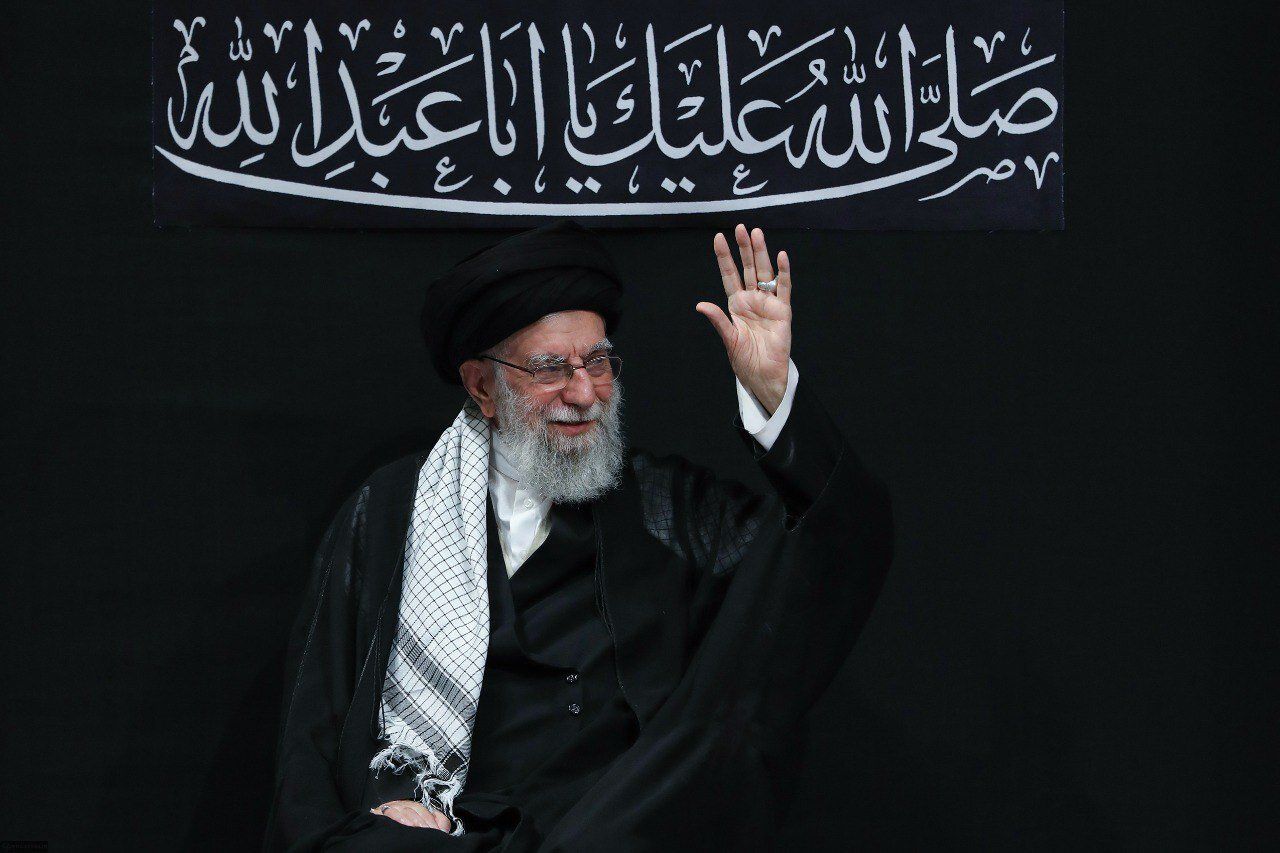
This new campaign of lies has set foot in the short term. On June 5th, the leader took part in the Imam Hussein mourning ceremony held at Imam Khomeini Hussein. He entered the room as the crowd was focused on Elegy’s readers. The participants turned their heads as Ayatollah Khamenei entered and quickly rose to their feet and began chanting the slogan.
The prominent slogan is “Haider, Haider,” a reference to the nickname of Imam Ali (AS), the son-in-law of Prophet Muhammad (Pbuh), and the first Shiite Imam to which Ayatollah Khamenei shares his name. Shortly after entering, the leader sat down and signaled the crowd to follow the lawsuit, but continued to chant for at least a minute upon arrival.
The rest of the ceremony continued without any notable events. By the end of the mourning, Ayatollah Khamenei called out an elegy reader and spoke to him for a few seconds. He had a faint smile on his face and his attitude seemed a little relaxed. The Recitor then returned to his seat and was placed in front of the crowd, and the leader said he asked him to recite “Ai Iran.”
“In my soul and life, you will remain from my land,” the reading sang as some of the people in the crowd began to shed tears with a stern expression. Ayatollah Khamenei was also seen listening enthusiastically.
The June 5th ceremony at Imam Khomeini Husseny was the first time a patriotic song was featured at the mourning ceremony of Imam Hossein, an essentially religious ritual. Analysts suggest that this is a message from the leader to Israel and the United States. Regardless of propaganda campaigns or attempts to strike airstrikes, the Iranian state is determined to unite and pursue legitimate rights.
The message resonated quickly, at least within Iran. Even those who were not mourning or rarely attending religious rituals turned to social media to praise the “courage” and “warmth” of their leaders. “The recent appearance of Ayatollah Khamenei brought me comfort and pride, just like his video message at the beginning of the war,” wrote a young Tehranian woman in X.