
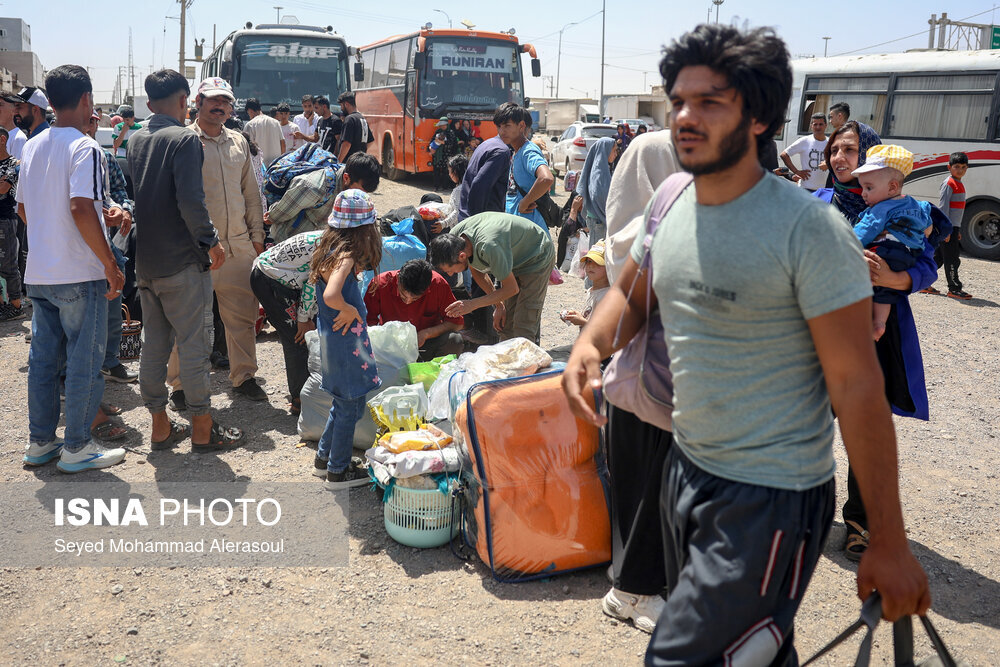
Tehran – From the beginning of the current Iranian year on March 21 until June 27, a total of 717,658 Afghans have returned to Afghanistan. Over 80% of them were sent voluntarily.
According to the head of the National Immigration Agency at Nader Yar-Ahmadi, there was no residency and the type of services offered to documented Afghans living in the country.
On the contrary, as illegal citizens leave the country, they will benefit from more services, the IRNA reported.
“The majority of these citizens are employees or students. We usually see employment as the basis for residential use in long-term planning,” the IRNA quotes Yar-Ahmadi.
Officials went on to say that the presence of illegal immigrants in any country poses many challenges and that in critical circumstances they will become the main suspects. Their presence has a negative impact on the economy, society and the security sector.
Global experience shows that at best immigrants can make up 3% of the population of any country. Iran’s population is estimated to reach around 90 million next year, which means that 3 million migrants. Currently, the country has over 6.1 million citizens and should gradually decrease, Yar-Ahmadi added.
According to the International Red Cross and Red Crescent Association (IFRC), the number of Afghans returning from Iran this year exceeds 800,000. Over 137,000 people returned to Afghanistan via the Islamic Kara border in June alone.
The IFRC has called for increased funding, essential supply and long-term support to help Afghans return from Iran.
The organization urges governments, donors and humanitarian organisations to support refugees and highlights that Afghanistan’s Red Crescent and its partners are doing everything they can, but the scale of the need is immeasurable.
“This issue doesn’t give the attention it deserves,” said Alexander Mashu, director of Asia-Pacific at IFRC after visiting the border over the weekend. “These individuals are more than just statistics.
They are mothers, fathers and children who are back in a country that is already facing major challenges. ”
Which Afghan nationals are allowed to stay in Iran?
Afghan citizens who are university students, vulnerable female household heads, children with Iranian parents, and those with job codes are permitted to live in the country.
Students whose parents do not have legal permission to reside in the state must return to Afghanistan by July 6th. However, this incident is different for university students. With passports they could extend their stay in the country, and the IRNA cited Nader Yar-Ahmadi, head of the National Immigration Agency.
Heads of households whose lives are confirmed to be threatened by returning home can temporarily stay in the country and benefit from treatment services.
According to the law, even if you are born in Iran, you will not be granted any Iranian citizenship. If the father of the child is Iranian and the parents’ marriage is legally registered, the child is considered Iranian and has an ID (ID) card.
If the mother is Iranian and the father is a foreigner, the child will receive the mother’s last name and ID card even if the marriage is not registered.
If undocumented citizens who voluntarily depart the country under the job code depart from the country in the event that their employer agrees, they can receive a visa to return to work. However, if they are arrested and deported, they will be banned from applying for a visa.
mt/mg