
TEHRAN – For Israel and the US, the war with Iran was almost certain to build up a political system, gain a dissatisfied population on the streets, and ultimately lead to the collapse of the Iranian government.
It explains why Donald Trump decided to undermine the very negotiations he had been hoping for years, attacking Iran while the country prepares to attend the sixth round of talks, sending a clear message to the world: Americans are not trusted. No matter how much you are committed to diplomacy and cooperation with international organizations that were the IAEA in Iran, they were able to launch an attack on you for a moment.
Analysts believe Iran has actually demonstrated prominent and unprecedented success in how it maintains political and military cohesion. Many Iran’s most senior military officials and nuclear scientists were assassinated at the first time of the war. Shortly afterwards, political people were called out by Israeli agents. Israeli agents said they should leave the country if they don’t want to be killed with their families.
Experts say they don’t currently expect the Islamic Republic to manage the crisis that effectively. Ayatollah Seiyed Ali Khamenei, the leader of the Islamic Revolution, was personally in charge of the war room, and within hours he appointed a new commander and deployed it to the battlefield. Retaliation began soon, with rain falling on territory where the first barrage of Iranian missiles was occupied on the first day of the war. At least 22 waves of missile and drone attacks have hampered Israel, leaving a major mark of destruction on occupied Palestinian lands.
Furthermore, other Iranian officials, such as the president, the Speaker of the Congress and the attorney general, remained directly involved with the public, keeping their duties in mind, despite having already been targeted in the failed Israeli attacks while holding a three-part meeting.
From the beginning of the war, what was more obvious than the fact that the Islamic Republic was trying to hold it together was that the Iranians had no intention of gathering behind Netanyahu. The Israeli Prime Minister issued a message on the first day of the war, telling the Iranians that his fight should be “stolen” and “freedom” rather than “people.” It is unclear why it didn’t happen to him that Iranians find it extremely difficult to trust war criminal liability, who has been convicted of the deaths of more than 60,000 Palestinians in the last 20 months. In Iran, Netanyahu killed about 1,000 people in 12 days. Most of them were civilians, including women and children.
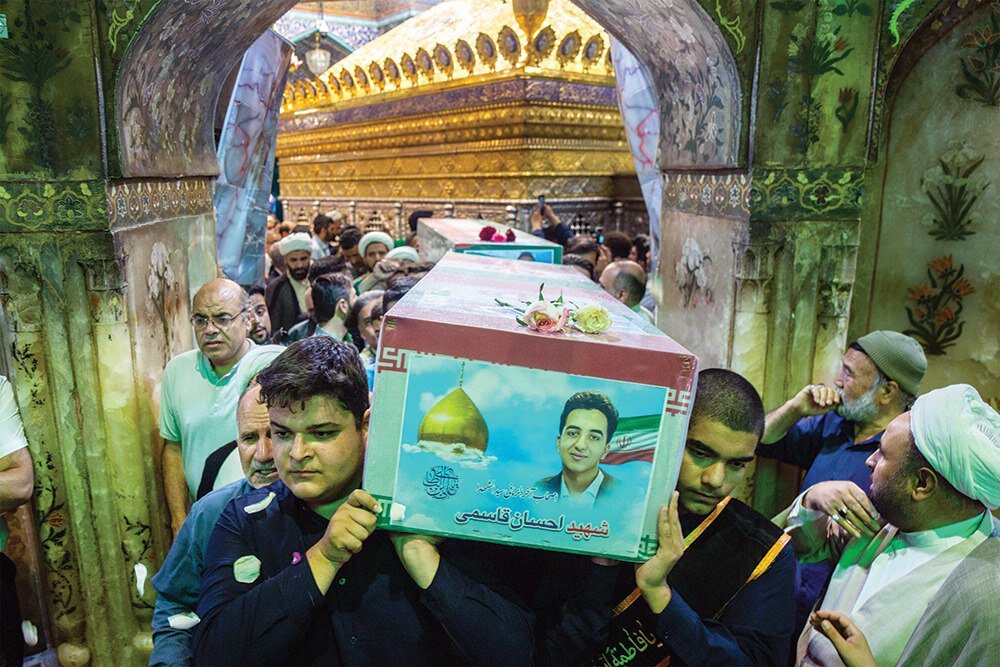
Netanyahu’s actions cultivated unprecedented hatred of the Israeli regime and its followers, rather than support or sympathy among the Iranian masses. The sentiment was on display this week when the father of a 16-year-old boy was killed in an Israeli airstrike at QOM, and when he told Iran that he wanted the government to use the money he saved for his son’s future to fight Israel. “I was planning to sell the land to provide my son’s future. Now I want to donate the value of the land to the government. I don’t know how many missiles the money can produce, but even if that’s the case, I hope that the missiles will hit the heart of Israel.”