
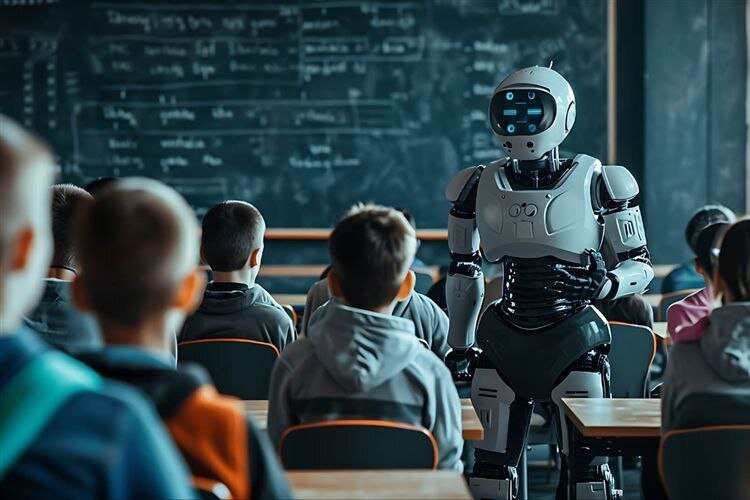
Tehean – Marked annually on July 15th, the 2025 World Youth Skills Day highlights youth empowerment through AI and digital skills to help them thrive in the future.
The UN General Assembly declared July 15th as the World Youth Skills Day of 2014 to celebrate the strategic importance of equipping young people with the skills necessary for employment, decent work and entrepreneurship. Since then, the day has urged the world to address the challenges of young people in learning, provide opportunities to ensure access to quality education and contribute to reaching their full potential.
The fourth industrial revolution will see technology and vocational education and training (TVET) evolve as the economy changes through artificial intelligence (AI) and acquire young people with future preparation skills.
AI is changing the way we live, learn and work, but it also poses serious risks if not implemented fairly.
World Youth Skills Day 2025 recognizes the power of youth as a driver of change, tackles today’s challenges, and commits to equipping AI and digital skills to shape a more peaceful, inclusive and sustainable future.
“Iran Digital” focuses on AI in schools
The National Free Artificial Intelligence (AI) Training Program, the first phase of the Iran Digital Initiative, has launched, covering 2 million middle school students and 1,000 teachers.
Students who complete the introductory course will learn about various functional areas of AI and implement practical projects. The IRNA cited Abdolhossein Bahrami, a vice presidential staff member of the science, technology and knowledge-based economy.
Ministry of Education Directors, Junior High School Principal, Educational Technology Director and Educational Group participated in the opening session.
Addressing the session, Barami emphasizes the importance of teaching students AI and helps students prepare for the future job market, develop critical thinking, and become familiar with emerging technologies by boosting digital literacy. It also promotes creativity and innovation among students.
The official further said that experts, policymakers and users have the opportunity to discuss and collaborate on the laws and principles to follow to develop AI use. This helps developers and decision makers understand people’s needs, expectations and concerns and improve their technology accordingly.
Various incentives are considered to motivate students and teachers. The platform is game-based and interactive, with incentives including holding seasonal competitions, ranking top individuals in various geographical areas, and awarding prizes. Barami also pointed out that top individuals have the opportunity to take part in advanced or internship courses.
AI, education
According to Audrey Azurey, director of the United Nations Education, Scientific and Culture Organization (UNESCO), “AI offers great opportunities for education.
To reach its full potential, this technique must complement the human and social aspects of learning rather than replace them. It must become a tool to serve teachers and students. Their main goal is their autonomy and happiness. ”
Officials made a statement on January 24th on International Education Day, which is observed annually.
UNESCO highlights the role of AI in reshaping teaching and learning. This event highlights the dynamic interaction between AI and education. How AI technology revolutionizes teaching and learning practices, and education serves as a guide to ensuring that AI is ethical, inclusive and aligns with human values.
In Iran, a national conference held in Tehran on October 9, 2024 examined the role of artificial intelligence (AI) in education and learning.
Using AI-driven technologies in education and learning as a transformational component not only helps to promote the quality and efficiency of the education process, but also provides cutting-edge technology and smart solutions to a wide range of individuals, ISNA reported.
Accurately analysing educational data and providing immediate feedback has improved student evaluations and production of educational content.
We also focused on three main axes. Recognize challenges and capabilities. Establish a dynamic and collaborative environment and discover new technology-based assessment and evaluation methods.
It focuses on topics such as AI and medical education, cognitive science, schools, design and content production, human resource development, education assessment and evaluation, future AI in education, ethical considerations, artificial intelligence and schools.
The main objective of the conference was to raise awareness of modern technology and its applications in educational and learning systems.
mt/mg