
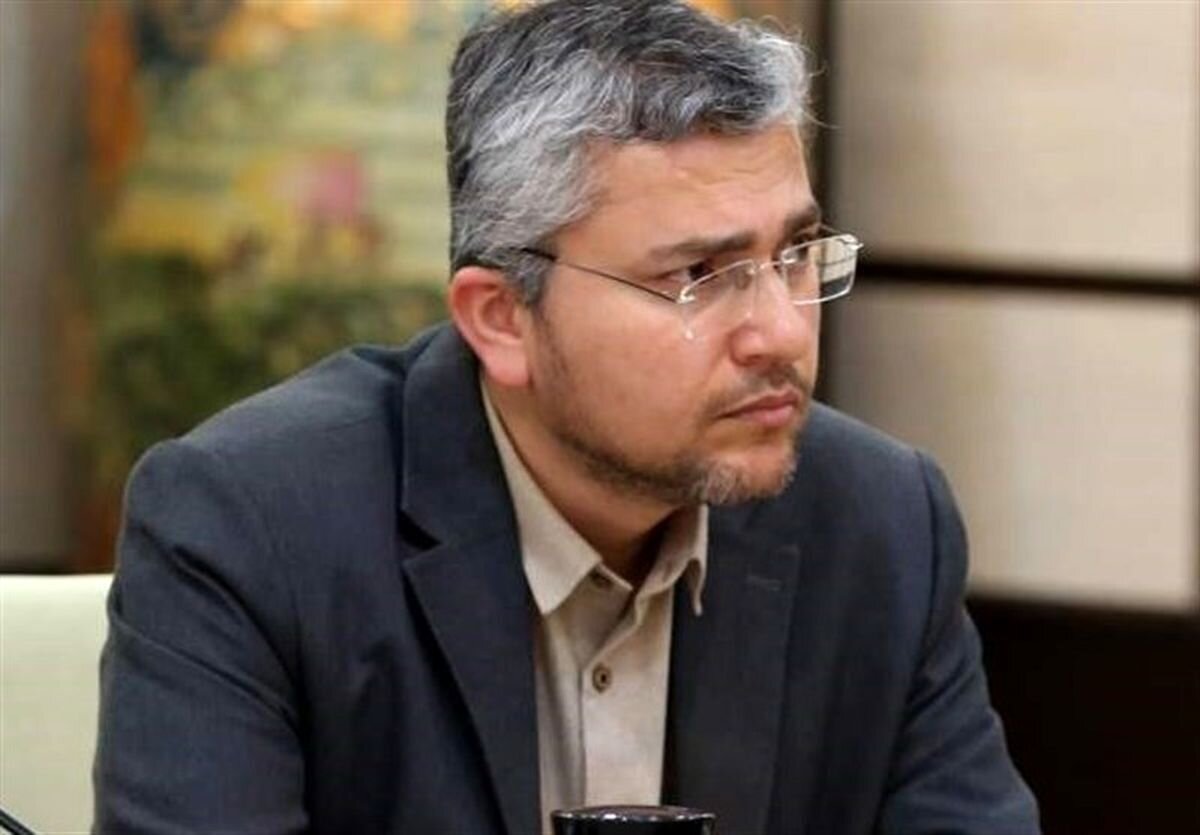
TEHRAN – Ebrahim Rezaei, a spokesman for the Iranian parliament’s National Security and Foreign Policy Committee, declared on Saturday that the Islamic Republic is already operating under conditions equivalent to an activated snapback mechanism and is dismissing it as denies the threat of Europe.
In an interview, Rezaei said Tehran may consider measures including withdrawal from the Nuclear Non-Proliferation Treaty (NPT) and enrich uranium to 90%.
“Sansions reimposed after the JCPOA quits being the biggest and inclusive. Formal activation of this mechanism will not significantly change the situation in the country,” the lawmaker said.
He also emphasized that returning the Iranian file to Chapter VII of the UN Charter and threatening to introduce it to war is a recurring ineffective threat. “The country has previously faced a direct attack on military centres and has experienced military conflict,” Lezai said.
Referring to US-Israel’s 12-day war with Iran, he said, “The experience proves that maintaining national interests depends solely on maintaining power and deterrent capabilities.
The lawmaker’s remarks respond to a joint statement on July 17th, threatening France, Germany and the UK (which threaten to activate the snapback clause of Resolution 2231 by late August) to “unless Iran returns to nuclear talk,” the mechanism will automatically recover all pre-2015 UN sanctions within 30 days.
Iranian Foreign Minister Abbas Aragci quickly rejected the threat. In his call with E3 diplomats, he condemned their “weak policies of threat and pressure” and emphasized that US-Israel attacks on Iran’s protected nuclear facilities have wiped out the legal and moral foundations of the snapback.
“Consultations are only possible if the other side wants fair deals,” he posted to X.
Esmaeiru Bakaei, a spokesman for the Ministry of Foreign Affairs, repeatedly vowed to have a “proportional response” to the revival of sanctions.
Why is Snapback meaningless?
US and Israeli airstrikes at Iran’s civilian nuclear sites fundamentally changed the context of the JCPOA and made snapbacks anachronistic.
Because Natanz and Fordow were damaged, the nuclear infrastructure mechanism was intended to regulate that it no longer existed in its previous form.
Some analysts call the principles of Rebus sic Stantibus at the Vienna Convention. As the situation changes radically, treaty obligations will be adjusted, leaving Snapback as mere legal theatre.
Not condemning the European strike, which is considered a violation of the Jus Cogens norm, sacrificed his status as a “participant” at E3 under UN Security Council resolution 2231, a prerequisite that causes Snapback. Thus, in the green light of the bombing of the very site that the deal governed, Europe confiscated its legal status.
Furthermore, reimposed sanctions could cause snapbacks as new Security Council resolutions would be needed to lift those that could be bewildered by Russia and China’s veto, which could reverse, allowing E3 to be effectively sidelined in future negotiations.