
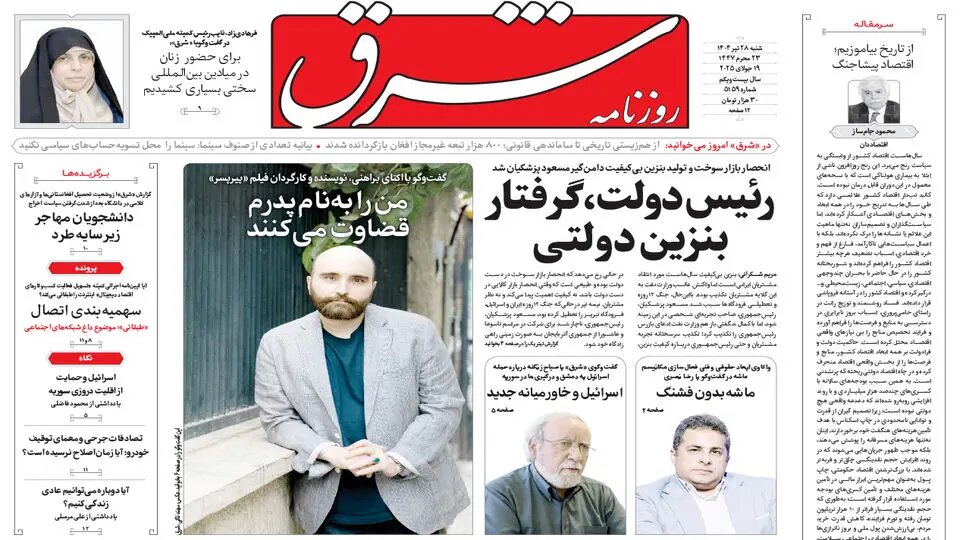
Tehran – In the analysis, Sharg analyzed the official conference call between Iranian foreign ministers and the European trio of Britain, France and Germany.
The paper states: The call was the first direct dialogue after a recent military attack on Iran’s nuclear land, and clearly showed two different positions. On one side, Europe and the West, they are hoping to threaten the reinvigoration of UN sanctions and negotiate as quickly as possible and put more pressure on Iran. Meanwhile, Iran advocates for a revival of negotiations in a form that adheres to its principles and guarantees mutual benefits. When Europe focuses on snapback mechanisms, tensions can increase and negotiating atmospheres can become more difficult. Rather than the beginning of a new chapter in diplomacy, this call reflects the deep gap between diplomatic turmoil and the trust between the parties. The future of this process depends on the severity and courage of the parties in overcoming the shadows of punitive policy and returning to the logic of dialogue. If it is fruitful, dialogue that must be based on mutual respect, realism and lessons from the past.
sobh-e-no: Message to the West on Iran’s policy
In the article, Sobh-e-no discussed Aragut’s visit to China and a declaration of solidarity with countries opposed to US and Israeli policies. It writes: Araghchi’s words on the support of Zionist regimes and by the support of the Shanghai organization and other international organizations for Iran against the US attacks send an important message to the international community. Iran urges global and regional organizations to oppose unilateral action and foreign threats against countries pursuing their interests. In addition to expressing solidarity with independent countries, this message is also considered a kind of opposition to US and Israeli policies. Araghchi’s visit and his discussions with his SCO counterparts sent messages to Western countries, particularly the United States. By highlighting the development of relations with China, Russia and other Asian countries, Iran demonstrates that it does not accept dependence on the West, particularly the United States. The message warns Western countries that Iran is strengthening its ties with other world powers, and that the amount of economic or political pressure cannot divert Iran from its path.
Javan: Negotiation is a tool at the right time
Jawan wrote about the possibility of a resumption of nuclear negotiations. It is clear that the official policy of the Islamic Republic in Iran towards negotiations remains prudent and conditional, and completely dependent on the highest level of decisions to establish. Iran’s hands seem to be far more fulfilling than when Iran’s nuclear facilities were not bombed. Some believe that Iran’s hands are empty after these bombings, and that the US and the West have no reason to negotiate and lift sanctions. Perhaps they’ll quote Trump’s recent words. He said he was not in a hurry to negotiate, and that it was the Iranians who would take the lead. Europeans have also expressed similar views and believe it is Iran that should demand negotiations. But if that were the case, then Europe and the US wouldn’t need to repeat this claim. Therefore, Iran’s hands are still full, full of logic and military power. And there’s still logic in negotiations. The national decision should be made at the best time and location. Europe and the US can remain silent and show off what is useless if they don’t see the need to negotiate with Iran and see Iran empty-handed.
Donya-e-eqtesad: A co-convict of a crime
In the memo, Donya Ektesad discussed Israeli crimes against Iran and American accomplices for violating international law. Not only did the US not condemn Israel’s attack on Iran’s nuclear facilities last month, it also took the valiant participation in the attack using B-2 bombers armed with bunker-breaking bombs. With an outrageous self-glory, Donald Trump made these attacks so successful, claiming that Iran’s nuclear power plants had been “expunged.” The attack targeted facilities under the supervision of the International Atomic Energy Agency, but was a clear violation of UN Security Council Resolution 487 and international law once claimed the US had defended. In response to the invasion, Iran suspended cooperation with the IAEA, withdraws from the NPT, bringing the region to the brink of full-scale war with missile attacks against Israel. Russia, China and Islamic cooperation organizations have denounced the crime as a sign of shameless hypocrisy in the West. Declared as a diplomatic advocate in 1981, America became a full-fledged partner in 2025, violating the principles it once defended vigorously.