
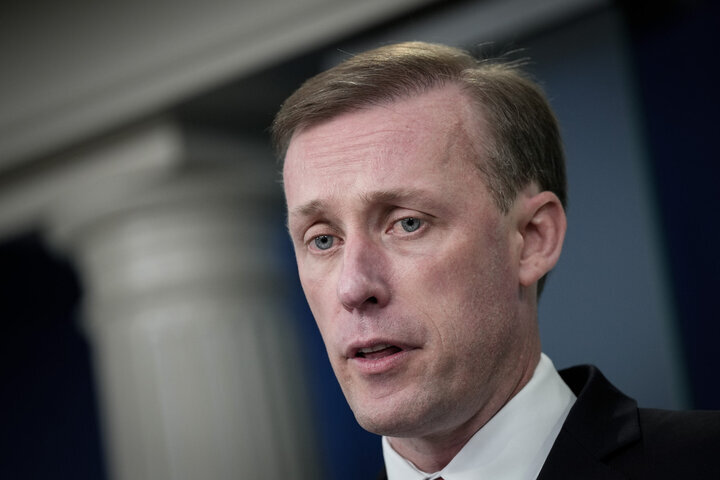
TEHRAN – A former US national security adviser has acknowledged that the Trump administration’s decision to attack Iran’s nuclear facilities was unnecessary and counterproductive, especially at a time when Tehran was ready to accept a long-term diplomatic contract.
Speaking at the Aspen Security Forum on Friday, Jake Sullivan said the Trump administration was able to avoid military action entirely. He argued that Iran is “ready to agree to a very good deal that may have suppressed its nuclear program for decades, not years.”
Sullivan emphasized that diplomacy is the only way to resolve Iran’s nuclear issue forever. “In my view, that is the direction Trump should take, and I believe he may still be.
In his previous remarks to CNN, Sullivan made clear that his initial response to Trump’s military decision was to question its long-term outcome. “My first response was a classic foreign policy question. What will happen next? Even if American pilots successfully carry out the strike, we still need a deal. Iran still has a wealth of uranium stockpile and centrifugation capabilities.
He added that Iran has already banned International Atomic Energy Agency (IAEA) inspectors from accessing the target site at that time. “So we lost the kind of verification and surveillance we once had under the nuclear agreement,” he said.
According to Jewish insiders, several Democrat senators from Aspenforum criticized Trump for launching a strike without consulting Congress, reiterating the need to resume serious negotiations with Tehran.
These statements are consistent with a preliminary assessment by the US Defense Intelligence Reporting Agency (DIA). This suggests that the strike did not cripple Iran’s core nuclear infrastructure, contradicting the US president’s claim of “complete erasure.” According to CNN, Iran’s enriched uranium stockpile remained intact, with minimal damage to centrifuges at important sites such as Fordow and Natanz.
US authorities tried to spin the result as a victory, but the leaked intelligence paints another picture. “The US has set up them for several months at best,” the American intelligence agency familiar with the report told CNN.
In a statement attempting to counter the criticism, White House spokesman Caroline Leavitt accused the media of trying to trust both President Trump and the fighter pilot who “fully carried out” the mission.
Jeffrey Lewis, a nuclear weapons expert at the Middlebury International Institute, told CNN that satellite imagery confirms Iran’s nuclear infrastructure is largely intact. He said the main underground facilities in Natanz, Isfahan and Parkin are functional and can be used to quickly restore Iran’s enrichment capacity.
The US attack on June 22 caused a strong Iranian response. Less than 48 hours later, Iran launched a barrage of missiles targeting U.S.-run Al-Udeid base in Qatar, causing serious damage and urged Washington to seek a ceasefire.
Despite the deployment of US B-2 bombers and precision-guided ammunition targeting three major sites, Ford, Natantz and Isfahan, the strike mainly damages ground infrastructure, and includes power systems and facilities involved in uranium metal conversion, US media claims.
Iran says damage to its nuclear site is “significant,” but has yet to confirm US media and intelligence reports about the facility’s core still remain unharmed. Iranians also say the country will continue to continue its peaceful nuclear program, regardless of the scale of destruction.