
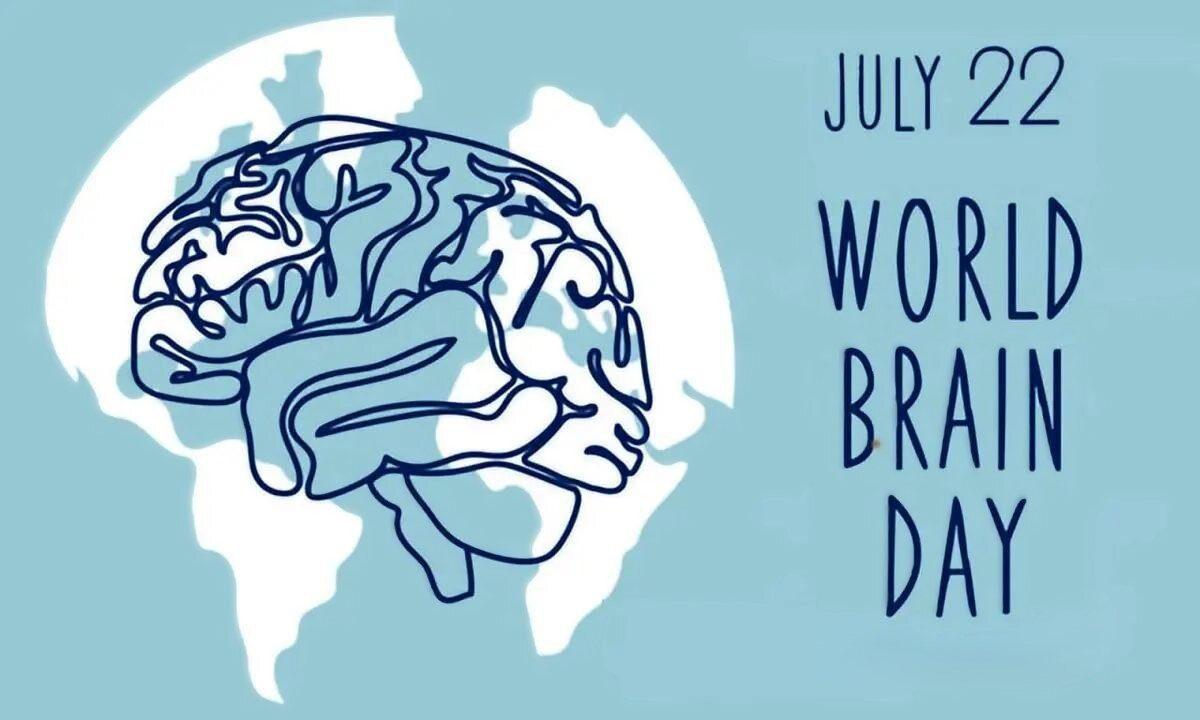
Tehran – World Brain Day raises public awareness of brain diseases on July 22nd every year. This year, the day’s theme is “Brain Health for All Ages.”
It emphasizes brain health as a fundamental aspect of personal and social health, and emphasizes the importance of supporting brain health at every stage of life.
According to the World Health Organization (WHO), brain health is the ability to function well in the cognitive, emotional, sensory and physical fields, allowing individuals to live a fulfilling, independent life while managing their health.
Brain health requires management of not only mental and physical health, but also physical aspects of your life that improves social and economic prosperity.
Brain disorders such as epilepsy, Alzheimer’s disease, stroke and headaches are very common, and factors such as stress, social crisis, and delayed diagnosis can contribute to the worsening of these diseases.
Around 50 million people suffer from epilepsy worldwide, and around 1.4 billion people in Iran are affected by this neurological condition.
Epilepsy is characterized by recurrent seizures. This is a short episode of involuntary movements that may involve parts of the body or whole body, and can involve loss of consciousness and control of intestinal or bladder function.
Disorientation and absence, and a temporary lack of awareness are other types of epilepsy.
Delays due to misdiagnosis and inappropriate treatment can lead to behavioral disorders and negatively affect the patient’s intelligence, the Ministry of Health website reported.
Epilepsy most commonly begins in childhood or older or older adults in patients age 60.
Alzheimer’s disease is a brain disorder that slowly destroys memory and thinking skills, and ultimately slowly destroys the ability to perform the simplest tasks. Most people with symptoms of Alzheimer’s disease appear later in life. It has a negative impact on patients’ lives, and family caregivers and society face social and economic challenges.
People think that forgetting is the same as Alzheimer’s. It can be a symptom of the disease, but it can also be due to many other factors such as depression, anxiety, and stress.
Global statistics show that every three seconds a new case of Alzheimer’s disease is diagnosed. New cases are diagnosed every week in Iran.
Routine visits and clinical testing can help identify up to 20% of people with Alzheimer’s disease. However, target screening can help diagnose cases early. Currently, 8% of individuals over the age of 60 in the country suffer from Alzheimer’s disease.
Strokes, also known as brain attacks, usually occur when the blood supply to a part of the brain is destroyed. In this case, the container will be blocked or bleeding. In both cases, blood is interrupted in any part of the brain.
There is an important concept in stroke treatment, known as time. This emphasizes that more brain cells die without being treated.
Regular physical activity, healthy eating, and avoiding cigarettes and alcohol are one of the most important ways to prevent stroke. If one is taking blood pressure and diabetes medication, it should be taken regularly to prevent stroke.
The prevalence of stroke in Iran is 1.5 times the global average. So, if there are less than 100 strokes per 100,000 people worldwide, the survey shows that this rate is 150 in Iran.
Stroke, the country’s second most major cause of death, can be prevented through awareness, improving lifestyle, timely screening and access to appropriate medications.
Headaches are sometimes a problem, sometimes problems like migraines or tension-type headaches.
Migraines are healthier than just a headache. Symptoms of the disease vary from person to person, but often include a return headache. It also includes nausea, vomiting, mood changes, extreme fatigue, sensitivity to light, noise and odor.
Tension type headaches are another common type of headache caused by anxiety. It can be treated by taking painkillers.