
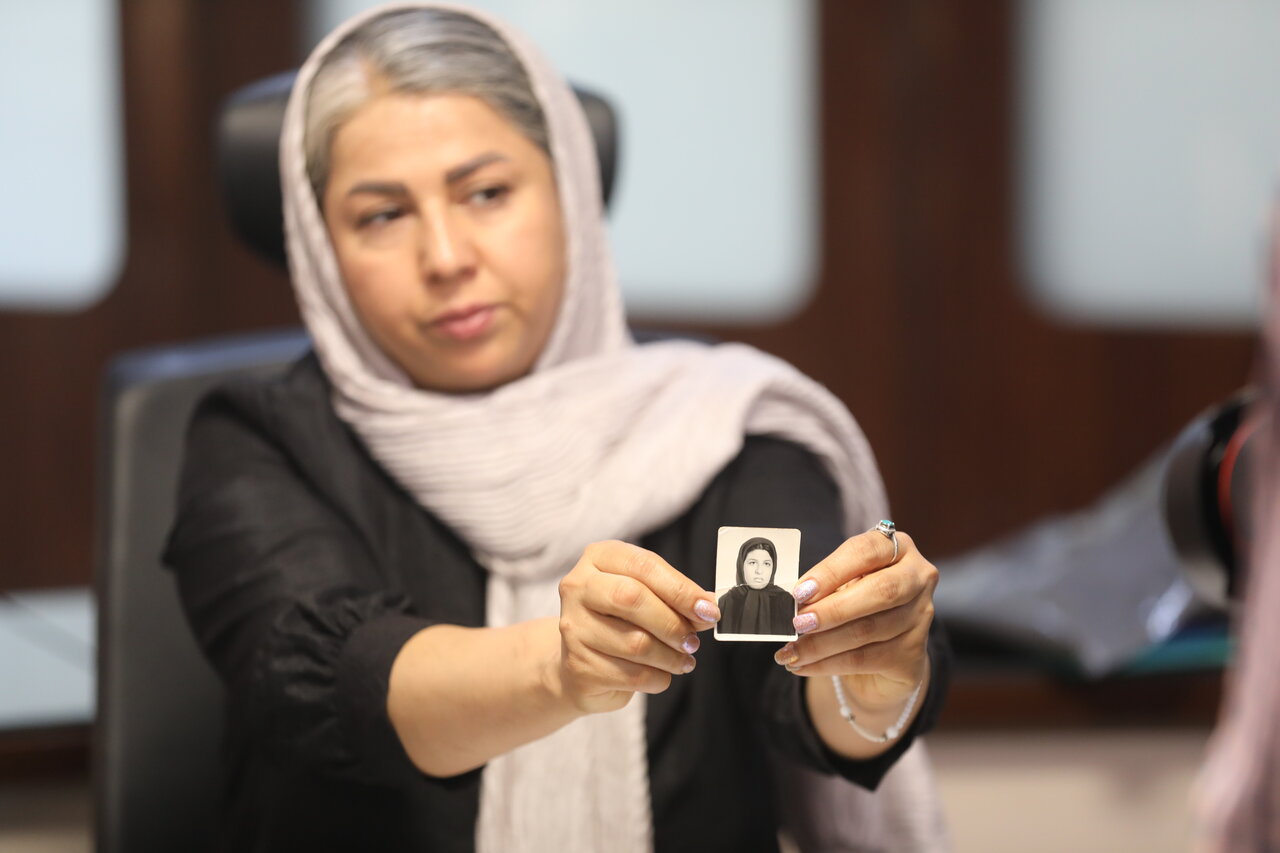
Tehran – Masoumecheha was 24 years old when he appeared at the door of a family in southern Tehran. She has not been able to form a consistent sentence about where she has been in the past few years. “We were all shocked. We kept asking her what had happened, but she couldn’t explain anything. She just screamed, screamed, zoned,” said Masoume’s sister, one of the first sisters to find her in that state. “We didn’t know what to do. She kept running away and in the end we lost contact with her again.”
After fleeing to his home, Masoume was greeted by police while wandering around the city of Tehran. She eventually went to a psychiatric facility, where her family was informed of her whereabouts. “When she was still at home, she was muttering the national anthem. We later learned that it belonged to Mohahedin e Kalk (MEK).”
MEK is a terrorist organization operated primarily outside of Iran. Currently based in Albania (formerly Iraq), the group is responsible for killing at least six Iranians, one of which is infants, in a recent Mek-linked terrorist attack in southeastern Iran. A media outlet belonging to MEK characterized the terrorist attack as “armed rebellion by young people” and praised the terrorists for brutal crimes.
MEK was listed as a US and European terrorist organization for many years from the early 2010s to the elimination of the middle. The West has long used the group for spies and attacks within Iran. Recently, during the Iran-Israel war, Western media and politicians have tried to rebrand MEK, hailing it as a “reformed” woman-led faction, floating as a potential alternative to the Iranian government. A New York Times report writes that MEK advocates “secular republic, gender equality, and non-nuclear Iran.”
But like Mak’s victims – Masoumeh, the PR campaign cannot erase the suffering. Like many others, she did not participate voluntarily.
“After my mother passed away, Masoume started caring for us at just eight years old. Her father was a construction worker and was usually at work,” explained Leila. “She always put us first and dreamed of a better life for her siblings. She cooked for us, cleaned after us, and took us outside.” The family had seven children. They had two sisters, four brothers, and an older half sister, Fateme.
Fatemeh was a member of the MEK but left before Saddam Hussein’s fall, when the group began to block asylum from the Iraqi camp. She moves to Finland and tries to take two financially struggling brothers (Masoume and her brother, Hamidreza) through contacts of MEK, whom she thinks can trust. “They were going to Türkiye first and then Finland next,” Leila said. Instead, in 2001, MEK members took them to Ashraf camp in Iraq.
The family quickly lost contact. Hamidreza resurfaced 14 years later and fled during the chaotic relocation of MEK to Albania. Masoume quickly reached out to her by random visits four years later, but her ordeal was much worse.
“After being taken to Iraq, they were separated at Ashraf Camp. Both resisted at first, but Hamidreza built up his time. Masoume continued to fight back.
As the Tehran Times previously recorded, MEK routinely sent rebellious members to the infamous Abu Ghraib prison. This was well known for the systematic torture of prisoners. Mazuume endured months of be-striking, isolation and psychological pain before Iraqi security guards abandoned her near the Iranian border. She then walked for days with hunger and trauma. By the time she arrived in Tehran, her heart had been shattered.
“The person who came back wasn’t my sister,” Layla said. “She was in a catatonic state. When she regained consciousness, memories tried to kill her again and again.”
The final escape
For the next 20 years, Masouum cycled through a psychiatric facility where she tried to take her life multiple times. Her final attempt in February 2025 was a success. That day, Leila visited Masoume, a mental hospital, and took her to a restaurant in Charles, a scenic route north of Tehran.
“Masoume loved nature, so I took her to a lovely place to spend a few hours together, but I distracted her as we sat at the table and she began to remember her past.
The mashwater, caused by Abu Ghraib’s flashback, had jumped into a nearby river. Her body was later found stuck in a wedge on a tree trunk. “That was the end Mech gave her – a decades of physical and mental torture until she couldn’t take it anymore,” Layla said as tears began to run down her face.
The story of Masume is not unique. It must consider dozens like her, like how the West rebranded Syrian Hayat Taharil Al-Sham (HTS) terrorists before they attempted to promote terrorist costumes as a “democratic group.” Future Tehran Times Reports guarantee you will never forget.