
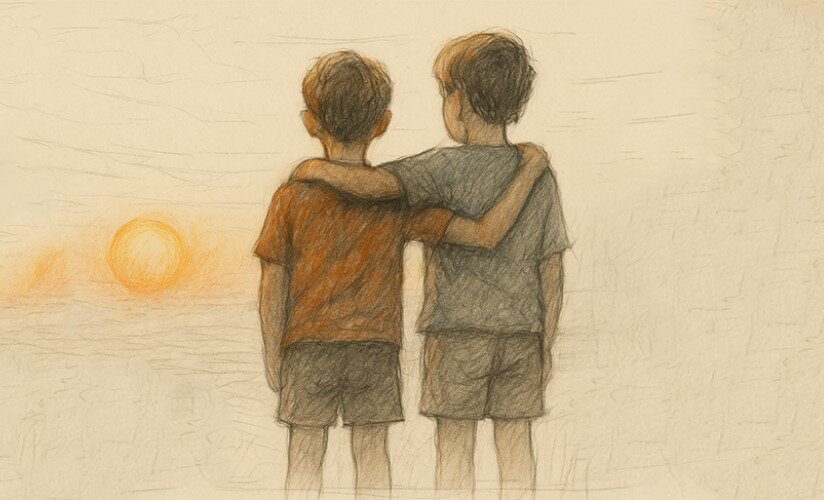
Tehran – in an age where the noise of division grows loudly – fuelled by war, conflict, inequality and fear – friendship feels almost radical in its simplicity. It will not arrive due to fanfare or policy. No speeches or signatures are required. It starts with something quiet. The willingness to see each other not as conversations, sharing moments, as strangers, but as fellow travelers through human experiences.
July 30 was declared in 2011 by the United Nations General Assembly as International Day of Friendship. It was declared with the idea that friendship between people, countries, cultures and individuals can encourage peace efforts and bridges between communities.
As we adhere to this year’s International Friendship Day, we remember that true peace is not only written in negotiation halls and treaties, but also built on thread by thread.
Friendships have a special kind of power, especially among young people. It can cross language, faith and history. It invites us to listen before we judge, and invites us to stay when it’s easier to leave. And when fostered across cultures and communities, friendship becomes more than a bond. That will be a blueprint for reconciliation. It teaches us that understanding is not a grand result. It’s a way to move through habits, practice, a world where “Your happiness is important to me too.”
As the world is facing a deep rupture this year, calls for friendship are not sentimental, between nations, in society, even within families. That is essential. It is to reach what is breaking us, to be bold and to believe in the better. This is a call to imagine a future where differences do not mean distance. Through friendship, we don’t just deal with the world as it is. We begin to shape the world as much as possible.
The resolution focuses on involving young people as future leaders in community activities that include a wide range of cultures and promote international understanding and respect for diversity.
To commemorate International Friendship Day, the United Nations encourages governments, international organizations and civil society groups to hold events, activities and initiatives that contribute to the international community’s efforts to promote dialogues of civilization, solidarity, mutual understanding and reconciliation.
International Friendship Day is an initiative following the proposal from UNESCO, defining a culture of peace as a set of values, attitudes and actions that reject violence and efforts to prevent conflict by addressing the root cause to resolve problems. It was later adopted in 1997 at the United Nations General Assembly.