
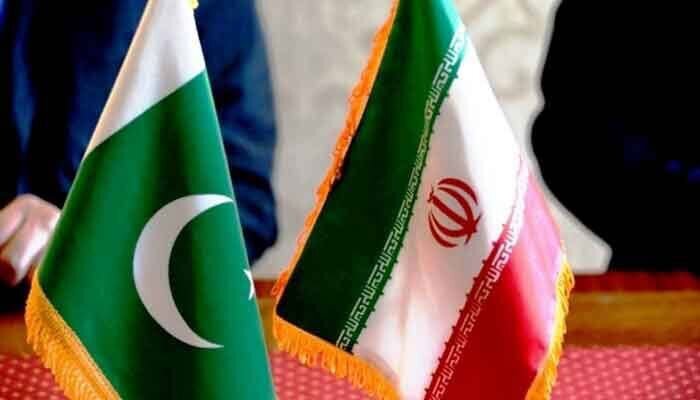
The fundamental doctrine of Iran’s foreign policy is the cultivation of strong, stable, mutually beneficial relationships with neighbors.
In this vision, relations with Pakistan occupy a special place. It is defined not only by geography but by centuries of civilization experience, religious affinity, cultural kinship, and convergent strategic interests. Two sovereign states at an important intersection in Asia can benefit Iran and Pakistan a lot from the lasting partnership and even contribute to the future of our region. President Masuud Pezeshkian’s future visit to the states reflects this growing momentum. It is based on a history of high levels of involvement, including the landmark trip of the late President Ebrahim Raisi to Islamabad, and on the history of Prime Minister Shebaz Sharif’s mutual visit to Tehran. These exchanges represent deepening integrity that goes far beyond ritual diplomacy, along with sustained diplomatic consultations between the high officials on both sides. They reflect conscious and strategic choices to enhance bilateral relations into one of the regional outcomes.
Iran and Pakistan share a 900-kilometer border over the line that divides the two provinces. It is a bridge that has connected people and civilization for centuries. Through this frontier, ideas, language, poetry and faith that continue to animate society, not only trade, but today. From celebrations of Nowruz to sharing the Sufi tradition, our depths of cultural and spiritual interconnectedness have built a lasting sense of familiarity and trust that forms the foundation of political cooperation.
Religious affinity strengthens this bond. As two proud Muslim countries, Iran and Pakistan are fixed in Islamic principles, justice, compassion and solidarity. These values are not just the cause of internal cohesion. They act as guide lights for our international engagement. They force us to support causes such as the Palestinian struggle, oppose injustice and support promoting peace through cooperation and mutual respect. Our economic complementarity offers great potential. Pakistan’s agricultural dynamism and Iran’s rich energy resources, coupled with our common interest in connectivity, provide a natural foundation for integration. In addition to the synergy of sectorals, both countries share a long-term interest in fostering open, fair and interdependent local economies. By adjusting the vision, Iran and Pakistan can build sustainable economic partnerships based on mutual resilience, technological advancements and inclusive growth. Such collaboration can play a transformative role in lifting communities, creating jobs and promoting development models that benefit the wider region.
As cross-border threats continue to put our shared security at stake, Iran and Pakistan continue to be vigilant against networks of terrorists operating in border regions. Counterterrorism adjustments are not an option. That is a must. Beyond local threats, both countries face wider strategic concerns arising from the region’s aggressive stance. The ongoing genocide in the Israeli regime’s Gaza, the occupation of Syria and Lebanon, and recent unprovoked attacks on Iranian territory highlight the urgency of a collective response to the belligerent forces thriving instability and domination. Responsible states cannot afford silence. It’s time to strengthen coordination, deepen security cooperation, and clarify clear and united attitudes at international forums.
In this context, Iran deeply appreciates the principled position carried out by the Pakistani government in June 2025, clearly condemning the US military attacks on Israel and Iranian territory. When the Western universe chose to take the wrong side of history, Pakistan stood firm in international law, regional stability, and solidarity with its neighbors.
What was moving likewise was heartfelt support expressed by the people of Pakistanis. The voluntary compassion of the Pakistani people resonated deeply throughout Iranian society. The Iranians looked at them with gratitude as their Pakistani brothers and sisters spoke up to them with their support. This display of empathy and unity will never be forgotten. It reaffirmed the deeper depth of our bond and the strength of the value we share.
Iran and Pakistan also enjoy records of close cooperation across multilateral institutions. The United Nations has consistently worked together to advocate for the rights of Palestinians and promote the Sustainable Development Goals. Within the organisation of Islamic cooperation, we advocate for addressing the pressing challenges of Muslim Ummah. As an active member of the Shanghai Cooperation Agency, Economic Cooperation Agency, and D-8, we pursue shared goals in connectivity, economic integration and regional peace. Our coordinated diplomacy helps to amplify our voices at the global stage and induce international discourse towards justice, equity and multilateralism. This collaboration is not limited to crisis management. It also reflects broader strategic convergence. Both Iran and Pakistan support the principles of sovereignty, non-interference and peaceful resolution of conflict. Both are committed to local order where Muslims shape their destiny and cooperate towards collective prosperity.
Our partnerships are also promising in trilateral and broader regional settings. With Afghanistan as our mutual neighbour, we share our interest in stabilizing our country and ensuring that peace and development will replace conflict and extremism. By integrating economic strategies and leveraging geostrategic positions, Iran and Pakistan will help transform the region into a hub of cooperation rather than competition.
Creating functional trade and transport corridors based on mutual benefits will bring tangible dividends to our people and reaffirm our leadership in creating future-looking regional architecture.
The pathways for the future call for unity, clarity of purpose, and willingness to transform a desire for sharedness into lasting institutions and practical outcomes. Enhanced diplomatic dialogue, expanding economic relations, promoting education and cultural exchanges, and institutionalizing security and development cooperation gives our relationships true depth and resilience.
President Pezeschkian’s visit not only reaffirms his commitment, but also provides an opportunity to revive his possibilities. In doing so we can draw inspiration from Arama Iqbal (Pakistani national poet and deep admirer of Persian thought). His words still resonate: “The nation is born in the minds of the poets. They thrive and die at the hands of the politicians.”
It is mandatory for us to ensure that Iran and Pakistan not only thrive, but also rise together as architects of the future of a peaceful, multi-dimensional, integrated region.
Our friendship is more than just an overview of the past. It is a strategic investment in the future. In unity, we find strength. Working together, we find a purpose. And in mutual respect, we find a foundation for perpetuating peace and sharing progress.
I have lived a long life of friendship between Iran and Pakistan.