
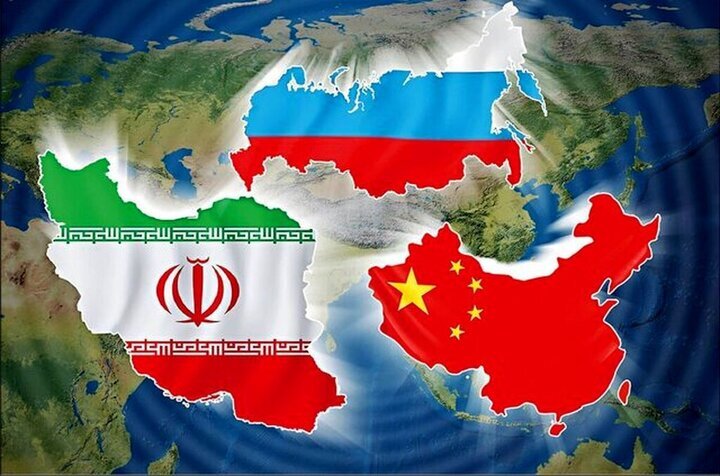
Tehran-Russia, China and Iran’s strategic cooperation is often labelled by Western countries as “a turbulent axis” and has emerged as a key counterweight to Western influences, particularly the US influence. This informal yet pivotal partnership is rooted in a shared goal of opposing America’s unipolarity, protecting national sovereignty and expanding influence across strategic regions.
With its strategic location and enormous energy resources, Iran will serve as a lynchpin within this axis, an important ally for Russia and a key energy and transport hub for China. Both Russia and China defend integration into frameworks such as the Iranian Shanghai Cooperation Organization (SCO) and BRICS, which they view as a breakwater against Western sanctions. Therefore, when Iran gets caught up in the crisis of war, or faces external threats that have intensified from Western pressure and regional conflict, it can significantly disrupt the balance of global and regional forces that have great consequences for both Russia and China.
Beijing’s unstable pivot
A war crisis or an increasing external threat to Iran will pose serious risks to China’s economic and strategic interests. Despite its deep economic ties with the West and Israel, China prioritizes diplomatic and political support for Iran over direct military involvement.
Iran is the heart of China’s energy security, supplying about 90% of crude oil exports to China, with an average of 1.7 million barrels per day (BPD) in 2025, peaking at 1.8 million bpd in June 2025. The Iranian crisis disrupts this critical supply chain and forces China to say it could cost more, seek less reliable alternatives and hinder economic growth. Furthermore, non-oil trade between Iran and China, worth $32.3 billion in 2024, will face serious constraints.
Iran is the “key gateway” of China’s Belt and Road Initiative (BRI), promoting ties with European and Western Asian markets. A war crisis or external threat disrupting Iran’s transport and energy corridors will put China’s major infrastructure projects and important logistics routes to the West. Events like the June 2025 attack on Iran’s military and nuclear facilities by Israel could further threaten strategic projects such as the Economic Corridor (CPEC) in China and Pakistan. The “middle corridor” (international transport routes in Caspian), an alternative to routes through Iran or Russia, suffers from infrastructure restrictions, including limited transport capacity, making it an inadequate alternative to Iran’s role in China’s BRI objectives.
Geopolitical, the Iranian crisis will undermine China’s diplomatic credibility, particularly after the successful mediation of Iran-Saudi Arabia’s reconciliation in March 2023. It also undermines China’s strategic autonomy to ensure energy and logistic routes, increasing its vulnerability to external pressures, particularly to external pressure clogging, such as the clogging of the effects of Malak. This will reduce China’s regional and global position, creating an opportunity for the West to strengthen its position and shift its focus to stand up directly to China.
Moscow’s changing strategic compass
For Russia, the crisis or external threat of war against Iran has widespread consequences, affecting its geopolitical impact, economic stability, and security interests.
The Iranian crisis could undermine Russia’s ability to maintain a regional foothold, creating a vacuum of exploitable forces by rival actors like Turkey and Saudi Arabia. Worst scenarios such as serious escalation of conflict, increased instability, ethnic tensions, or refugee crisis can increase the risk of terrorism, migration, and anti-Russian sentiment in these important regions.
Economically, Russia, a major oil exporter, may benefit temporarily from rising global oil prices due to disruptions in Iran’s supply, but long-term market volatility will undermine cooperation within OPEC+ on oil production and price stabilization. Iran is also considered a market for Russian weapons, and the crisis is likely to reduce the demand for Russian defense exports and affect the defense industry. Furthermore, Iran is essential for access to Russia’s Asian market, particularly India, via transport corridors.
The international North-South Transport Corridor (INSTC) connecting Russia, Iran and India is the cornerstone of Russia’s strategy to diversify trade routes and reduce its dependence on Western-controlled aisles. The Iranian crisis jeopardizes the survival rate of the INSTC, disrupts Russia’s access to South Asian markets, and hampers the challenges posed by sanctions related to the Ukrainian conflict. Direct conflicts, including Iran, could further destabilise these routes and block Russian exports.
Political, Iran serves as a geopolitical buffer against Western pressure, especially in the context of Ukraine’s conflict. The Iranian crisis could burn the West, strengthen Russia’s isolation and undermine the narrative of Western imperialism.
In conclusion, the crisis of war against Iran or an intensified external threat would have serious and multifaceted consequences for both China and Russia. The loss of key strategic partners erodes regional influence and geopolitical leverage over the West. Key energy and transport routes will face disruption, and neighboring regions will see increased instability, and both countries will face major challenges in their economic and security interests.
The axis is severely damaged and creates an opportunity for the West to expand its impact. If the US overcomes the challenges posed by Iran, it could redirect resources to confront China and Russia more directly, especially in the context of renewed Western support for Ukraine. This scenario will force both countries to reassess their geopolitical and economic strategies, addressing significant obstacles to maintaining strategic balance and global impact.
Mohammad Hossein Masumzadeh, Senior Researcher at GPTT