
Islamabad – From Tehran to Islamabad, Gaza’s position is defined by moral clarity and historical consistency.
On July 22, 2025, Iran’s Foreign Ministry condemned “a horrific crime committed by the Zionist regime of the Gaza Strip,” warning that 90% of the territory is currently unresiduous and that over a million people are facing starvation. They condemned the city of Israel’s plan as an ethnic cleansing act and called for an emergency meeting of Islamic cooperation organizations.
Pakistan’s attitude is just as solid. From the early days of the state, Quaid-e-azam Muhammad Ali Jinnah has completely rejected Israel, calling it an “illegal condition created by taking away the lands of Palestinian Muslims,” and famously declared, “our souls are not for sale.” Since then, all governments have supported this position, refusing to recognize the Palestinians until they achieve self-determination with East Jerusalem as the capital. For both Iran and Pakistan, the Palestinian cause is not a distant diplomatic file, but a litmus test of the commitment to justice in the Islamic world.
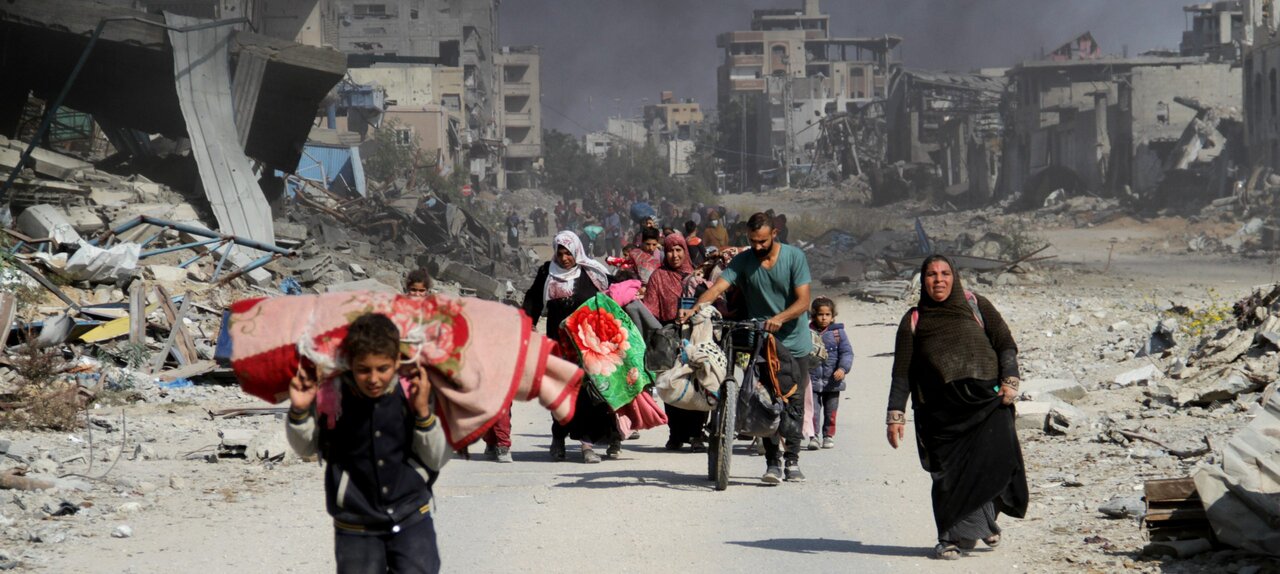
If the goal is to defeat Hamas, then the destruction of Gaza homes, hospitals, schools and water systems would be inexplicable. This is not a secondary damage. That’s an intentional policy. Many of them unfolded under the cover of the Iran-Israel conflict when global attention was elsewhere. According to the Gaza Ministry of Health, Palestinian deaths have already exceeded 55,637 as the war between Iran and Israel escalated in June 2025, with more than 129,000 people injured. By the end of July, it had reached 60,785, including 217 journalists, 120 academics and 224 humanitarian workers. At least 80% of the victims were civilians. 70% of deaths in the area were women and children. These figures make it clear that after the Iran-Israel war, not only continued the killings in Gaza, but escalated.
The willingness of the Western voice to use the word “genocide” is important not only to examine Palestinian testimony, but also to crush architecture decades-old denials. When Jewish scholars, Israeli experts, UN officials and international courts gather in this language, the space for evasion collapses. For citizens from Melbourne to Montreal, this convergence has given moral legitimacy to what the streets have been saying for months. The struggle in Gaza is a struggle for humanity.
But moral clarity without political action is mere theatre. Both Sachs and Albanese argue that to end the accomplice, they must cut off weapons, impose sanctions and prosecute those responsible. Below that is acknowledgement of guilt.
It brings us back to where we began: divided into itself to the west, its conscience naked. The screams of Gaza violate auditoriums, courtrooms and city streets. Whether or not it can penetrate the power position determines how this age is remembered. The Quranic tradition considers the cry of the oppressed as a summoning, not a mourning. History will ask whether the East stood firm when the West became enthusiastic, and whether people who heard the word “genocide” acted before the inscription was over.