
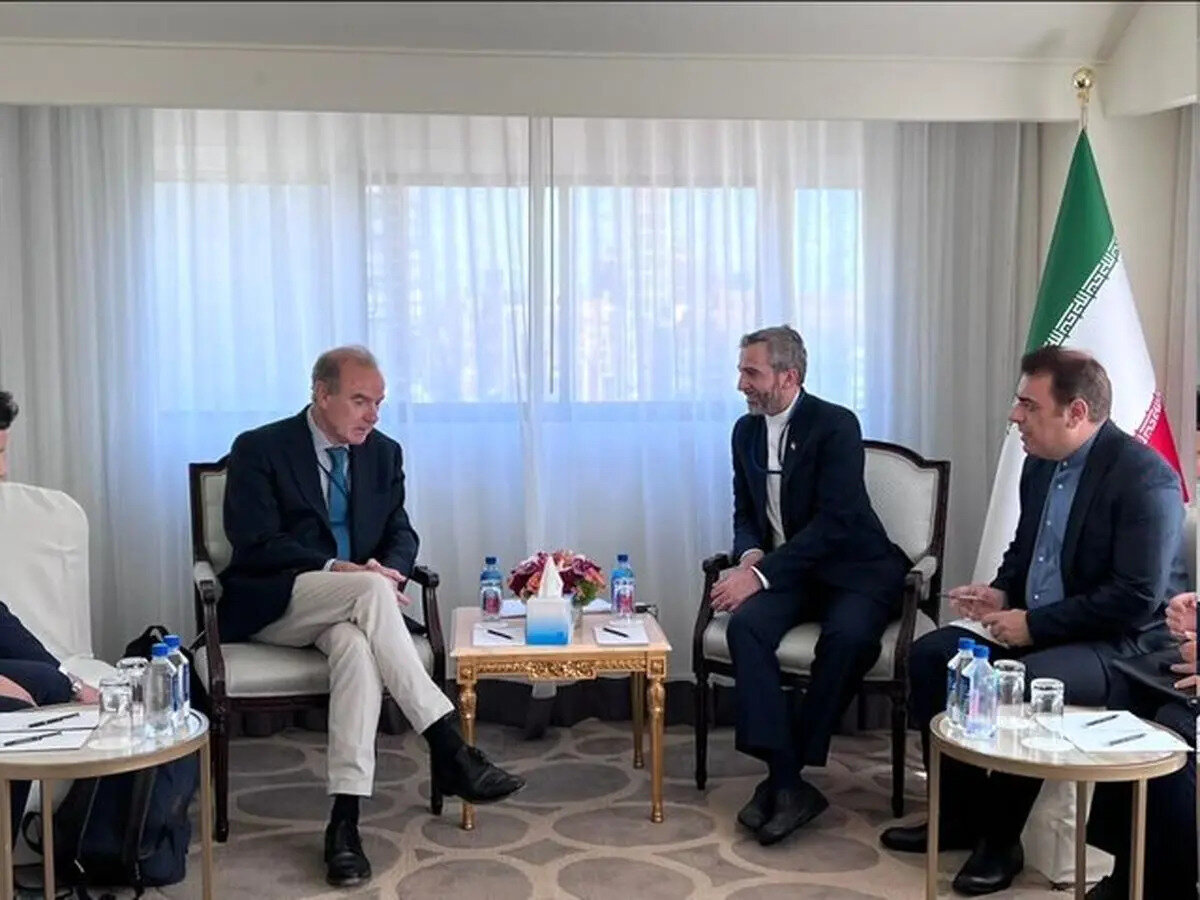
TEHRAN – Ali Bagheri Kani, secretary of Iran’s Strategic Council, has revealed Washington’s intentional obstruction of the comprehensive nuclear agreement that was finalised during the administration of the late President Ebrahim Raisi.
In an interview that aired Saturday, Bagheri Crani said: “Under President Raisi’s inauguration (2021-2024), multiple negotiation rounds in Vienna, Tehran and New York have come to a full draft.
Dismissing the claims of internal obstruction, he emphasized that the Iranian negotiating team would operate “strictly within the system’s strategic framework” and would make domestic interference impossible.
Mikhail Ulinov, the permanent president of Russia for a Vienna-based international organization, confirmed the review in a January interview with the Tehran Times.
He confirmed that the remaining JCPOA signatories were poised to revive the agreement when they abandoned the sudden negotiations “in cooperation with Washington” in 2022 – a move consistent with Iran’s domestic unrest.
Urinov emphasized that saving the agreement “reliant entirely on our actions,” and highlighted Europe’s subordination to the American agenda.
On June 13, 2025, when the Israeli regime launched airstrikes targeting Iran’s nuclear facilities, military sites and civilian infrastructure, efforts to resume negotiations under President Masuud Pezeshkian’s government were shattered violently.
The US escalated hostilities on June 22, deploying B-2 stealth bombers to attack nuclear sites with Natanz, Fordow and Isfahan.
The 12-day campaign of attacks led to march beyond more than 1,065 Iranians, including civilians, scientists and military personnel.
Iranian officials have denounced the attack as “diplomacy betrayal” and revealed Washington’s overlap in defending consultations while enabling military attacks.
Iran’s retaliation operation True Promise III caused unprecedented damage to Israel’s military and economic infrastructure, overwhelming the US and Israeli air defenses.
Importantly, Iranian forces attacked Al Udeid Air Force Base in Qatar, the Pentagon’s important regional command center.
The conflict halted only after the Israeli regime, facing the prospect of a stockpile of depleted missiles and collapse of civil infrastructure, demanding a ceasefire on June 24th.
Despite the confusion, Tehran and Washington appear to be weighing back to indirect talks. Norway emerged this month as a potential mediator of potential Iran-US negotiations, following a previously held round in Muscat and Rome, which halted after the June 13 strike.
Both sides are said to be willing to restart, and Tehran argues that compensation for war damage is part of a new debate along with nuclear issues.
Iran’s Foreign Minister Abbas Aragchi has shown that the reopening will be legitimately dependent on national interests, and Tehran received a message from Washington, noting that the decision to talks is taking place within Iran’s highest security council.
He emphasized that Iran is seeking an IAEA and a “new stage” that is consistent with current reality, even if the June strike and its aftermath strengthens public views on external pressure tactics.
Tehran officials and analysts argue that the thrulines throughout these episodes are consistent with Iranian diplomacy and repeated US obstruction.
Domestic skepticism continues to compare new diplomacy with “idolive worship” by figures like former nuclear negotiator Saeed Jalili.
Nevertheless, Iranian diplomats argue that dialogue requires enforceable US guarantees against a military strike in negotiations.
Currently under consideration by contacts via Norway, Iranian officials say the test is not Iran’s willingness to engage and whether Washington will refrain from derailing another diplomatic trajectory.