
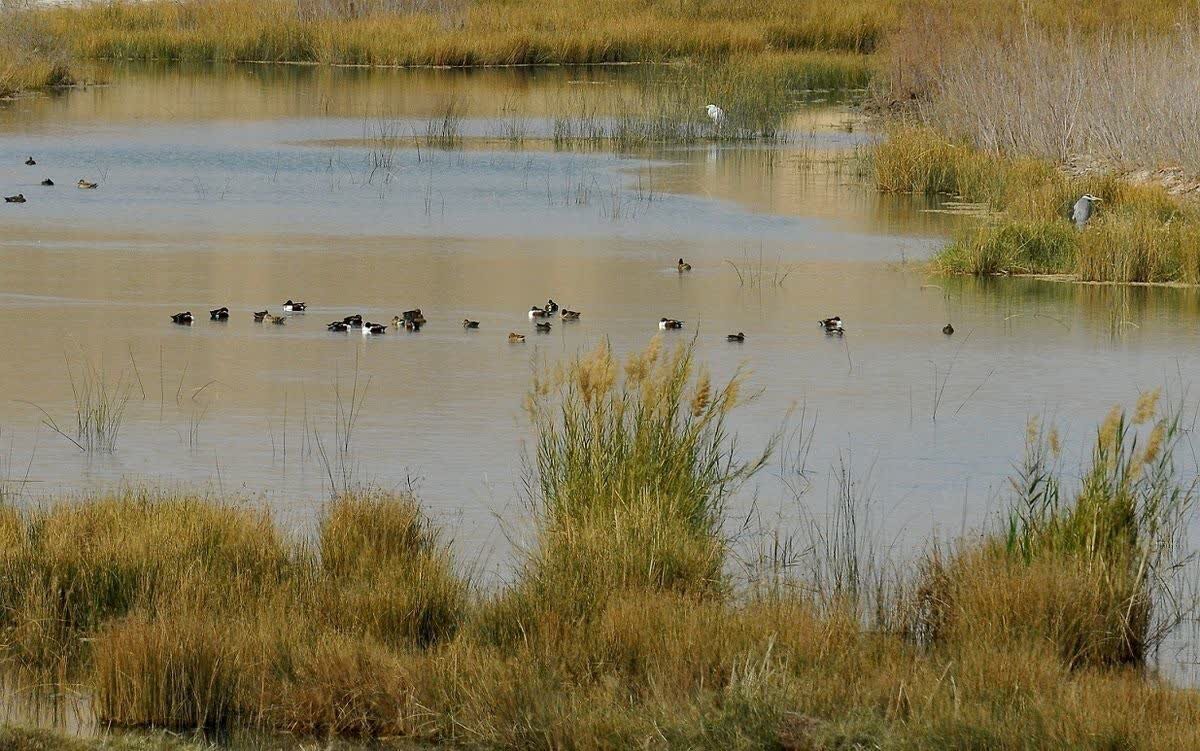
Tehran – The Gandman wetland, closed in Borgen County in southwestern Chaharmahal Bhaktiari province, is one of the most important habitats of migratory birds in the country and houses around 40,000 birds from around the world.
In February, the wetland was registered as Iran’s 27th Internationally Important Wetland. With its reaching 1,070 hectares, it is one of Iran’s top five bird watching sites and is the country’s most important permanent habitat for migratory birds.
The shallow depths of the wetlands and diverse vegetation have become important stopover points for migratory birds. This site is particularly notable for its plant diversity, with 129 species and 87 genera identified in 32 families. It is one of Iran’s most important habitats for endemic Zagros fish.
All of these features have made the wetlands a favourable place to stop in the wetlands on long journeys from South Africa and India to the northern and Siberian regions, Irib reported.
Additionally, around 5,000 migratory birds, including ducks, herons and sandpipers, nest and breed in the marshlands of gundmans. The bird flies to wetlands all year round and uses it as temporary habitat.
As autumn approaches, there will be a new wave of migratory bird wings to the marsh, continuing the movement until the beginning of winter.
Wetlands are important wintering habitats for several bird species, such as endangered sociable lapwings and vulnerable common Pochards.
Drought, climate change, fires and pollution pose threats to wetlands, but experts regularly monitor the site according to Gundman’s wetland management plan. Furthermore, communities play a role in mitigating such threats due to the importance of wetlands to their livelihoods and spiritual beliefs.
Gandman wetlands play an important role in maintaining the biodiversity of both local and nationalities, as well as environmental and ecological importance. It’s a great destination for birdwatchers and nature lovers. Protecting this international wetland will go a long way in maintaining local ecosystems and mitigating environmental threats.
National Plans to Improve Wetland Conservation
In June, the Ministry of the Environment (DOE) and the Ministry of Agriculture signed a Memorandum of Understanding (MOU) to launch a national plan to empower communities to protect and promote sustainable use of wetlands.
The main purpose of the MOU is to turn wetland protection from a government initiative to an inclusive social responsibility by focusing on training, empowering and engaging in the community.
Wetlands are an important ecosystem and are known as the kidneys of the Earth. These ecosystems provide clean water, protect against flooding, restore underground aquifers, and maintain surface water flow during drying periods.
Iran’s geography is clear and full of diverse landscapes. The country has a variety of wetlands, of which 27 were listed in the International Ramsar Convention.
On December 10, 2024, DOE official Mehri Asna-Ashari said the Iranian wetland conservation project led to a 27.5% reduction in irrigation water consumption and an increase in agricultural produce by 22.5%.
“Currently, 49 wetlands, which cover about 22% of the total domestic wetlands, are preserved in the form of native ecosystem management partnerships,” the IRNA quotes Asna-Ashari as saying.
She made a statement at a meeting of the steering committee of the International Project for Iran’s Wetland Conservation.
mt/mg