
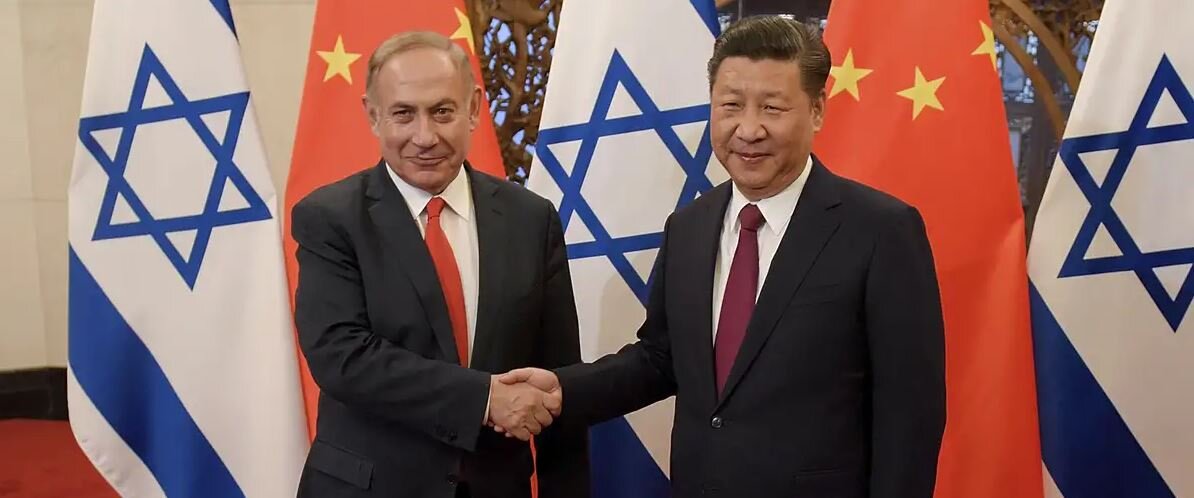
Madrid – On modern Western Asian chess boards, China is increasingly emerging as a decisive actor. Its Belt and Road Initiative (BRI) is one of the biggest geopolitical projects of the 21st century, demanding solid anchors in strategic regions where energy, trade corridors and some of the world’s longest-running conflicts intersect.
However, Beijing faces a dilemma. How can we guarantee stability and continuity in areas where deep rivals are marked, without abandoning their traditional role as a “neutral” actor? The postponement time has passed. The very structure of the international system forces choices, and in West Asia the choices are summarised in Iran.
The paper for this analysis is simple. If China wants to secure Eurasian economic projects, only solid cooperation with Iran can achieve this. The alternative – a “weak” balanced act with Israel or its allies – relents not only on the BRI of the region, but also on Beijing’s ability to project itself as a global South stabilizing force.
Belts and roads as global architecture
China sees BRI as a multipole integration infrastructure. Its core objectives are three:
Energy: Ensures stable supply from the Persian Gulf and Central Asia to East Asia.
Connectivity: Establishment of land and maritime corridors connecting Eurasia and Africa.
Economic diplomacy: Integrating a global environment that is independent of the dollar and Western financial hegemony.
Western Asia is the heart of all three pillars given its geography and energy resources. Overland routes to Europe and maritime corridors to Africa cannot bypass the straits or ports. For this reason, Beijing cannot treat the area as merely a transit zone. This must be considered a nucleus that requires sustained stability.
China and Iran: Strategic Affinity
Iran offers China what other regional powers cannot simultaneously offer:
Energy Depth: A huge amount of oil and gas reserves that can sustain China’s growth for decades.
Central location: The intersection of Central Asia, West Asia and the Indian Ocean is perfect for clarifying both the land and the maritime corridors.
Political Autonomy: Unlike Saudi Arabia and the UAE, Iran is not a US protectorate, but rather a more strategic room to operate.
Political Convergence: Like China, Iran promotes a multipolar order and questions Western hegemony.
This alignment does not have to be ideological. It’s structure. Both forces benefit from weakening their dependence on transatlantic orders and integrating alternative networks.
In 2021, China signed a 25-year strategic cooperation agreement with Tehran, covering billions of dollars in investments in infrastructure, transportation and energy. However, Beijing is considered cautious and reluctant to commit completely. This hesitation is becoming increasingly unacceptable.
Structural risks of Israeli BRI
Israeli expansionism is a factor of instability that directly threatens China’s regional interests. Israel is neither a neutral nor a predictable partner.
The Dimension of Colonial and Expansionist: In 1948, particularly since 1967, Israel predicted across borders and promoted endemic conflict.
Regional ripple effects: All attacks in Gaza, all operations in Lebanon or Syria, have created tensions over Iran and its coalition’s resistance movement.
Asymmetry with Washington: Israel serves as a strategic adjoint for the United States and as a vector for the American agenda in the region.
For China, which is seeking a stable trade corridor, Israel represents a lasting risk factor at best, and at worst a catalyst for instability that can derail a billion dollar investment.
Expanding Israel’s territory – ambitions such as Gaza, the West Bank, and others are not considered purely “local” issues. Every step in that direction drags you in anxiously across the wider area. In the case of BRI, this corresponds to a systematic threat. Land routes across Iran and Iraq towards the Mediterranean, or maritime routes that rely on stability in the Persian Gulf, become vulnerable with any surge in Israeli and Palestinian violence.
Logic conflict: Colonialism and connectivity
From another prism, the Chinese dilemma can be explained as a collision between two incompatible logic. On one side is the logic of Israeli Exhaustism: permanent war, military rule, and fragmentation of neighbors. The other is China’s BRI logic: connectivity, interdependence, and predictability of trade corridors.
Israel’s expansion depends on the division of Palestine, the weakening of Syria, Lebanon’s pressure and the instability of Iran’s siege. In contrast, China’s expansion requires stability. A secure pipeline, functional ports, uninterrupted railways.
These two models cannot coexist in the same geopolitical space. Entry into China’s region forces you to make a choice. Submit local walls and order of violence, or build one of the routes and horizons.
If Israel represents permanent destabilization, Iran serves as the importance of resistance and containment. Not because Tehran has no internal tensions or military predictions, but because its structural role is to block Israel and the US expansion.
For China, the outcome is direct:
Land Corridor Security: The route connecting New Jiang and Turkey to the Mediterranean will inevitably pass through Iran. If this section succumbs to instability induced by Tel Aviv or Washington, the overall BRI architecture will fade.
Energy Balance: Reevaluate the pressure on Beijing through supply or pricing, as Iran is the counterweight, as Saudi Arabia and the United Arab Emirates lined up with Washington.
Projection into the Indian Ocean: Iran has direct access to ports like Chabahar and corridors from Pakistan, India and beyond.
Therefore, China’s consistency with Iran is neither sentimental nor ideological. It is the survival strategy of BRI.
The miracle of Israeli pragmatism
Some Chinese experts argue that Israel could become a valuable technical and economic partner for BRI, citing cooperation in agriculture, water and digital innovation.
However, this reasoning disrupts tactical alliances and tactical collaborations. Israel can provide advanced technology, but it is never politically stable. Washington and its reliance on expansionist logic has become an unreliable partner for multicentury initiatives like BRI. What is at stake is not access to agricultural patents, but the consistency of the China-fueled energy corridor throughout the 21st century.
Another important factor is the perception of the Global South. China presents itself as an alternative to the Western order, but its credibility depends on its attitude towards Palestine and Israel. For most Arab and Muslim societies, Israel embodies colonial projects that perpetuate injustice. Ambiguity from Beijing to Tel Aviv will undermine his legitimacy as a leader in the Global South.
In contrast, Iran is seen as a state that resists hegemony and colonial expansion. Supporting Tehran not only ensures routes and energy, but also strengthens the Chinese image as a political force for multipora and order. The dilemma is transparent. China will either build global legitimacy or erode it by shaking Israel.
Risk Scenario: Gaza-Golan-Iranian Crossing
The current situation in Gaza, ongoing tensions in Syria’s Goran, and sustained pressure on Iran create the risk of a triangle that can jeopardize BRI. Israeli military escalations draw the area into a spiral that affects pipelines, gas reserves, and maritime routes.
It is naive to think that China remains detached indefinitely. Global interdependence means that a major fire in this zone will affect investors’ perceptions of risk in the energy market, maritime insurance, and infrastructure.
Iran is the only actor who shows his true ability to resist such pressures. Through the network of alliances (Hezbollah, Syrian and Palestinian groups), Iran is the only force capable of impose restrictions on Israel’s expansion. If China wants a stable corridor, it must support actors who will reduce instability.
For decades, China’s Western policy has been dependent on balance. It’s ties with Iran, economic ties with the Persian Gulf, and occasional cooperation with Israel. This strategy has enabled expansion without deep commitment.
Today, that balance is at its limit. Israel’s radicalization, open competition with the US, and West Asia’s centrality towards BRI forces of choice. Neutrality no longer brings benefits — it creates vulnerability.
The future of West Asia belts and roads relies on strategic definitions. China cannot maintain two conflicting logics. Israeli Extensive – Colonial logic, what thrives in conflict, and BRI logic of connectivity that requires stability and predictability.
Choosing Israel is to undermine the project from within and blame the vulnerability. Iran’s choice is to build an axis of stability, energy and projection for Eurasia and the Indian Ocean.
This is not an ideological choice, it is a geopolitical calculation. Guaranteed the corridor’s functionality for decades to come. Without Iran’s strong and supported Iran, Beijing’s dream of global integration could evaporate into the ocean of conflict driven by Israel’s representative logic of colonialism and expansion.