
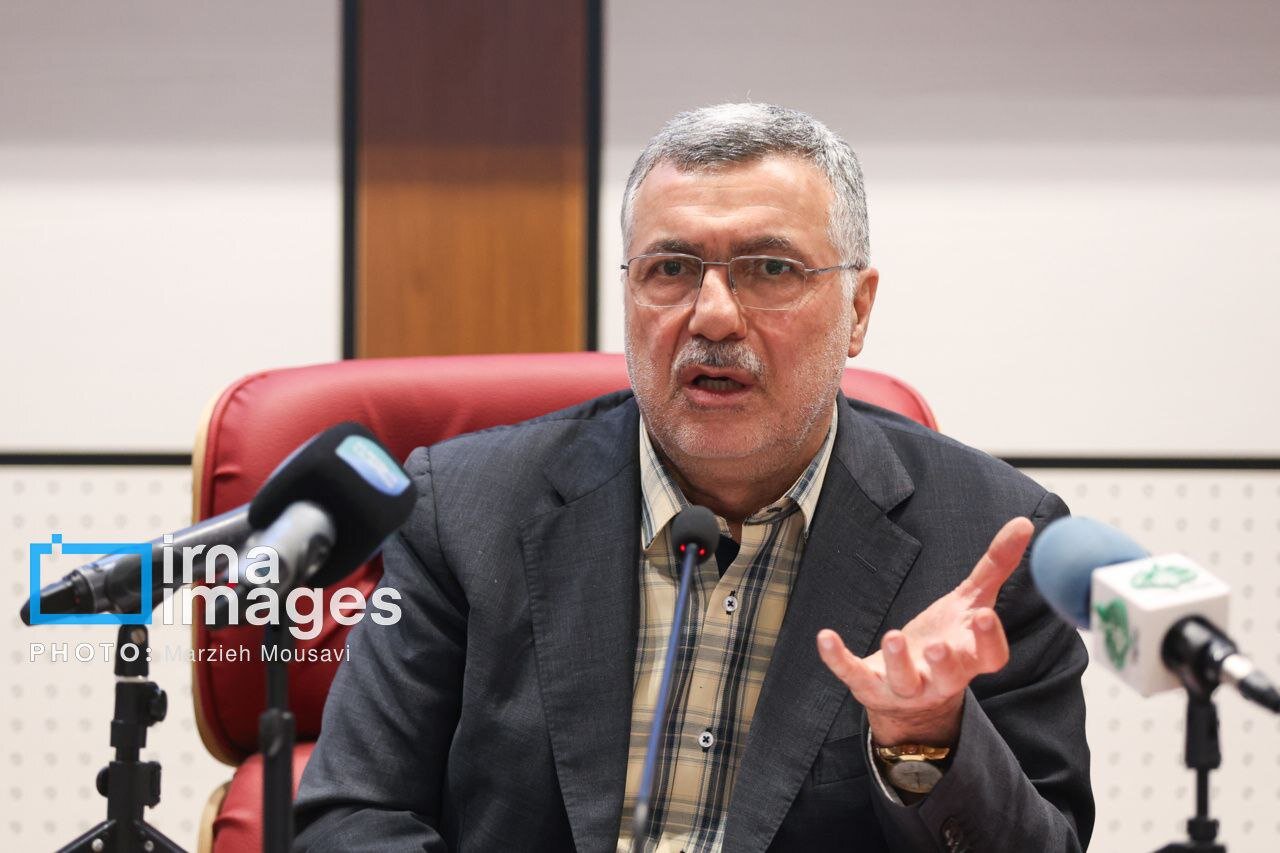
Health Minister Tehran – Mohammad-Reza Zafarqandi highlighted the importance of artificial intelligence (AI), telehealth and mobile health in the management of non-communicable diseases (NCDs).
Developing smart health care systems and raising public awareness through the promotion of preventive education and health literacy is a key point for the future of health care systems. The adoption of the latest technology is inevitable, so these tools can be adopted to reduce costs and promote access to services.
Officials made their remarks Tuesday, dealing with the first session of the National Committee for Prevention and Control of NCD.
People’s health is not limited to treatment. He noted that health literacy and education play an important role in improving society’s health.
Zafarqandi emphasized the importance of education and self-care, saying that raising public awareness of key symptoms of the disease leads to early detection, which reduces treatment costs and improves success rates.
Officials also highlighted the need for the development of national, operational programs that can be implemented in each state, and the need to hold workshops for the implementation of screening programs for hypertension, diabetes and blood lipids.
Iran’s NCD accounts for 82% of all deaths. Over the past 20 years, deaths caused by NCDs have increased by 14.5%.
Cancer, diabetes, cardiovascular disease, chronic respiratory disease, and mental health disease are five main categories of NCD.
Early screening for non-communicable diseases and controlling risk factors are two ways to deal with disease.
MOU has signed to use AI in treatment
In January, the Vice President of Science and Technology and the University of Tehran University of Medicine signed a memorandum of understanding to use artificial intelligence for medical purposes.
The agreement, inked on January 11th, aims to promote targeted support for the knowledge-based ecosystem in the health sector focused on human-centered health using artificial intelligence tools for cell therapy in endocrinology and metabolism, as well as ultimate innovations in human-centered healthcare with reported products and services.
Statistics show significant cost savings of around 40% using artificial intelligence in healthcare in developed countries. In certain cases such as breast and lung cancer, artificial intelligence can reduce healthcare costs by 80%. Therefore, the knowledge-based economy should aim to use AI to save healthcare costs, IRIB cited Mostafa Qanei, secretary at the Biology Development Headquarters.
National Health Literacy Movement
In 2024, the National Health Literacy Movement began to be implemented in 10 states of the country along the theme of the second day of National Health Week, an official from the Ministry of Health’s Persian Medicine Department said.
“This is a specialized program aimed at promoting health and healthy lifestyles, and involves multilateral interactions between health and education ministries,” the IRNA quoted Hossein Rezaei-Zadeh as saying.
The initiative begins at school and targets teachers, students (1st to 6th grade), and parents.
Using graphic techniques and educational principles for children, the program seeks to convey a simple and practical message about healthy lifestyles in the form of stories.
Health literacy and skills to maintain a healthy lifestyle are one of the most important factors in promoting health and well-being in families and society.
mt/mg