
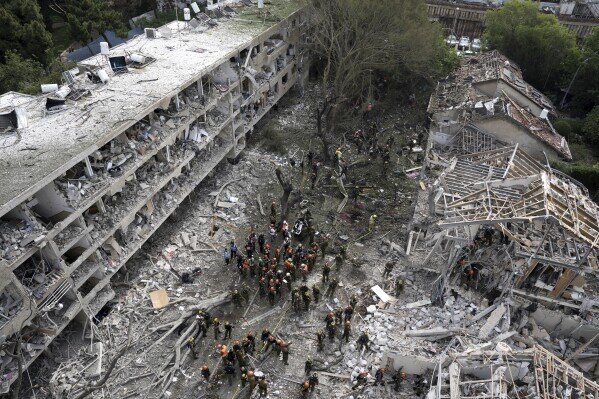
Tehran – In recent decades, the conflict between Iran and Israel has evolved into a battlefield of obvious, secret hostility.
Iran and Israel fought a full military conflict between June 13th and June 24th. Since the battle stopped, analysts have tried to guess how both sides will once again be targeted directly to each other with bombs and missiles. However, it appears that the Iran-Israel conflict could once again return to the previous pattern of “shadow war.” This model, dominant over the past 20 years, has been defined by intelligence reporting, sabotage, targeted assassinations, lobbying, diplomatic pressure, and proxy warfare.
Earlier on June 13, 2025, after attempting to destabilize the Islamic Republic through lobbying due to internal unrest, increased economic pressure and denials, Israel launched a direct military strike against Iran, citing concerns about the nuclear program. Although the first day of the war supported Tel Aviv, the tide began to shift as Iran regained its military foothold. Iran’s extensive missile retaliation, tactical changes in attack strategies, breakthroughs in domestic intelligence that exposed Mossad-related groups, and tensions over Israeli missile defense sanctuaries have helped to rebalance the power. This dynamic continued until Iran deployed a new generation of missiles, urging Tel Aviv to demand a ceasefire.
More than two months after the end of the 12-day war, the possibility of an updated conflict cannot be ruled out, but the return to the old pattern of conflict, “shadow war,” has probably emerged as a scenario. The war has effectively disproved a long-standing concept that dates back to the 2003 US invasion of Iraq. This means that Iran’s “change of regime” could be achieved through military intervention. This idea, which had been circulating for a long time in the American military world, is now decisively discredited. Western media analysis suggests that the Iran-Israel warfare not only failed to cause Iran’s domestic unrest, but also validated Zbigniew Brzezinski’s 2004 warning. This phenomenon was clearly observable throughout the 12-day conflict.
Israel had three main objectives in launching an attack on Iran. It causes extensive damage to nuclear and military infrastructure, assassinates senior Iranian officials, and leads the country to chaos. Although US support was able to damage some nuclear facilities, Iran’s military capabilities and social cohesion remained largely unharmed. Meanwhile, the strategic use of Iranian missile tactics and the deployment of advanced Arsenal have restored some military balance and caused serious damage to Israel.
It is also important to remember that surprises have always been the basis of war. But today, Iran’s military preparation and restructuring of defense systems (including air defense) dramatically increased the costs of Israel’s direct attacks. Recent changes in the structure of Iran’s Supreme National Security Council further demonstrate Tehran’s commitment to crisis management and strategic planning in the face of future threats. Meanwhile, Israel has not managed to halt Iran’s nuclear program. With its own admission, it was able to delay it after a few years. This reality, coupled with the long and decisive conflict in Gaza, which is now approaching nearly two years, has exhausted Tel Aviv’s military and political stamina, making it increasingly difficult to make an extension campaign against Iran.
Also, economic aspects must be considered. The economy is driven by decisions from consumers and businesses, people. What undermines consumer confidence and what John Maynard Keynes calls the “animal spirit” leads to higher costs and reduced investment. The growing tensions in the region make both citizens and investors more cautious. If everyone is cautious at once, the economy will decline. This may not be a significant issue for Iran, which has long withstanded Western sanctions and reduced foreign investment, but poses a serious threat to Israel.
Another lasting feature of the global economy is that investors flock to the US Treasury when the world feels dangerous. As we have seen, concerns about tensions in West Asia are likely to ease and even lower the recent increase in Treasury yields.
Israeli military strikes against Iran are always costly and dangerous due to geographical distance and Tehran’s ability to deterrent. Now, Israel appears to be poised to return to a low-cost, potentially effective model of “shadow wars” as it is tired from the long-term war in Gaza, failing to achieve its strategic goals and not facing internal and international pressures. In this model, assassinations, secret operations, economic warfare, and destructive diplomacy replace direct conflict. This return is inevitably driven, not driven by preference. Because Tel Aviv knows that an open conflict with Iran will not result in a swift victory and can spiral into a crisis that is irreversible for itself.