
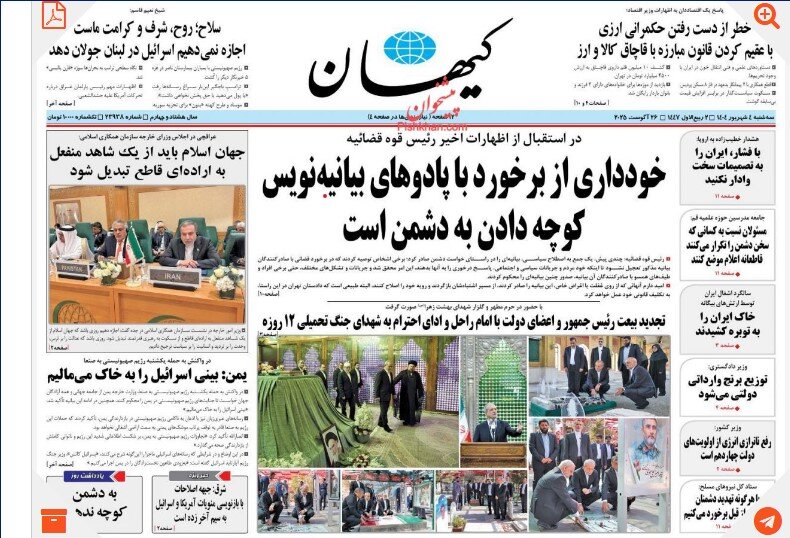
Kayhan reviewed the collapse of Israeli drones during the 12-day war in June, writing: The collapse of Israel’s advanced drones is a major achievement for the Iranian military.
The ruins of the fallen drone include sensitive technologies such as electro-optic sensors, advanced radar, electronic warfare systems, and satellite communications. With its strong history of reverse engineering, Iran can analyze these technologies and use them in the design of new drones. This could improve the accuracy, range, stealth and combat capabilities of Iranian drones. This success strengthened Iran’s status as a regional and global drone power. The ability to shoot down the world’s most advanced Israeli drones could boost international client trust in Iran’s technology and expand the Iranian drone export market. This operational experience provides valuable information for upgrading Iran’s defense systems. This will help indirectly protect the drone infrastructure and strengthen Iran’s advantage.
Donya-e-eqtesad: ICT will suffer if sanctions are returned
In an interview with Ehsan Chitsaz, Deputy Communications Minister for International Affairs, Donya-e-eqtesad discussed the impact of snapback mechanisms on the digital economy and industry. He said: It should be noted that Iran’s ICT industry is at a delicate point today. On the other hand, the risk of activating snapback mechanisms can be more strongly separated from this sector, reduce access to global services, and accelerate the movement of human capital. Meanwhile, even without this mechanism, internal challenges such as widespread filtering, internet instability and unpredictable policies limit the space run by startups and technology companies. Thus, lifting sanctions and paving the way for interaction with global chains could allow Iran to access new technologies, foreign investments and international partnerships. The future of Iran’s technology industry depends more than anything on whether it can overcome both the threat of sanctions and the domestic obstacles, such as filtering in the near future.
Arman-E-Emrooz: Dynamic Diplomacy
In the memo, Ahman et M.Ruz discussed the dynamic diplomacy of the sitting government. According to this paper, the dynamic diplomacy of the 14th government allowed the creation of new routes for trade and exports by expanding commercial and economic ties with their neighbors. By pursuing a balanced foreign policy, the 14th government was able to manage its relationship with global and regional authority. While some Persian Gulf countries have shown a tendency to maintain the presence of US troops in the region, Iran has helped establish a balance in the region by strengthening China’s relations with Russia. This multilateral approach allowed Iran to resist foreign pressure and at the same time establishing friendly relations with its neighbors. By focusing on regional integration and dynamic diplomacy, the government has established Tehran as a key force in the Middle East. The restoration of relations between Egypt and Bahrain, along with expanding cooperation with other countries in the region, demonstrates the success of the government in promoting peace and stability.
sobh-e-no: Deterrence through unification
In the article, Sobh-e-No emphasized that the statements of the leaders of the Islamic Revolution once again highlighted the strategic truth. The solidarity and unity forged during the 12-day conflict have reshaped America and Zionist enemies’ perceptions of Islamic Iran. The vigilance of the Iranian people successfully disrupt the enemy’s plans to stand up to the state and become unstable. Foreign powers continue to engage in hybrid wars, from sanctions to media manipulation and cognitive tactics in their efforts to erode national authorities. In this context, internal discrepancies risk becoming a country’s “strategic black hole.” Today, Iran is at a historic crossroads. One path defends the strength and comprehensive deterrence of the nation, while the other is decorated with charming rhetoric, but in substance. The choice is clear. Signature and security lie in intelligent unity and positive resistance. Alternative narratives simply reflect the psychological warfare of hostile forces.