
Tehran – Responding as E3 in a move that could further escalate tensions with Iran, the UK, France and Germany, reportedly prepares to spark the so-called “snapback” mechanism of the 2015 nuclear deal.
According to Reuters, the European trio will formally begin the process of reimposed UN sanctions on Iran on Thursday, leaving the possibility of delaying actual 30 days of enforcement if Tehran offers a new commitment to its nuclear programme.
A diplomat involved in Geneva Talk confirmed that the meeting between Iran and E3 on Tuesday produced no concrete results. Despite their willingness to leave space for further diplomacy, Europeans ostensibly seem determined to maintain snapbacks to the table to prevent the expiration of UN Security Council resolution 2231 in mid-October. The resolution, adopted after the 2015 Joint Comprehensive Action Plan (JCPOA), lifted sanctions in exchange for nuclear restrictions and was set to expire 10 years after signing.
But beyond technology, E3’s attempts to exercise Snapback highlight the deeper struggles of Europe. It seeks to demonstrate geopolitical authority at a moment when subordination to Washington becomes more obvious than ever before.
A few days ago, European leaders were very publicized in Washington for a summit with President Donald Trump about the Ukrainian crisis. Far from showing unity, the conference optics were widely seen as humiliating to Europe.
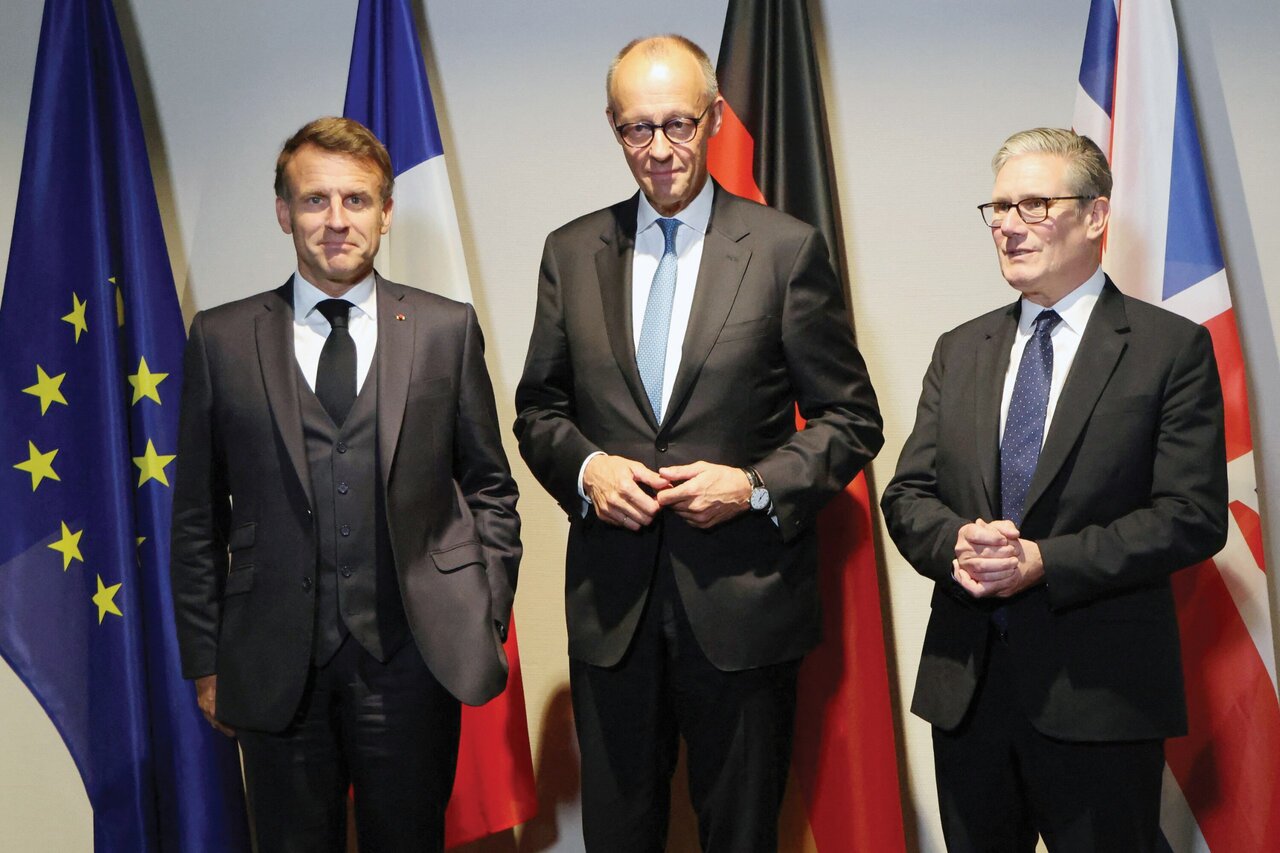
Images spread throughout the global media show Trump sitting grandly on a resolute desk, with European leaders, Prime Minister Kiel, German Prime Minister Friedrich Merz, French President Emmanuel Macron and Italian Prime Minister Giorgia Meloni twitching on the other side. Even the sympathetic outlets in Europe could not ignore the imbalance. The intention to project solidarity of the project revealed instead the hierarchy of Trump as the sole power broker and Majuuka as Majuuka as Europe.
The E3 is reaching the Iranian snapback lever is the backdrop of this decline in height.
Iran consistently rejected snapbacks as illegal. This mechanism was originally built into the JCPOA, reassuring the signature that sanctions could return quickly if Iran violates its commitment. However, Tehran claims that after the US unilaterally retracted in 2018, Washington confiscated its right to call it.
Europe’s position is even weaker. E3 is now claiming its right to punish Iran for alleged violations, as it has failed for years to respect its economic obligations under the agreement, including promoting trade mechanisms to offset US sanctions. Tehran claims they lack both the legal status and moral authority to do so.
Even within the scope of international law, cases are tenuous. Resolution 2231 was a negotiated balance between all parties, including Russia and China. Europe’s attempts to snap back without consensus disrupt the very framework they claim to preserve.
If E3 moves forward, the result is not an updated leverage, but a further erosion of the reliability of the transaction. As Iranian officials have repeatedly stated, attempts to reimpose sanctions effectively nullify the JCPOA.
Tehran also warns of “severe response” if Europe continues. But in reality, Iranian leaders know that sanctions are nothing new. For decades, the Islamic Republic has been operating in some form of Western economic restrictions.
In particular, over the past 15 years, we have seen cycles of past measurements, including restrictions, oil embargoes and technology bans designed to isolate Iran. Although these impose undeniable costs, they also adapted the country and promoted self-sufficiency and innovation across key sectors. Iran’s advances in aerospace engineering, biotechnology, pharmaceuticals and nuclear technology itself have often accelerated as external pressures leave no alternatives other than developing domestic capabilities.
For this reason, Tehran sees the threat of European snapbacks as more iconic than material. The return of UN sanctions will not fundamentally change the conditions under which Iran is already operating. Instead, they will once again confirm that the Western promises of diplomacy are unreliable.
Meanwhile, the nuclear file itself remains contested. UN inspectors this week saw Tehran suspend cooperation after us, making it back to Iran for the first time since Israel was attacked by a nuclear facility in June. However, there has not been a consensus on their work or the scope of access to the site.
E3 offered to delay snapbacks for up to six months if Iran resumes full testing and engages in consultations with the US. But there is also a contradiction here. Europe is conditioning diplomacy that comes with the threat of sanctions. This is rarely successful in a country that is used to pressure.
Iran has shown an eagerness to resume dialogue with Washington under one condition. It ensures that negotiations do not involve new military strikes. This demand is neither trivial nor unreasonable given the June attack on Iranian facilities coordinated between Israel and the US.