
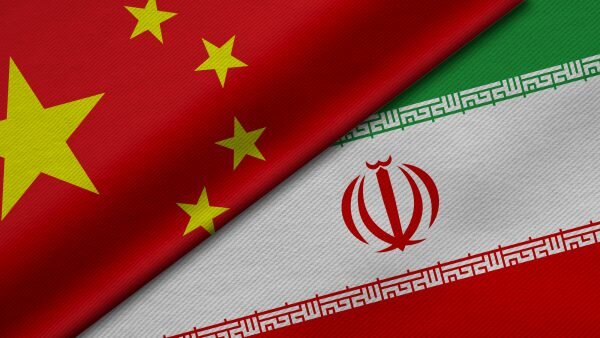
Tehran – Through the spread of history, civilization not only shapes one’s own destiny, but also serves as an anchor for the stability and purpose of the world around it. Iran and China, each rooted in their own unique landscape, have this deep heritage. It was fake from a crucible of ancient cultural and trade exchanges along the Silk Road and shared historical challenges.
As global landscapes make unprecedented changes today, these two ancient forces lean against this deep heritage, turning again towards each other at pivotal moments.
Current trends indicate a decline in old order and a progressive emergence of new orders. This transition is more than just a change in power. This is a fundamental reconstruction of concepts such as sovereignty, development, security. Both countries have drawn valuable lessons from their history of resilience. This is a lecture highlighting how sustainable progress and national dignity can only be achieved through independence and unbearable will. This shared wisdom gives us deep insight into today’s transformational dynamics.
In this context, the concept of “stability” requires an accurate redefinement. The stability born from submission to hegemony is fragile and fleeting. In contrast, the stability that arises from resistance to protecting national identity is deeply rooted and reliable. Symbolizing Iran’s modern experience, this form of endurance tested in court cases such as sanctions, the Covid-19 crisis and recent conflicts, represents not only domestic achievements, but the strategic assets of the entire region and its international partners.
Geography shapes the fate of a nation. Iran is not a player around it, but the geopolitical center of Eurasia, a Nexus where energy corridors, trade routes and cultural flows converge. The vision for secure and lasting connectivity across Asia is incomplete and vulnerable without stable and prosperous Iran as its strategic pivot. This critical core stability is essential to the overall health of the regional economic and security framework.
Enduring partnerships are built on a worldview that is consistent with shared principles rather than fleeting interests. Iran’s eastward direction is not a tactical maneuver. This reflects a strategic, long-term reorganization drawn from a thorough assessment of the historical trajectory. Proven at a critical historical fork, this authentic orientation provides the consistency and predictability needed for deep, multi-faceted collaboration.
Economic cooperation between these two authorities must transcend simple transactional logic and evolve into an “integrated ecosystem.” Such systems are based on organic ties between energy security, technology transfer and complementary supply chains. This framework not only produces lasting economic benefits, but also weaves productive structures together and promotes constructive interdependence against external pressures.
West Asia’s sustainable security architecture comes from cooperation between local stakeholders rather than from foreign interventions. The role of responsible global forces is to promote and support the formation of such indigenous security structures rather than directly involved in conflict. This approach replaces “crisis engagement” with “participation in stability” and stimulates the collaborative capabilities for mutual protection.
The essence of this partnership can be defined by complementary strengths. One serves as a global economic and technical anchor, while the other serves as a guarantor for the geostrategic hub and security depth of key regions. Each plays a unique and irreplaceable role, and when united, they form a powerful, stable whole. This is an alliance of partners with clear yet synergistic abilities.
In the current situation, the strategic fates of these two civilizations are more intertwined than ever before. Attempts to destabilize Iran and thwart its natural role are part of a broader strategy to contain new Asian forces. Therefore, Iran’s security and development is not an isolated concern, but is essential for the security and growth of its entire Asia, particularly its strategic allies. This represents the undeniable shared fate.
Ultimately, history calls for a nation to recognize that it defines the moment and expresses its future with courage and foresight. With its proven internal stability, independent political will and a clear vision, Iran is ready alongside China to play a constructive role in shaping the order in which cooperation is at odds with sustainable development replacing hegemony. This is not just a choice, it is a shared historical responsibility.