
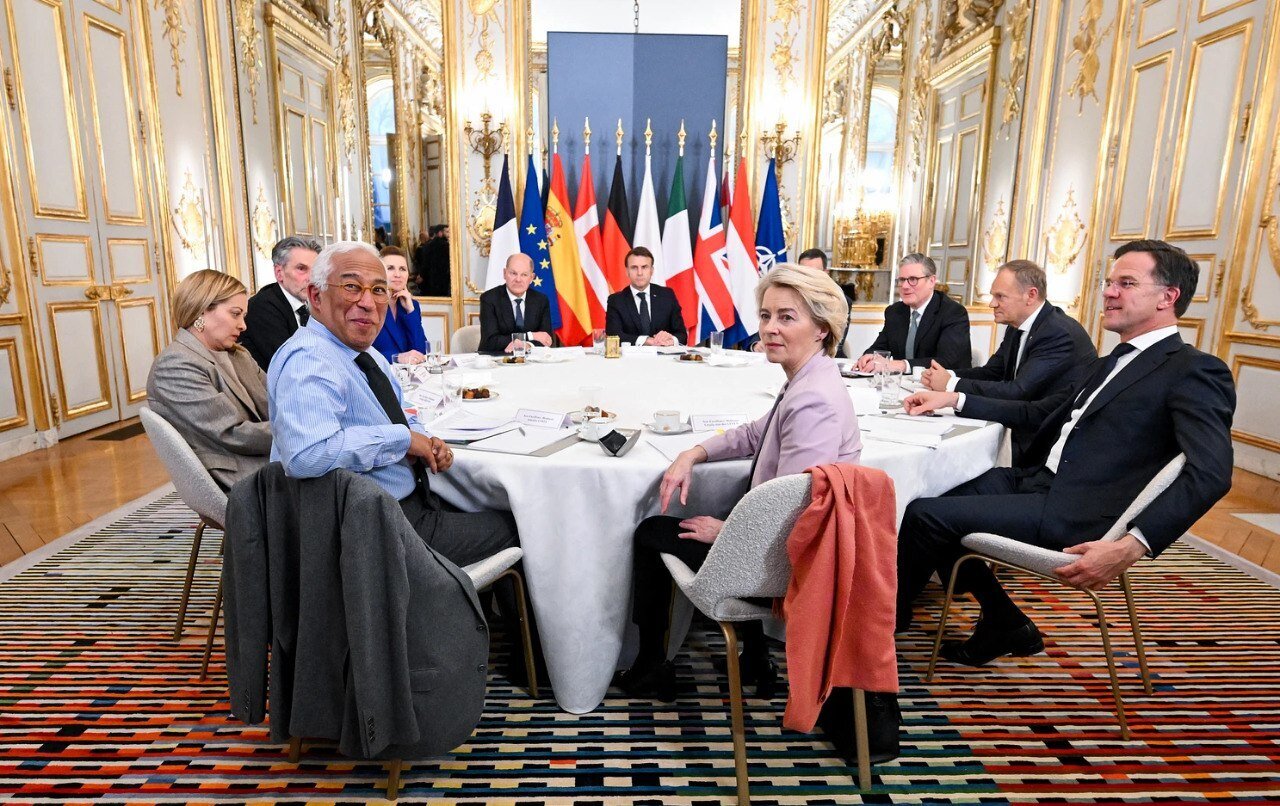
Madrid-Europe is at a critical moment in geopolitical fate. The European dream of self-sufficiency, frequently expressed in the rhetoric of “strategic autonomy” and functioning as a global player, suddenly clashed with reality after the Ukrainian crisis, US pressure on Russia, and the steady escalation of sanctions and punitive measures alongside the Western agenda.
The European Union’s claim to its own weight seemed ripe, but the evidence suggests the opposite. Europe, far from strengthening its voice, accepts its supporting role and pays high economic, political and moral prices to transfer control of foreign and security policies to Washington.
The Illusion of Autonomy
The European concept of strategic autonomy has filled an endless academic and diplomatic forum since 2014. It was called as a reasonable alternative to military dependence on the United States and as a historic opportunity to build a bridge with Eurasia. However, the facts show that at all major intersections, including the war in Ukraine, its relationship with Moscow, its nuclear policy with Iran, the EU has consistently chosen to abandon its often critically organized and aligned in the interests of our increasingly unreliable allies.
It was not only European diplomacy that has resigned to this role. The cost of that strategic surrender ripples through the overall architecture of security, economic and external influences. Sanctions against Russia have had serious consequences for European industries, particularly in major sectors such as energy and manufacturing, while reconstructing the map of the Continental Union. The result is an EU that is increasingly conditioned by dynamics that have less freedom of action and are not completely controlled.
Specific costs: Energy, technology, global impact
Automatic alignment with Washington is at the tangible cost of transferring capital and employment to US companies, particularly in defense and technology. Europe’s response to the crisis – Withstanding the collapse of dialogue with Moscow has deepened our transatlantic dependence. At the same time, enforcement measures against Russia did not significantly alter its actions, exposing the cost asymmetry between Europe and the United States.
Europe’s “following rules” and its obsession with its technical approach to foreign policy is a stark contrast to Washington’s tactical flexibility. The US is far from struggling with its “maximum pressure” strategy, attracting investments and profiting from European resource emissions. Meanwhile, European industries are forced to buy American energy and weapons with an inflated price, exacerbating innovation gaps and technical dependence, and hampering projects of virtual independence.
Iran’s case: missed opportunity and diplomatic costs
One of the clearest examples of the cost of European followership is handling of Iranian files. The Nuclear Trade (JCPOA) had allowed the EU to regain its mediation role and open new political and commercial channels with Iran. However, the unilateral withdrawal of the US from the JCPOA showed a collapse in expectations for autonomous policy from Brussels.
A calm analysis of Iran’s nuclear advocacy requires moving beyond the Manichan dichotomy imposed by Washington and Tel Aviv. For nearly two decades, Iranian leaders have emphasized their intention to use nuclear energy for private purposes to pursue economic development and energy autonomy as sovereignty under the Nuclear Non-Proliferation Treaty. Despite the fear and disinformation of hostile lobbys, there is no conclusive evidence that Iran developed nuclear weapons, and IAEA testing has historically found no major violations that justify current isolation.
If the EU had prioritized dialogue and agreement on punishment and threats, it would have been possible to integrate Eurasian roles as actors in peace and mediation and create alternative channels of economic and energy cooperation beyond the US Gulf axis. Instead, Europe confiscated commercial and political interests, but Chinese and Russian companies filled the gap left by leaving European companies. Under pressure, Tehran has been resilient, consolidating its economy under sanctions, strengthening its autonomous regional networks, and proven its coordination with a steady moving multipolar order from Western hegemony.
Perhaps the biggest, intangible case, cost is the loss of long-term reliability in Europe. In Iran’s strategic imagination, the EU no longer appears as a reliable partner or a counterweight to our unipolarity, but appears as a soft, whimsical intermediary who can’t even guarantee the implementation of basic international agreements. This perception limits the possibility of structural cooperation in critical areas: energy, technology, mobility management, or regional stability.
There are many examples. The updated sanctions not only harmed Iran’s economy and society, but also took away Europe’s diplomatic status in the region. Turkey, India, Brazil and, more than anything, China and Russia have stepped in to fill the leadership vacuum and launched their own initiative to maintain multilateralism and Eurasian integration without Brussels. Cost: Declining access to emerging markets, greater political isolation, and a decline in Europe’s global ambitions in favor of powers that involve true autonomy.
The miracle of unity in Europe
Behind the rhetoric of “European unity” is deep fragmentation. Germany and Austria prioritize trade and cheap energy. France is clinging to nuclear power as a shield. The Eastern Provinces automatically align with US maximalism due to fear of Russia. And the South looks for intermediate paths that are rarely embodied due to the lack of geopolitical weight.
Sanctions against Iran and Russia and the management of common policies bare these fractures. Some people seek a practical relationship recovery, while others choose to continue to hostility that replicates foreign agendas at home. In the long run, this lack of consensus weakens the EU’s negotiating position and widens the gap between autonomy rhetoric and actual impotence.
The past few years have shown that Europe has passively embraced moving to the margins of global games. The inability to define independent policies against Moscow and Tehran places it as a mere attachment to Washington and has been accused of paying for decisions made elsewhere. The price is rapid. Increases in resource loss, technological erosion, reduced trust from potential partners, strategic dependence, and diplomatic irrelevance.
Paradoxically, being perceived as a substantial and unpredictable actor in Tehran means that the EU will be influencing or mitigating the excesses of the Islamic Republic, or losing its ability to encourage reform and openness. When dialogue incentives are replaced by coercion and punishment, the outcome is greater defensiveness, nationalism, and integration of alternative alliances.
Towards a new Eurasian architecture
The post-crane era sees the emergence of alliances and consensus that accelerate the formation of a new Eurasian order, where the EU is mostly an audience, and challenges the old bipolar logic. Iran, alongside Russia, China and other emerging powers, is driving multilateral initiatives based on new mechanisms of non-interference, sovereignty and cooperation and security. Infatuated with an internal crisis, Europe laments the late arrival in the game and has lost its opportunity for influence and profit.
To avoid being permanently relegated to the periphery, the EU must rethink its priorities and invest in its autonomous ability to rebuild technical, energy, military and diplomatic bridges, particularly along with key actors like Iran. In doing so, not only will it ensure access to critical resources and underused markets, it will also provide greater maneuverability to protect its profits in an increasingly multi-polar and competitive world. In particular, reliability relies on respecting commitment and adopting a sovereign position.
Europe must acknowledge that the cost of a lack of strategic autonomy is not limited to short-term economics. It is a sacrifice that erodes his role as a global actor, limits his options in future crises, and undermines his ability to build equal relationships with regional powers like Iran to seek respect and solid dialogue rather than obedience. If Europe’s Eurasia, West Asia and the Global South demonstrate anything, the future belongs to people who can set their own terms and pursue autonomous projects of development and security. Sticking to one-sided followership only drags Brussels deep unrelatedly, while others have written 21st century scripts.